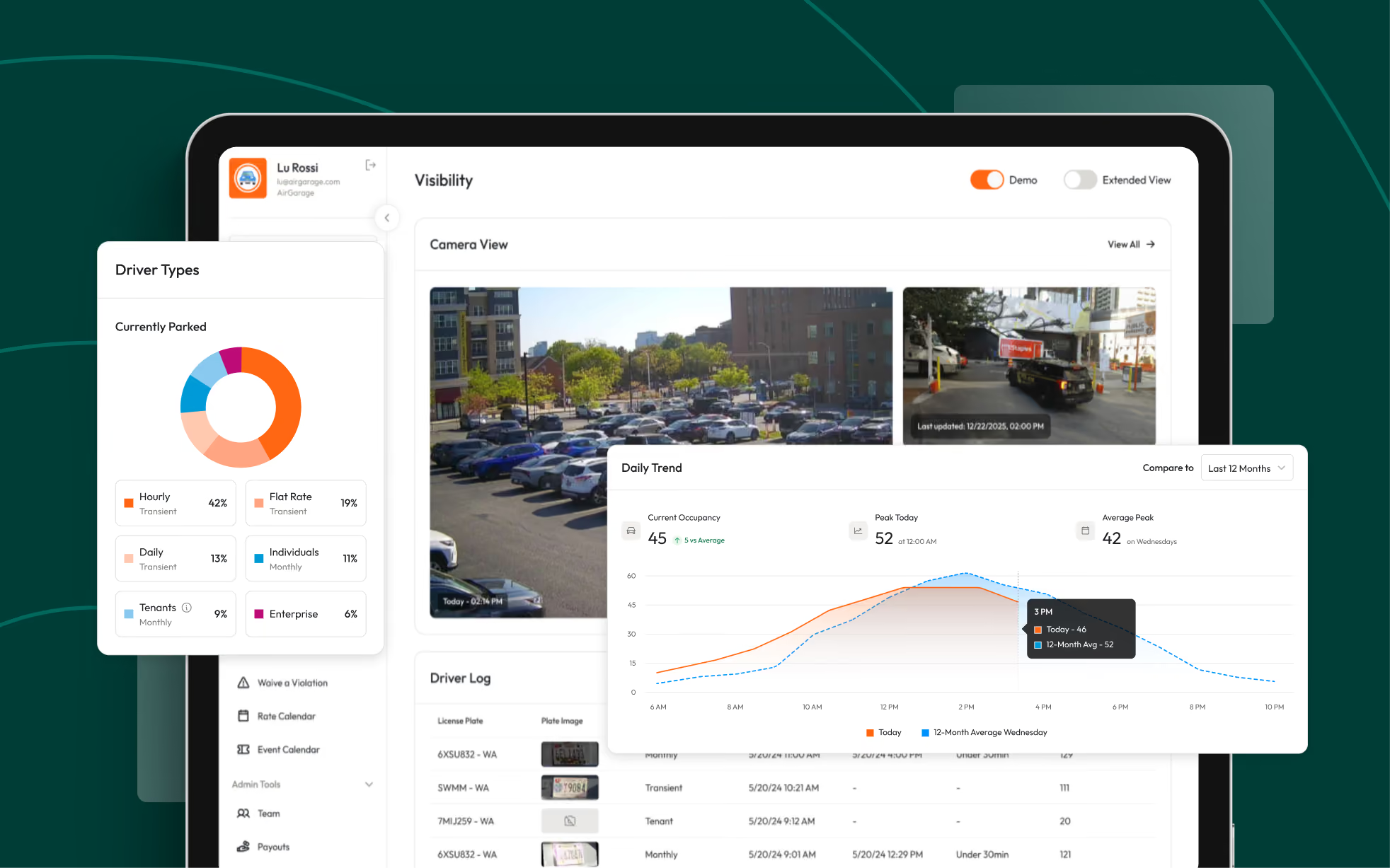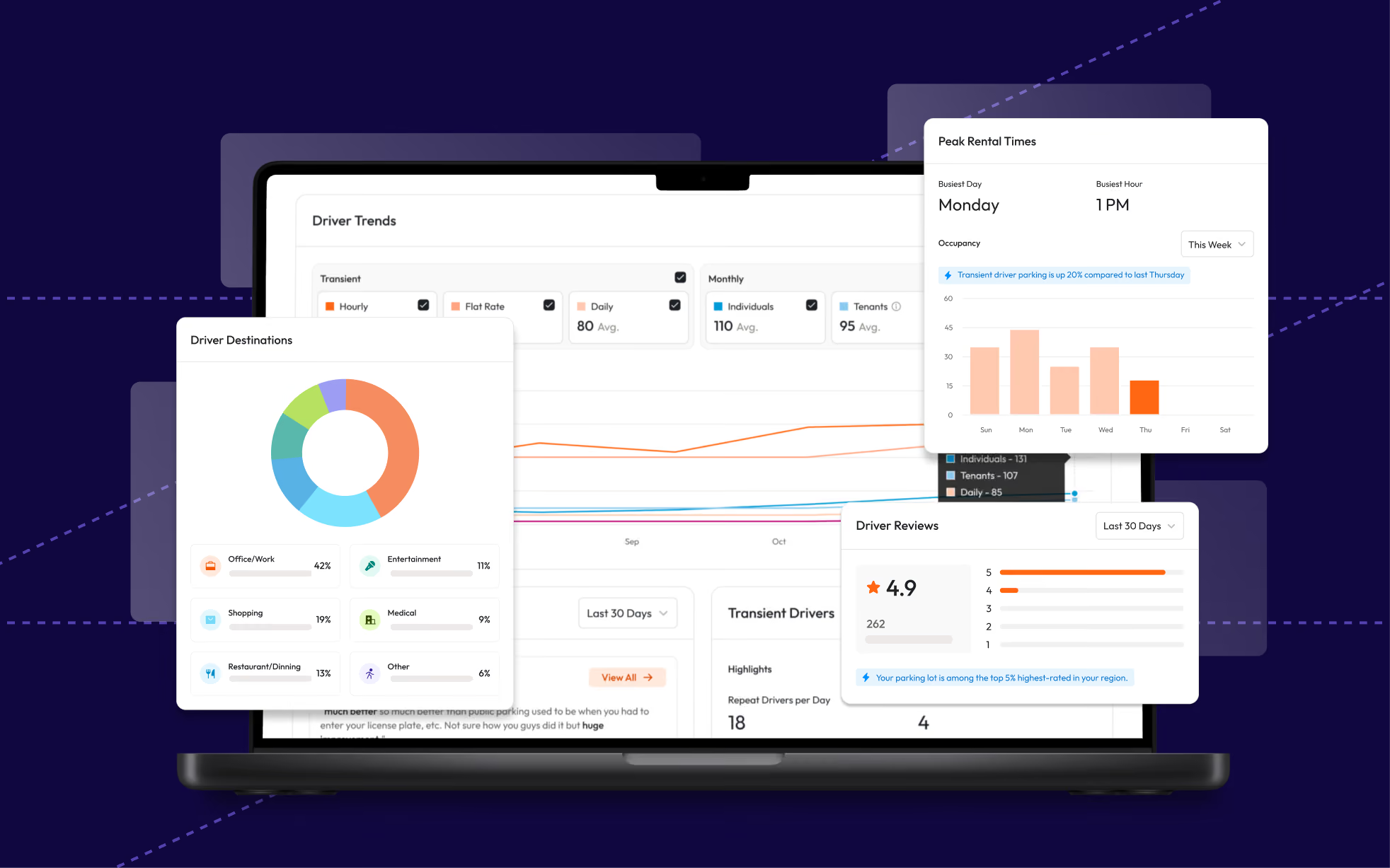



It used to be that you could build a parking structure and drivers would show up. Demand was steady enough that you didn't need to overthink driver acquisition.
Since 2020, that's changed. Return to office recovery is uneven across cities as commuter patterns shift and new competition has entered once stable markets. Property owners who’ve optimized pricing and operations for pre-2020 conditions are left without an answer to why demand hasn’t picked up again, or whether it ever will.
And the most frustrating part for many owners is that the data they have today leaves broad gaps in their knowledge.
This article clarifies the foundation of a real revenue strategy by providing a framework for understanding parking demand, the key drivers at play, and how to be more proactive in your approach. Understanding these demand drivers is the first step toward treating revenue as something you can control, not just collect.
What are parking demand drivers?
Parking demand drivers are the forces that influence how many people need parking in your locality, where they choose to park, and how long they stay.
Factors like weather, nearby events, competitor pricing, and office occupancy rates in your submarket are all demand drivers. Your pricing, driver mix, and online visibility also affect demand. But the drivers shaping demand at your specific facility are likely different (at least somewhat) from other locations in your area.
For example, a downtown garage anchored by office tenants appeals to a totally different driver than a surface lot two blocks from a stadium. Every facility has a unique combination of demand forces, and understanding yours is what separates reactive management from a proactive posture.
Demand drivers fall into two high-level categories: internal and external.
Internal drivers
What they are: Internal drivers are the levers you set and control directly based on the goals for your asset. They’re things you can monitor, test, and adjust.
Examples:
- Rate structure and pricing tiers
- Target parker mix (transient hourly, daily, monthly parkers, event rates)
- Signage and wayfinding around and inside the facility
- Payment experience (e.g., mobile, gateless, app or no app)
- Distribution channels and listings on parking apps and maps
When you change your daily rate or launch a flexible monthly pass, you're making an internal decision with a direct and immediate effect on demand.
External drivers
What they are: External drivers exist outside your asset. They shape the pool of potential parkers before they see your signage or rates.
Examples:
- Local weather patterns and seasonal shifts
- Nearby event calendars (e.g., concerts, games, conferences, community events)
- The number of other parking options in your immediate market
- Competitor pricing
- Return to office and hybrid work schedules at nearby employers
- New construction or developments in your area
You can’t directly control these drivers, but you can control how clearly you see them and how quickly you respond. A facility that monitors external drivers in real time and adjusts pricing and inventory accordingly will consistently outperform.
Fixed vs. variable drivers
Internal and external forces help you understand which drivers you can influence and which ones you can respond to as things change in your local environment. This is a good starting point, but to build an effective demand strategy there are several other key external drivers differences you should know, starting with the fixed vs. variable distinction.
Fixed: Some demand drivers are stable over time. For example, the amount of competition in your market changes gradually (not daily) and proximity to a hospital, university, or major employer is a fixed demand anchor that shapes your baseline.
These are your foundation, and they inform your pricing and product strategy initially.
Variable: Other demand drivers shift frequently, or even continuously. Weather can change demand patterns several times within a single day, pushing drivers toward covered parking or keeping them off the road entirely. An event three blocks away can move your occupancy from 45% to near capacity with 48 hours' notice. These variable drivers require ongoing awareness and the operational capacity to respond before the opportunity passes.
Primary vs. secondary drivers
What they are: Primary drivers are local and direct, with an immediate, measurable effect on daily occupancy:
- Employers within walking distance
- Current in-office policies
- The event schedule of nearby venues nearby
- Competing facilities and what they're currently charging
- Your regional weather patterns by season
What they are: Secondary drivers are macro trends that reach your facility through the primary drivers:
- Broad economic cycles affecting downtown foot traffic
- National return to office headlines and policy shifts at larger corporations
- Long term urban development patterns in your city
Transient vs. monthly demand
The two core customer types for most assets respond to demand drivers on different timelines. Unknowingly mixing your strategy for each is a common mistake, and it can leave revenue behind.
- Transient parkers pay by the hour or day, and their decisions are sensitive to conditions right now. A rainstorm raises the appeal of your covered structure over the open lot down the street, and a sold out event two blocks away pulls in parkers who wouldn't otherwise be in your area. Similarly, a competitor dropping their rate by $3 can redirect a meaningful share of daily traffic.
- Monthly parkers (e.g., contracts, tenants) make decisions over weeks or months, and their behavior can shift based on longer term changes like employer requirements or construction that makes your location more or less convenient.
Overall, the demand mix can shift significantly depending on our asset type and target driver profile.
Comparing demand drivers for two different assets.
Asset 1: A downtown office garage
The primary demand drivers here are things like employer density, industry mix, return-to-office patterns, and seasonal weather.
- Because office workers on variable in-office schedules are the primary parkers, demand typically peaks Tuesday through Thursday and softens on Mondays and Fridays.
- Winter months bring more drivers who shift from public transit or walking to driving.
- The revenue strategy centers on monthly hybrid employees, daily rate adjustments tied to occupancy targets, and close monitoring of market pricing shifts to stay competitive in the long term.
Asset 2: A surface lot near a stadium
For this asset, the primary demand drivers are the calendar of events at the nearby stadium and competitor pricing in the surrounding urban area.
- On event days, occupancy can jump from 40% to 80% or higher, and on off days that same lot sits well below capacity.
- The revenue strategy requires event awareness, dynamic pricing, frictionless mobile payment for high volume arrivals, online reservations for known events, and a clear plan for generating consistent revenue between events rather than depending entirely on game day spikes.
Two facilities in the same city, potentially within a few blocks of each other, require completely different monitoring cadences, pricing approaches, and customer experiences because their demand environments are fundamentally different.
Measuring demand is not enough.
Knowing whether your revenue is up or down tells you something happened. Knowing the cause and what to adjust before it happens again gives you control over the outcome.
Operators who sustainably grow their NOI build operations that can accurately do the following:
- Monitor demand signals as they develop, with real time occupancy data tied to your location
- Adjust pricing to reflect real-time demand and nearby competitor rates
And this kind of operation is only possible if you understand your demand drivers, their variability, and which customers they affect. Without that foundation, pricing and marketing decisions are educated guesses at best.
Start with the drivers moving your demand right now
The framework above is the foundation, but most of the revenue opportunity lives in the variable, external drivers that reshape demand week to week and sometimes hour to hour. Each deserves a closer look than one overview can give it, so the logical next step is to go deep on whichever is most active at your facility today.
- Events create the sharpest and most predictable swings you'll see. Our article on how events shape parking revenue and demand breaks down how different event types move demand and how to capture the premium event-goers will pay.
- Competitor pricing is the driver operators most often misread. We've written about how competitor pricing affects your parking demand, plus how to find your true competitive set and decide when a price response is actually the right move.
- Weather is the most constant of the variable drivers, shifting demand several times in a single day. Learn how rain, snow, and weather patterns change how many drivers park and where they choose to park.
Discover Asset Intelligence
Connect with one of our parking experts to learn more about how AirGarage proactively drives revenue, eliminates operational burden, and gives owners real-time visibility into their asset's performance.