

Our core thesis at AirGarage is simple:
The first step to optimizing an asset is understanding it.
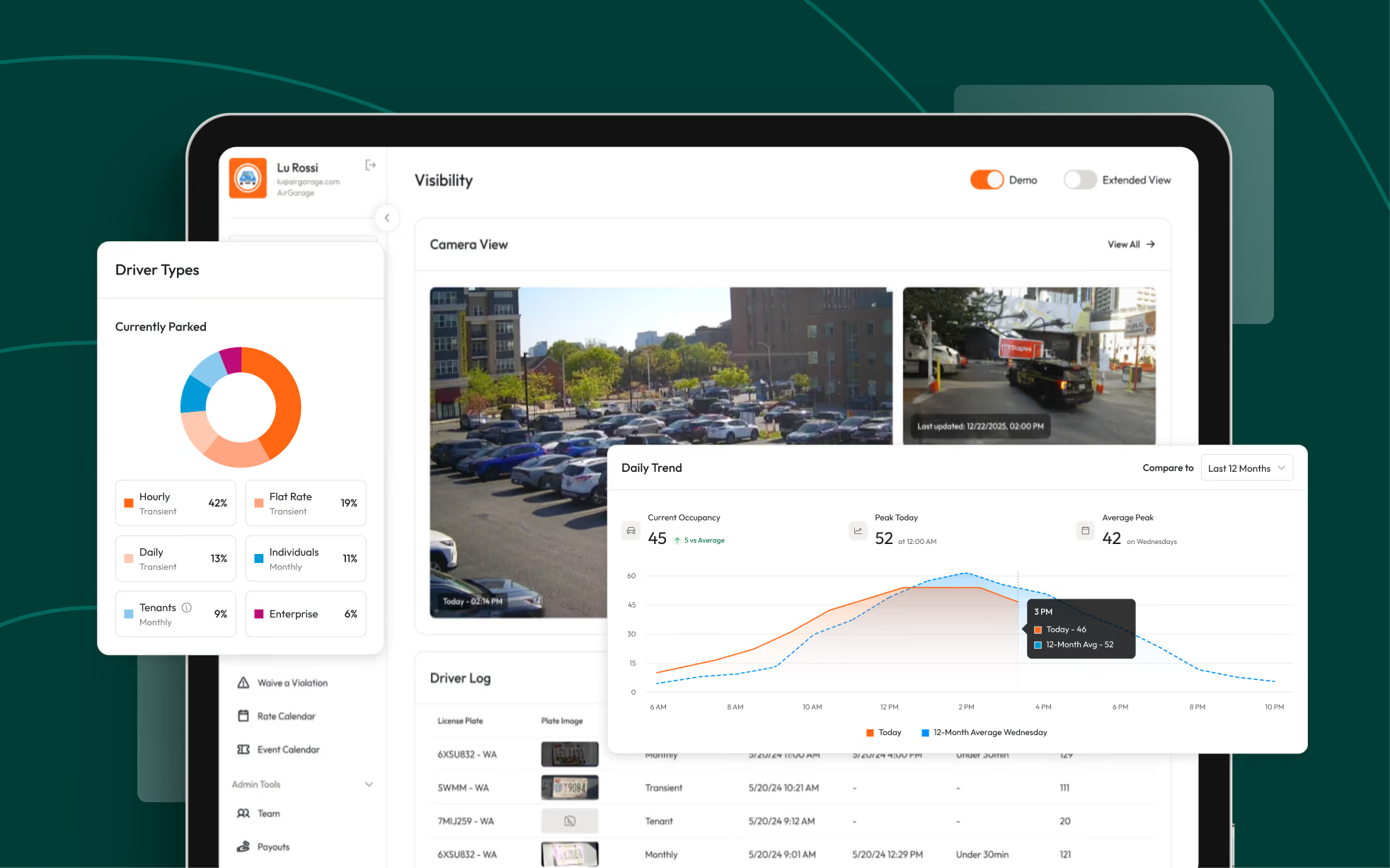
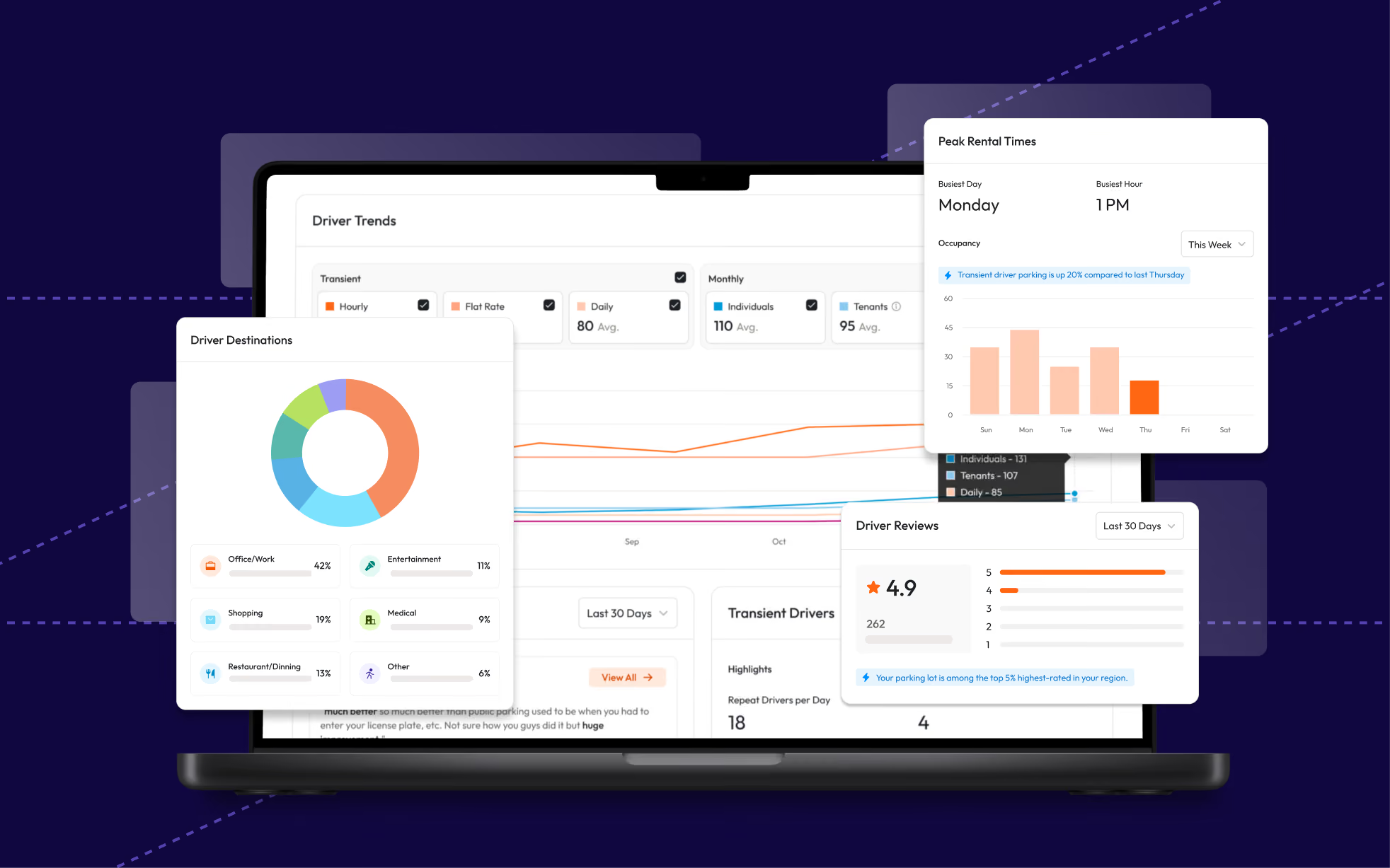
And optimizing is central to better serving both owners and drivers. But the only way to truly understand an asset well enough to proactively drive revenue and improve the customer experience is with rich, real-time data about how it’s actually being used: occupancy, demand, pricing response, and the market around it.
To get there, the parking industry needs to change.
At AirGarage, we’ve been beating that drum since our founding, with the results to show.
Now we want to define that shift with fresh clarity and framing.
To us, it’s the shift from reactive property management to proactive asset management.
The Problem with the Old Model
For decades, parking has been run with the same mindset: keep the lights on.
Parking operators were paid to make sure operations didn’t break:
- Gates open and close
- Pavement stripes stay visible
- Attendants show up
- Payments get collected
If nothing went wrong, the operator was doing their job.
But this framing is flawed. Deeply. Not because operations don’t matter, but because operations alone can’t optimize assets or create value.
Meaningful growth won’t come from focusing your energy on cleaning 10% faster or switching to energy-efficient lights.
This means traditional parking management is asking the wrong questions:
- Are the machines functioning?
- Did we pick up the trash?
- Are driver complaints within tolerance?
Revenue is treated as something you collect, not something you actively shape and grow.
Pricing is set, then changed infrequently, timidly, and without clear rationale.
Decisions are reactive and based on lagging, high-level reports weeks or months after reality has already shifted.
In other words, traditional management historically treated parking like an operational cost center, not like a revenue-producing asset.
And the consequences are obvious:
- Owners lack visibility into what’s actually happening on their property
- Pricing rarely reflects true demand
- Operators optimize for operational ease, not long-term NOI
- Incentives between owners and operators are misaligned
- Drivers get a worse experience as a byproduct of legacy systems
The industry didn’t stagnate because innovation was impossible.
It stagnated because the mental model was wrong.
The Shift: From Reactive Property Management to Proactive Asset Management
Proactive asset management starts from a fundamentally different place: metrics and long-term goals.
It asks:
- How is this asset being used, right now?
- What demand signals are we seeing in real time?
- Which levers can we pull to increase NOI without degrading experience?
- How does this asset fit into the surrounding market?
Smooth operations to protect the current value of the asset are table stakes, not the end goal.
The goal is maximizing the long-term value of the asset.
Realizing that ambition requires:
- Continuous visibility into performance
- Pricing that adapts to real demand, not static assumptions based on gut feeling
- Clear, transparent economics
- Incentives that align operators and owners
- A feedback loop that turns data into action
This is the shift AirGarage is driving.
What We Believe
We crafted 10 principles that we believe will guide a future-focused vision for parking. These principles define what proactive, growth-oriented asset management actually looks like in practice:
- Parking is a driver of asset value, not just an operational detail. It should be managed with the same rigor as any other revenue-generating component of a property.
- The first step to optimization is understanding. Real-time data is not a “nice-to-have,” it is the foundation of proactive revenue strategy.
- NOI and asset value are the true measures of success. Operational metrics matter only insofar as they support long-term financial outcomes for owners.
- Revenue is not fixed. It can be actively shaped. Demand is dynamic. Pricing and marketing strategy should be too.
- Decisions should be proactive, not reactive. Leading indicators beat lagging reports. Strategy should respond to what’s happening now, not what happened weeks ago.
- Owners deserve transparency. Costs, performance, and tradeoffs should be clear and understandable, not buried in opaque line items on a P&L.
- Operators and owners must share incentives. Alignment drives better outcomes than contracts designed to minimize risk or effort.
- Driver experience and asset performance are not at odds. A frictionless experience builds trust, loyalty, and consistent, and repeat demand.
- Fragmented systems create blind spots. A unified operating system beats stitched-together hardware, software, and vendors.
- The status quo optimizes for stagnation. Growth requires rethinking the system from the ground up.
What This Looks Like in Practice
In a property management world:
- Pricing changes rarely
- Reporting explains the past
- Operators react to issues as they arise
- Owners hope performance improves or wait for the market around them to improve
In an asset management world:
- Pricing continuously adapts to real demand
- Data is visible, trusted, and actionable
- Strategy is informed by real-time signals
- An effective operator can actively manage and grow parking like the asset it is
In this model, data creates insight. Then insight drives proactive strategy. And proactive strategy is how assets grow in value.
That approach and the corresponding value growth is the difference between managing operations and optimizing an asset.
Why This Matters
For real estate owners, the risk isn't about operations challenges anymore.
The risk is that you are leaving meaningful value on the table by treating parking as something to be maintained instead of an asset to be optimized.
Every parking asset already has demand patterns, price elasticity, and revenue ceilings that change daily. Often hour to hour. Most operators simply can’t see them. And if you can’t see them, you can’t act on them.
That invisibility has a cost.
Static pricing leaves revenue on the table during peak demand.
Outdated assumptions about usage lead to underutilized space.
Lagging reports mask opportunities that compound over time.
Misaligned incentives keep operators focused on operational effort, not outcomes.
The result isn’t catastrophic failure. It’s something more dangerous: quiet, consistent underperformance.
Lost revenue here.
Missed pricing adjustment there.
An asset that “works fine,” but never reaches its full potential.
Over time, those small misses add up to real dollars and real asset value left unrealized.
Owners don’t accept this mindset anywhere else in their portfolio. Office, retail, multifamily — those assets are actively managed, continuously evaluated, and optimized using data.
Parking has simply been left behind.
That gap is no longer defensible.
The tools now exist to understand parking assets in real time.
To price based on actual demand, not gut feel.
To align operators around NOI, not operational activity.
To manage parking the way you manage any other revenue-generating asset.
The question isn't whether parking can be proactively optimized.
It’s whether you’re willing to continue accepting a model that was designed for a world without data, without visibility, and without aligned incentives.
Parking needs to perform, not just function.
And every day it isn’t treated that way, value is left on the table.
That’s what we’re changing here at AirGarage.
Discover Asset Intelligence
Connect with one of our parking experts to learn more about how AirGarage proactively drives revenue, eliminates operational burden, and gives owners real-time visibility into their asset's performance.