


Events create some of the sharpest demand swings for parking. But, unlike weather or competitor pricing changes, most events are visible on a calendar weeks or months in advance. With the right level of visibility, event demand can be monitored, predicted, and captured.
To show just how significantly events affect demand, we analyzed event-driven data across every property we operate to find and baseline key trends.
Here’s what we found:
- Overall, event days account for 31% of the year (113 days), but account for 51% of revenue
- On event days, properties generated 129% more revenue than on non-event days, with 60% more volume
- Research from PredictHQ supports our findings. Their study found that days with several concerts and shows within three miles drove a roughly 60% spike in parking demand for nearby operators
Even so, this measurable lift doesn’t distribute evenly across a local market. Some operators see their lots fill early and they increase pricing accordingly. Others experience only a modest bump, even when they are just a few blocks away.
Most don’t change their approach at all.
The operators who capture event demand can see it coming, change prices deliberately, and make it easy for drivers to choose them over the lot across the street.
In this piece, we’ll review how event demand varies, demographic differences of event parkers, and the strategic and practical shifts operators can start making today to drive revenue.
Event demand doesn't always look the same.
Different kinds of events produce very different effects on demand. When we measured revenue uplift and volume shifts across specific event categories, the gaps between them were striking. Sports events alone drove a 250% revenue lift, nearly double what conferences and community events generated, while festivals and performing arts events landed at the lower end of the range. Every category we tracked outperformed non-event days by a wide margin, but the size of that lift varied significantly depending on the type of event.
Here's how each event category performed compared to non-event days:
- Sports events: 250% revenue lift, 150% volume increase
- Conferences: 149% revenue lift, 72% volume increase
- Community events (farmers markets, food truck rallies, parades): 149% revenue lift, 69% volume increase
- Expos: 142% revenue lift, 68% volume increase
- Concerts: 134% revenue lift, 70% volume increase
- Festivals: 125% revenue lift, 55% volume increase
- Performing arts: 121% revenue lift, 56% volume increase
Not every event fits cleanly into a pre-set category, but the table below highlights general examples of common event types and shows how demand varies across each.
Event attendees behave differently than your typical customer
Events may bring a fundamentally different customer to your area, and the difference could be wide enough to affect your pricing strategy. Everyday parkers tend to make decisions based on a balance between price and proximity to their destination—often leaning toward price sensitivity.
But your premium spaces (e.g., covered, well-lit, close to the exit) command a higher price on event nights than your standard rate reflects. So, facilities that charge the same rate on a sold-out Saturday as they do on a slow Wednesday are underpricing a clear demand signal.
The table below illustrates this by comparing and contrasting the traits of different customer types, including the balance between price and convenience for event-goers.
How to increase parking revenue by capturing event demand.
The facilities that outperform on event days consistently use four tools to their advantage: local intelligence, smarter marketing, dynamic pricing, and proactive management.
Local Intelligence
Local intelligence is your foundation and a significant competitive advantage. A concert announced three weeks out, a conference scheduled months in advance, or a recurring game-day calendar are all visible if you monitor the right sources. Here are few simple steps you can take now to improve your event awareness and demand capture:
- Track your local event calendars alongside real-time occupancy data
- Treat upcoming events as proactive operational triggers vs. reactive changes once demand picks up
- Build from season to season as patterns repeat and your data improves
Marketing
Marketing determines whether event parkers will find you. Because event attendees plan ahead more than most transient customers, your facility needs to show up where they're searching before they ever leave home. Assess how well you’re doing on the following actions, and where you need to fill in gaps:
- Listings on parking apps, maps, and ticketing platform integrations
- Highlighting what event parkers care about: covered parking, security, proximity, and mobile payment with no app required
- Keeping your Google Business Profile current with hours, photos, and accurate address information
- Offering fast, well-designed landing pages for easy booking
Dynamic Pricing
Dynamic pricing captures the premium that event demand creates. Rates set for a normal Tuesday don't reflect what a driver will pay when your lot is the last covered option within two blocks of a sold-out show. Depending on your pricing flexibility and ability to make changes quickly, the following improvements can help you drive uplift:
- Apply dynamic pricing to respond to demand in real-time
- Test pricing changes against volume and customer sentiment
- Use past event data to set better opening prices for similar future events
Gateless Operations
Modern, gateless parking operations enable you to service the demand that events create. When several hundred drivers try to leave at the same time, a gate arm or cash booth creates a bottleneck that backs up street traffic and leaves drivers with a poor impression. You can substantially improve the customer experience through enhancements like:
- Gateless operations and app-free mobile payment that removes friction at peak exit times
- Avoiding cash handling, which slows throughput and creates revenue leakage
- Testing your approach after each event, observe what worked, and adjusting before the next one
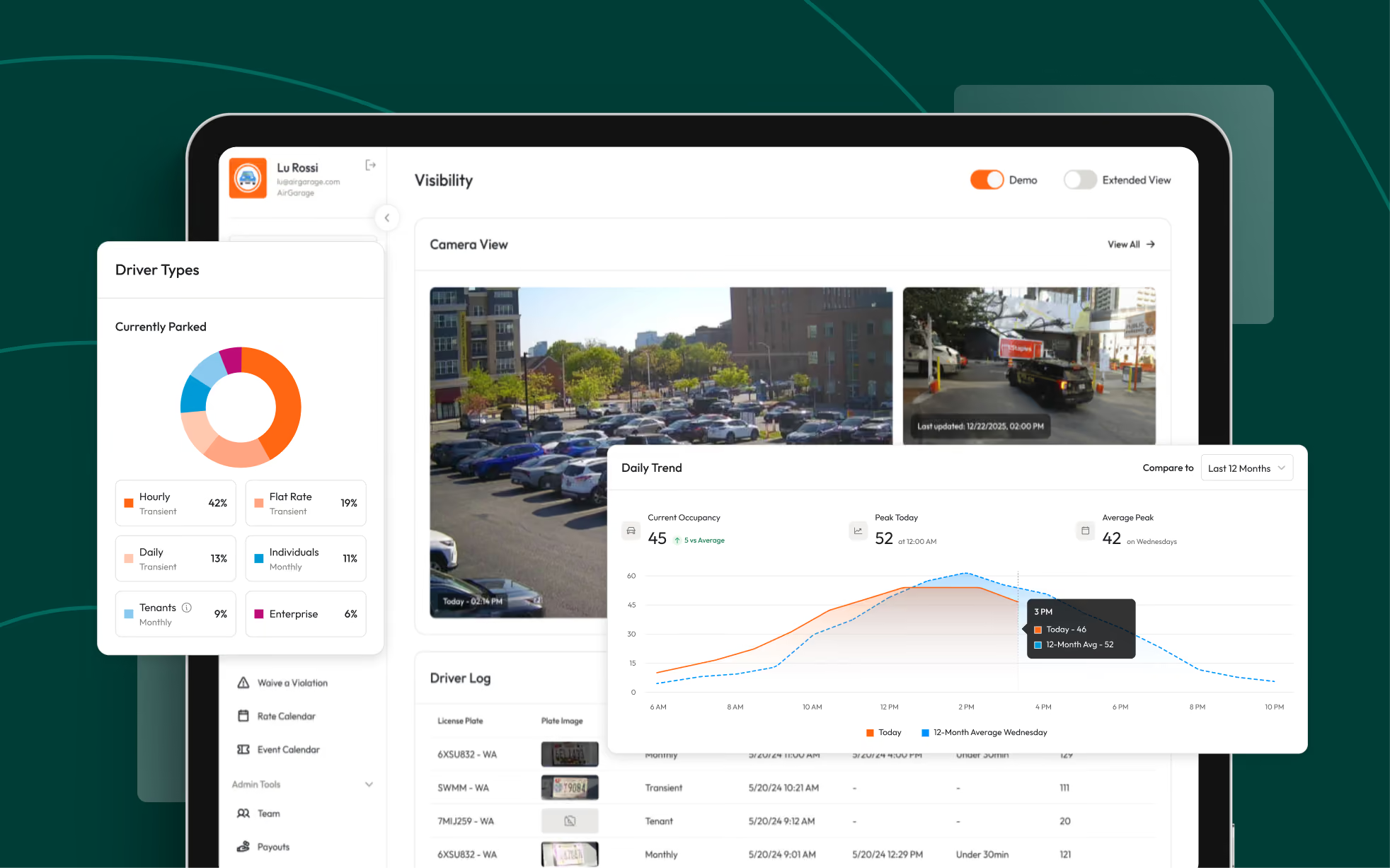
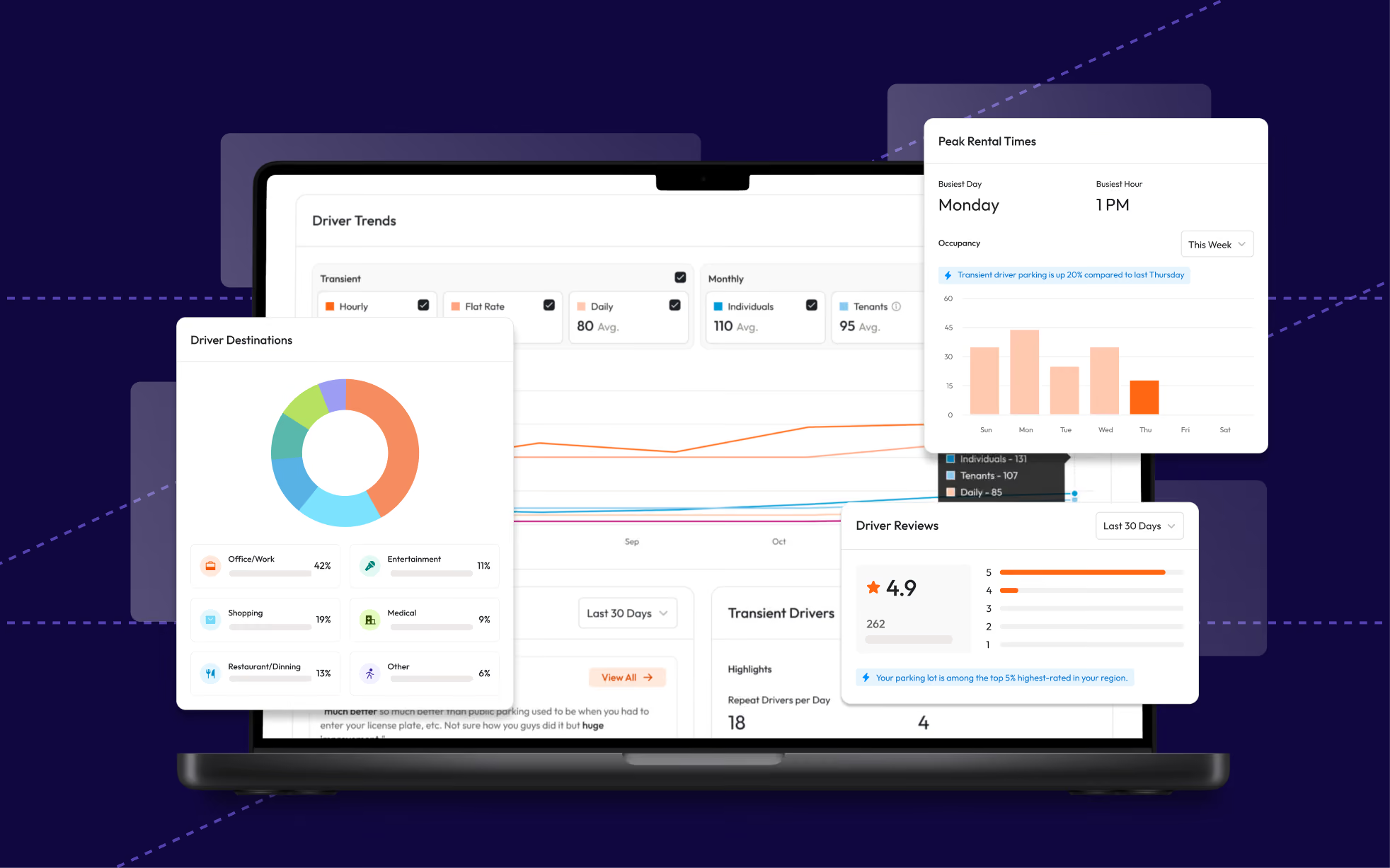
If this sounds like a lot to manually track, you’re right. And that’s why we built a full Local Intelligence Dashboard that tracks events and venues near your property, helping you stay updated and monitor how our proactive pricing management is affecting revenue in real time.
To see how AirGarage tracks local event activity and uses it to drive pricing and operational decisions, schedule your demo of the Local Intelligence Dashboard now, or read the full product launch announcement for more context.
Discover Asset Intelligence
Connect with one of our parking experts to learn more about how AirGarage proactively drives revenue, eliminates operational burden, and gives owners real-time visibility into their asset's performance.