

We’ve covered how visibility drives asset value, but now we need to address the next question: once you have visibility, how do you actually capture the opportunities it reveals?
Ultimately, the answer comes down to whether your operator approaches parking as property management or asset optimization. The difference between those two approaches is whether they’re “order taking” and “problem spotting,” or whether they’re proactively finding and capturing opportunities for improvement.
In this article, we’ll look at the 5 approaches to parking management so you can better understand how visibility is used to create value, and how that shows up in real operational and strategic decisions.
The parking management “maturity curve.”
Let’s start with a quick review of a basic maturity curve from reactive property management to proactive asset management. Understanding where an operator fits in this spectrum will clarify how operators think and act differently at each level:
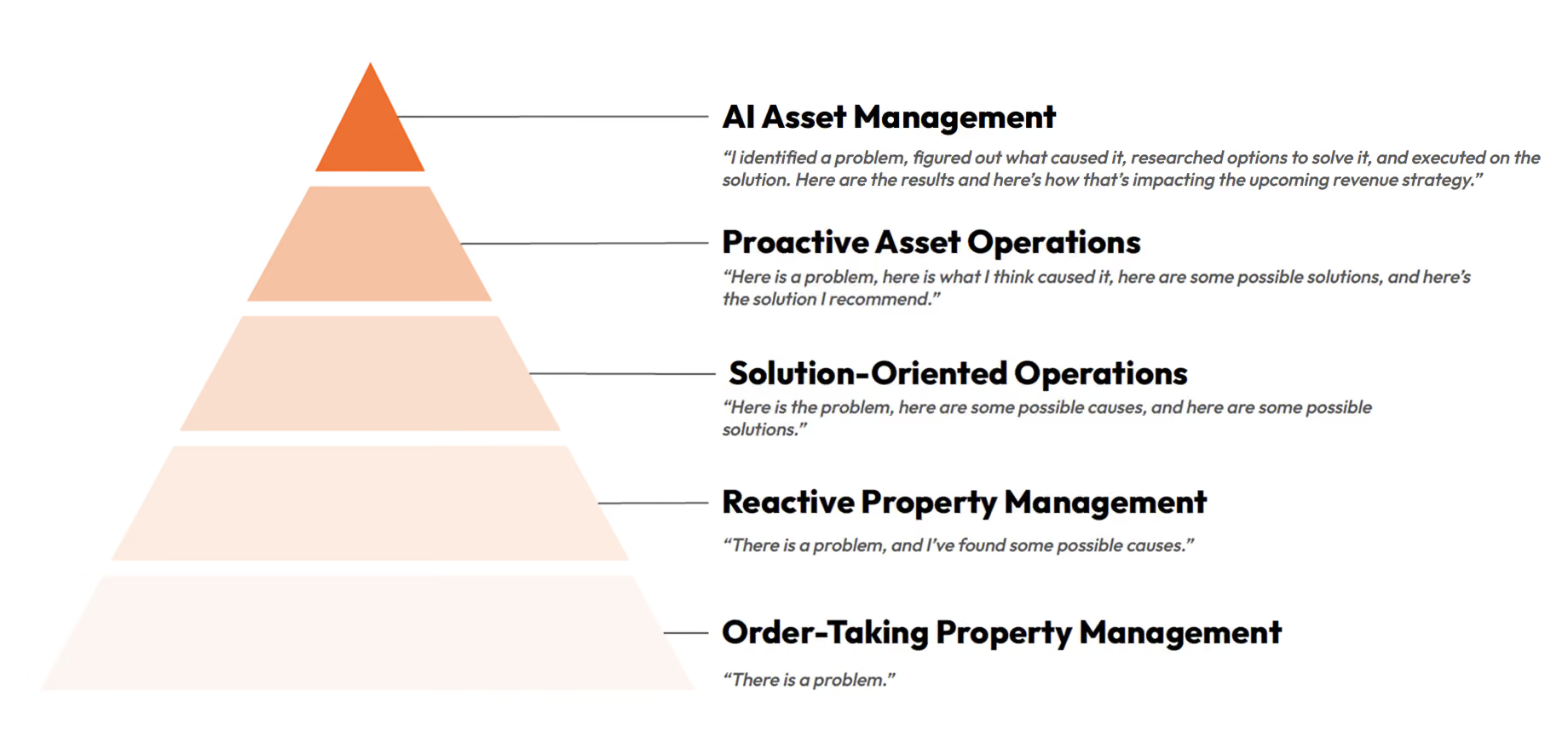
Level 5: Proactive Asset Management
"I identified a problem, figured out the cause, researched options, executed the solution, and here are the results."
What it looks like in practice: The operator doesn't just monitor and recommend. They actively manage your asset like they own it. They identify opportunities, develop and test solutions, then deploy improvements automatically.
Your system gets better over time without needing to monitor, request, or approve every change. Pricing algorithms improve, and new capabilities appear in your dashboard.
The operator uses visibility to ask asset management questions and take action.
Level 4: Proactive Asset Operations
"Here is a problem, here are possible solutions, and here's what I recommend."
What it looks like in practice: the operator actively monitors your property, identifies opportunities, researches solutions, and makes recommendations. But they’re not acting independently or proactively to improve your operations and outcomes.
Level 3: Solution-Oriented Operations
"Here is the problem, here are possible causes, and here are possible solutions"
What it looks like in practice: while operations are smooth and the tools are good, it feels like you’re doing the proactive strategic thinking. Opportunities slip because someone needs to actively watch performance, ask questions, and request action.
Level 2: Reactive property management
"There is a problem, and I've found some possible causes."
What it looks like in practice: reactive responses and baseline problem-solving, no proactive monitoring or recommendations.
Level 1: Order-taking property management
"There is a problem."
What it looks like in practice: task completion and basic execution, no proactive thinking. No initiative, no strategy.
Most operators can't get past level 3. Here’s why.
There are two structural problems that keep most operators stuck at level 3:
- Fragmented systems
Traditional parking operations stitch together hardware, software, and service from different vendors. Each vendor protects their margin and upsell opportunities. When you want to make an improvement, it requires hands-on involvement, integration work, and vendor negotiations.
No one controls the full stack, which makes it impossible to move quickly or efficiently.
Also, the lack of integration keeps visibility low, whether you want to track performance drivers or monitor property conditions. As a result, the data they offer is too late (month end at the earliest) and insufficient, often failing to include occupancy, driver sentiment, local market data, and more.
- Misaligned incentives
When your operator makes money from service and management fees rather than your parking performance, they're incentivized to keep you dependent. More customer "touches" mean more revenue opportunities. Making improvements requires upgrade fees and implementation projects.
Your revenue growth has no effect on their earnings.
What it takes to reach levels 4 and 5.
Reaching sophisticated management levels requires three things working together:
1. Vertical integration
You need a unified operating system where the same team owns hardware, software, and management. When you spot a pattern, you can develop a solution, test it, and deploy it network-wide without vendor negotiations or integration dependencies.
2. Aligned incentives
At AirGarage, we promote revenue-share agreements because they align our success with yours. This creates the right incentives to proactively optimize your asset rather than sell you additional services.
When your operator's revenue depends on your NOI growth, they're naturally incentivized to operate at level 4 or 5. When it depends on service fees, they're stuck at level 3.
3. Network effects
Insights from one property should inform improvements across all properties. The system continuously learns and gets better, and every property benefits from the collective intelligence.
A side-by-side comparison.
Why you should demand a better approach.
Most parking management sales conversations miss the point entirely.
They focus on features and over-inflated system sophistication. But more bells and whistles don’t mean much if the management approach is outdated.
Here's what we often see when taking over management of a property: underused capabilities, undefined strategy, and unanswered questions about performance. That’s because selling relies on promises about more visibility or integration, when that’s often not true in reality.
Every parking asset has demand patterns that change daily, price elasticity that shifts with market conditions, and revenue ceilings that can rise with the right strategy.
Most operators don’t look for these opportunities. If they're waiting for you to notice them and request action, you're leaving value on the table every month.
So, visibility creates the opportunity. But your operator should be incentivized and equipped to capture it; not handing you better tools and expecting you to do the asset management work yourself.
See how AirGarage's approach translates visibility into asset value:
- The AirGarage Handbook: Our complete management philosophy and operating model
- Revenue Dashboard: How we turn real-time data into actionable insights
- Local Intelligence Dashboard: How market visibility shapes proactive strategy
Discover Asset Intelligence
Connect with one of our parking experts to learn more about how AirGarage proactively drives revenue, eliminates operational burden, and gives owners real-time visibility into their asset's performance.