

A gateless parking system uses license plate recognition cameras, mobile payments, and cloud software instead of physical gates to manage parking access and enforcement. This technology reduces violator rates and boosts income by 15% while eliminating gate maintenance costs. Properties typically see 20-30% net operating income increases after switching to gateless systems with automated payment processing and violation flagging.
• Core technology: License plate recognition cameras track vehicles automatically at entry/exit points, replacing traditional gate arms and ticket systems
• Revenue impact: Property owners report 20-30% net operating income increases, with some locations seeing 25-35% revenue growth
• Driver experience: No tickets, no gates, no waiting - drivers pay via mobile devices and exit seamlessly while LPR technology ensures efficient enforcement
• Cost savings: Eliminates gate maintenance expenses entirely while reducing operating costs by 20-25%
• Real-time management: Cloud dashboards provide instant access to occupancy, duration, and turnover data for smarter pricing decisions
A gateless parking system replaces traditional gate arms with license plate recognition cameras, mobile payments, and cloud software. Property owners across North America are rapidly adopting this approach as the global parking management market is expected to expand from USD 4,539.7 million in 2024 to USD 11,665.3 million by 2034.
If you manage a parking asset, you're likely familiar with the frustrations of broken gates, manual audits, and revenue leakage. This guide explains how gateless technology works, why it boosts revenue, and what to consider before making the switch.
Gateless parking removes physical barriers entirely. Instead of gate arms controlling entry and exit, cameras read license plates, drivers pay via mobile devices or kiosks, and software handles enforcement automatically.
The shift began as electronic parking meters replaced mechanical ones, offering improved security and simplified rate changes. Today's systems go further. Intelligent single-space meters, pay-by-phone technologies, and automated off-street facilities offer even more convenience and flexibility.
Advances in license plate recognition technologies further improve enforcement and data collection. Property owners benefit from real-time reporting while drivers enjoy seamless entry and exit.
The parking management market reflects this momentum. One industry report shows the market reached USD 3,109.6 million in 2019 and continues growing at 10% annually.
For a real-world example, consider Washington Hill, a 400-space lot in downtown Baltimore. After switching to a gateless model, revenue grew 28% within two years without any rate increases.
Key takeaway: Gateless parking eliminates hardware bottlenecks, cuts maintenance costs, and opens real-time data for smarter pricing decisions.
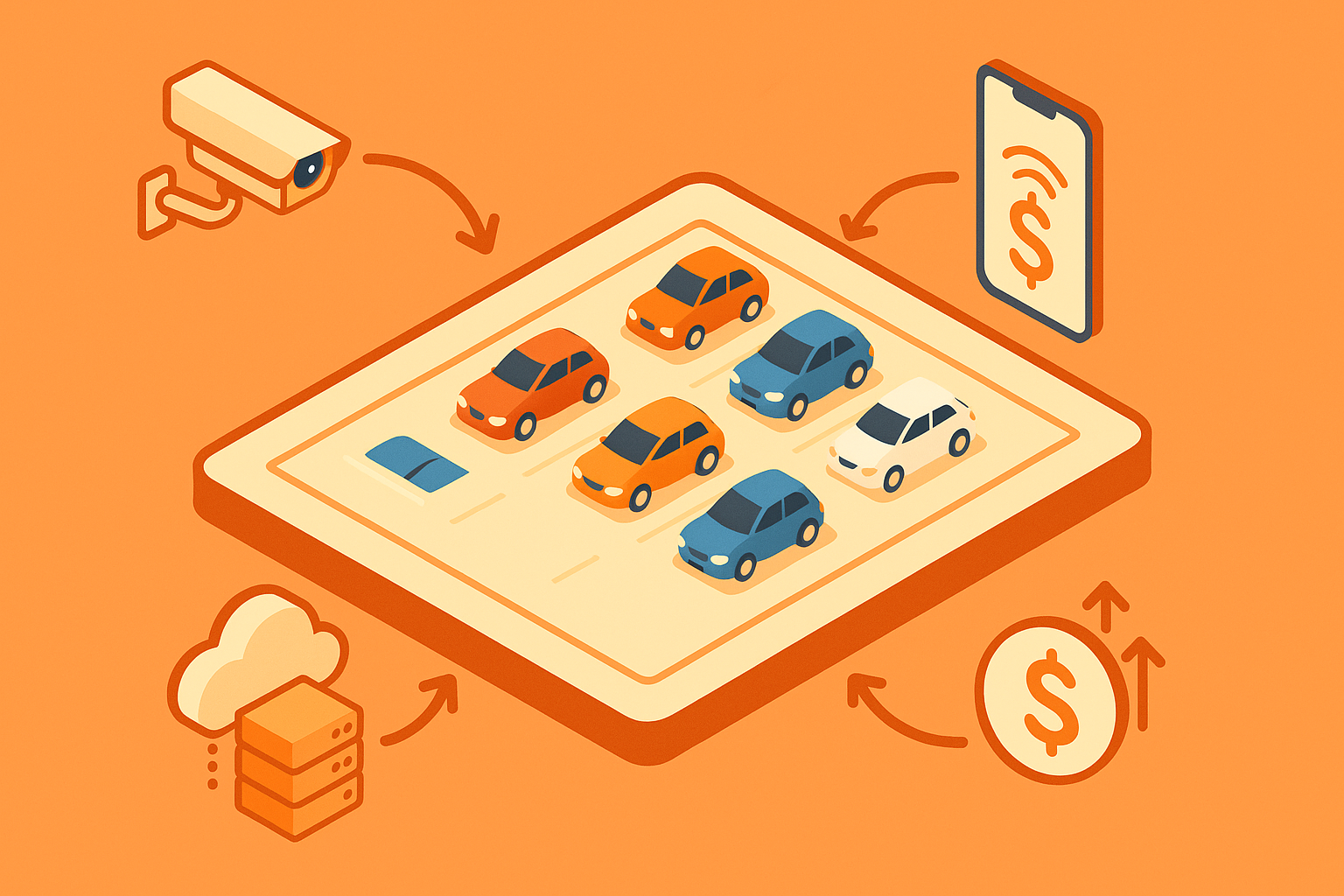
Four core technologies work together in a gateless system:
The hardware segment holds the largest share of the smart parking market through 2034. Cameras and sensors form the foundation, while software ties everything together.
AirGarage uses LPR cameras for smart, secure parking management. The system automates payments for returning drivers and flags violations for instant enforcement. This reduces violator rates and helps property owners recover lost revenue, boosting income by 15%.
Dynamic pricing has revolutionized industries like airlines and hotels. Now it's transforming parking, allowing operators to maximize revenue, optimize demand, and stay competitive in real time.
LPR technology uses cameras and optical character recognition to read license plates. This happens automatically as vehicles enter and exit.
AirGarage's proprietary license plate reading cameras are built from the ground up for maximum accuracy. The cameras provide seamless tracking of vehicle entries and exits, creating a complete record of every parking session.
The technology acts as an additional layer of security, helping to deter and quickly identify unauthorized or suspicious vehicles. When a plate doesn't match a valid payment, the system flags it immediately for enforcement.
Dynamic pricing systems adjust parking rates based on factors like time of day, demand, and local events. When a concert ends downtown, rates can increase to match demand. On slow weekday mornings, prices drop to attract more vehicles.
AirGarage partners have seen their revenue increase 12-27% after enabling the dynamic pricing engine.
AirGarage's intelligent pricing algorithms adjust rates based on demand, ensuring competitive pricing while optimizing occupancy levels. The system capitalizes on high-demand periods without requiring manual intervention.
The driver experience becomes remarkably simple:
With automatic license plate recognition, enforcing parking rules becomes more efficient. There's no gate to break, no ticket to lose, and no cash to handle.
AirGarage's web payment platform is optimized for speed and saves payment info for repeat customers. Platforms like Mistall integrate occupancy inputs from various data sources, including sensors, AI-enabled cameras, and LPR systems, allowing operators to monitor supply and demand in real time.
The financial case for gateless parking is compelling. Here's what the data shows:
| Metric | Typical Result |
|---|---|
| Net operating income increase | 20-30% |
| Revenue growth (Showboat Resort) | 25-35% |
| Operating cost reduction | 20-25% |
| Dynamic pricing revenue lift | 12-27% |
At The Showboat Resort, the largest non-casino hotel in New Jersey, broken gates and equipment malfunctions were causing revenue leakage. After implementing a gateless system with LPR cameras, "Revenue increased 25-35%" while operating costs dropped by 20-25%.
Property owners also eliminate gate maintenance costs entirely. There's no hardware to repair when a driver clips a barrier or when electronics fail in bad weather.
Enforcement decreases violator rates and recovers lost revenue. Combined with dynamic pricing, these improvements compound quickly.
Drivers notice the difference immediately. No waiting for gates to open. No fumbling for tickets. No cash-only payment machines.
At Washington Hill, "Customer satisfaction also saw a major lift. Improved signage, seamless entry/exit, and a fast web-based registration process helped the lot's rating climb from 2.3 stars to 4.25 stars."
Drivers that park with AirGarage rate the payment system an average of 4.9 stars because of its ease of use and speed.
The global smart parking systems market continues growing as urban populations expand. Currently, 55% of the world's population lives in urban areas, and this proportion is expected to rise to 68% by 2050. Drivers increasingly expect the same frictionless experience they get from ride-sharing apps.
At Tower Investments' Parkadelphia garage, "Congestion at exits disappeared" after switching to a gateless system. Manual oversight was replaced with automated enforcement and clear reporting.
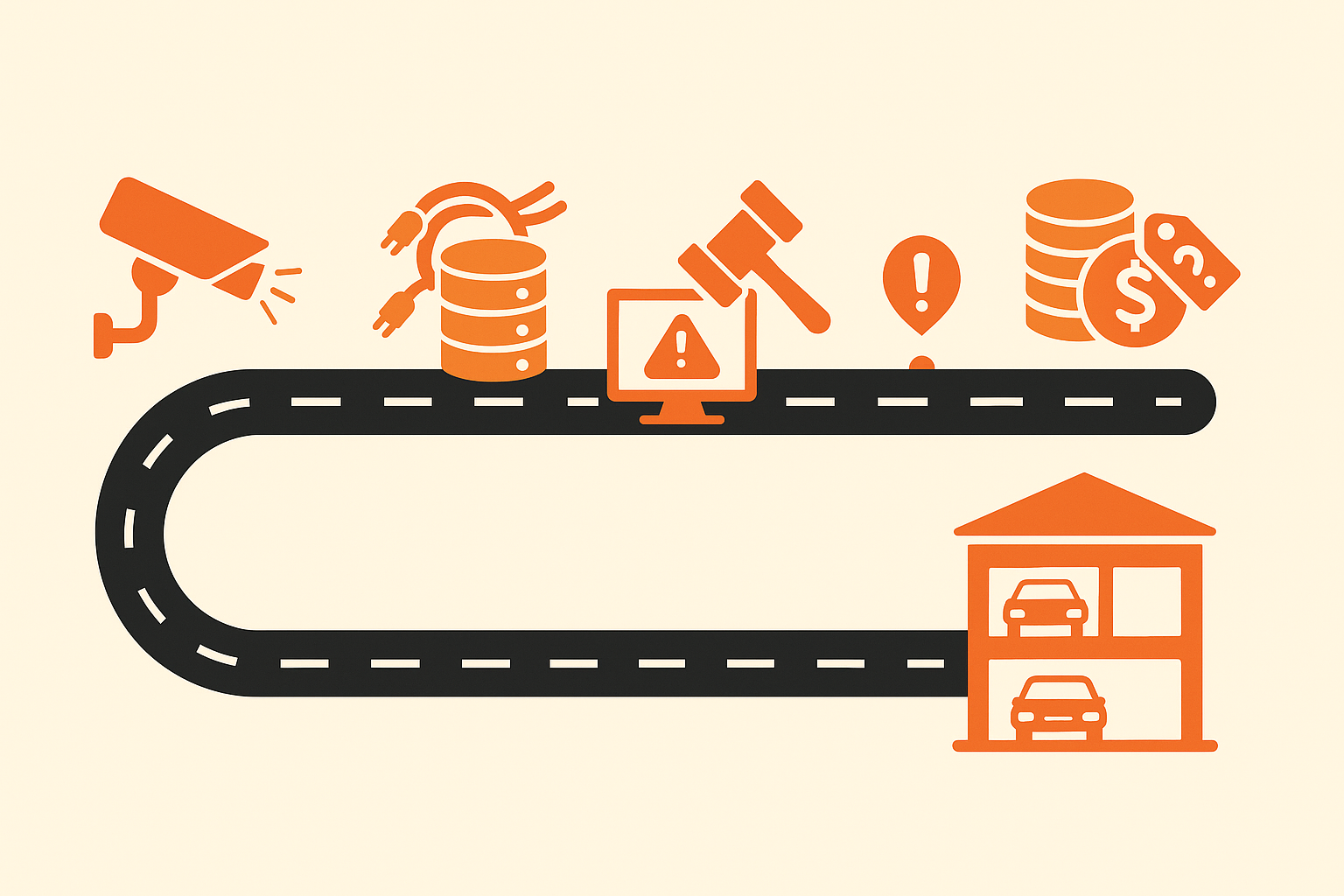
Gateless systems deliver strong results, but implementation requires attention to detail. Common challenges include:
LPR technology acts as an additional layer of security, helping to deter and quickly identify unauthorized vehicles. However, this works best when cameras are properly installed and maintained.
Several trends are shaping the future:
| Trend | Impact |
|---|---|
| AI and machine learning | Predictive demand forecasting and smarter pricing |
| EV charging integration | Parking spaces becoming charging hubs |
| IoT connectivity | Real-time sensor networks across facilities |
| Regional expansion | Asia-Pacific projected to register 20% CAGR |
The Smart Parking Market grew from USD 12.42 billion in 2024 to USD 14.33 billion in 2025. It is expected to continue growing at a CAGR of 15.08%, reaching USD 38.22 billion by 2032.
Another significant trend is the adoption of EV charging stations integrated into smart parking systems. As electric vehicle infrastructure grows, parking facilities become natural locations for charging.
Cloud-based platforms support rapid feature updates, remote monitoring, and more agile pricing strategies. Property owners who invest in flexible systems today will be positioned to adopt tomorrow's innovations.
Gateless parking has become the modern default for property owners who want to maximize revenue and minimize headaches. The technology eliminates gate maintenance, automates enforcement, and provides real-time data for smarter decisions.
The results speak for themselves: "Operational complexity was reduced. Automation and real-time reporting replaced gate maintenance, manual audits, and spreadsheet billing."
If you're considering a switch, look for a partner that offers:
AirGarage manages over 300 properties across the United States and Canada, delivering 20-30% NOI increases for parking lot and garage owners. We handle the technology, enforcement, and optimization so you can focus on your core business.
Ready to unlock untapped revenue from your parking asset? Get a proposal to see what gateless parking can do for your property.
A gateless parking system eliminates traditional gate arms, using license plate recognition cameras, mobile payments, and cloud software to manage parking operations. This system enhances efficiency by automating entry, exit, and payment processes.
License plate recognition (LPR) uses cameras and optical character recognition to automatically read vehicle plates as they enter and exit a parking facility. This technology enables seamless tracking and enforcement, reducing the need for manual intervention.
Dynamic pricing adjusts parking rates based on demand, time of day, and local events. This approach maximizes revenue by optimizing occupancy and ensuring competitive pricing, similar to strategies used in the airline and hotel industries.
AirGarage's gateless system boosts revenue by automating payments, reducing violator rates, and implementing dynamic pricing. Property owners have reported revenue increases of 20-30% and reduced operating costs by 20-25%.
Challenges include proper camera placement, data integration, system monitoring, and compliance with local regulations. Addressing these issues is crucial for successful implementation and maximizing the benefits of a gateless system.