

Modern downtown parking management systems leverage AI-powered analytics, license plate recognition, and dynamic pricing to address the reality that drivers waste over 50 hours annually searching for spots. Leading solutions like AirGarage demonstrate 23% average revenue increases through gateless operations, while platforms like Smarking report 163% revenue uplifts through intelligent pricing optimization.
• Market Growth: Parking management solutions market expanding from $4.14 billion to $4.44 billion in 2025, reaching $6.72 billion by 2029
• Revenue Impact: Full-stack operators deliver 12-27% revenue increases through dynamic pricing, with some properties seeing 44% uplifts
• Technology Adoption: License plate recognition systems enable 4x faster enforcement and 98% citation payment rates
• Space Efficiency: Comprehensive management programs reduce required parking supply by 20-60% while improving convenience
• Cost Considerations: Downtown parking construction ranges from $3,500 per surface stall to $50,000 for underground spaces
• Sensor Accuracy: Modern IoT sensors achieve 99% vehicle detection accuracy with 5+ year battery life
Downtown parking management has evolved far beyond gates and meters. With drivers wasting over 50 hours annually searching for spots in cities like Boston and Atlanta, property owners are turning to technology-driven solutions that maximize revenue while enhancing the driver experience. The commercial real estate industry's $35 billion parking opportunity demands systems that can adapt to fluctuating demand, integrate with modern payment methods, and deliver measurable NOI improvements.
Today's parking management landscape offers everything from full-stack gateless operators to AI-powered analytics platforms and sensor-based guidance systems. These solutions address the unique challenges of downtown properties where 50-70% of land in non-residential areas is allocated for parking, yet traditional management approaches leave significant revenue untapped.
Parking management systems combine hardware, software, and operational strategies to optimize parking resources, maximize revenue, and improve the user experience. For downtown properties specifically, these systems address critical pain points that traditional parking operations cannot solve.
Typical North American communities have three to six parking spaces per vehicle, including many that are seldom used. This oversupply creates massive inefficiency - for every dollar motorists spend on their vehicles, someone spends about a dollar providing parking. Yet downtown property owners struggle with congestion, enforcement challenges, and revenue leakage despite this abundance of spaces.
The transformation opportunity is substantial. Comprehensive management programs that include an appropriate combination of cost-effective strategies can usually reduce the parking supply needed at a destination by 20-60%, while improving user convenience and providing various economic, social and environmental benefits. This is particularly crucial in downtown areas where land values are highest and parking construction costs range from $3,500 per stall in surface lots to $50,000 per stall for underground garages.
Modern parking management systems solve these challenges through:
The impact extends beyond operational efficiency. By implementing intelligent parking management, downtown properties can support broader urban goals including reduced traffic congestion, lower emissions, and improved walkability - all while significantly boosting their bottom line.

The parking management industry is experiencing unprecedented growth and technological transformation. The market will grow from $4.14 billion in 2024 to $4.44 billion in 2025 at a CAGR of 7.3%, with projections reaching $6.72 billion by 2029.
Several key trends are reshaping how downtown properties approach parking:
Technology Integration: Smart city initiatives, IoT and sensor technologies, mobile applications and payment systems, and contactless solutions are becoming standard expectations rather than differentiators.
Market Dynamics: The global Smart Parking market alone was valued at $10.5 billion in 2024 and is projected to reach $33.8 billion by 2030, growing at a CAGR of 21.6%. This explosive growth reflects the shift from static, hardware-dependent systems to dynamic, software-driven solutions.
Revenue Impact: Properties implementing modern parking management systems are seeing dramatic results. Property owners are unlocking 30% to 40% increases in parking yield by moving to technology-driven models that prioritize driver experience.
When evaluating parking management systems for downtown properties, consider these essential criteria:
Must-Have Capabilities:
Deal-Breakers to Avoid:
Financial Considerations:
As one parking management expert notes, a rule of thumb suggests setting meter rates such that 15 percent of spaces, or one in every eight spaces, will be open at any one time. This optimal occupancy rate maximizes both revenue and customer satisfaction.
Full-stack parking operators represent a paradigm shift from traditional gate-and-ticket systems. These companies combine license plate recognition technology, dynamic pricing algorithms, and comprehensive on-ground operations to transform parking assets into sophisticated revenue generators. Parking garage owners that switch from legacy parking management companies to modern operators see an average 23% revenue increase.
AirGarage has emerged as a leader in gateless parking management, operating over 300 properties nationwide. Their approach eliminates expensive hardware while implementing sophisticated pricing and enforcement strategies. AirGarage partners have seen revenue increase 12-27% after enabling their dynamic pricing engine.
The company's full-stack solution includes:
In a Charleston case study, AirGarage's dynamic pricing system achieved a 44% revenue uplift. As one client testimonial states: "AirGarage has materially exceeded their projected revenues when we converted our parking lot operations from traditional gate arms to license plate recognition and algorithm based dynamic pricing."
Flash Parking takes a comprehensive platform approach, offering both technology and Hardware-as-a-Service models. Their AI-enabled Vision cameras deliver frictionless access through industry-leading license plate recognition, while flexible gate control maximizes safety.
Key metrics include:
Flash's HaaS model allows properties to preserve CapEx while maximizing tenant experience. One major real estate leader saw a 23% revenue lift and 20% cost reduction after implementation.
Metropolis focuses on creating a checkout-free parking experience for mixed-use properties. Their technology recognizes vehicles automatically as they arrive, eliminating tickets and key fobs entirely.
Their tiered pricing model includes:
Metropolis positions itself as replacing all parking revenue systems for a fraction of traditional costs, making it particularly attractive for downtown properties looking to modernize without major capital investment.
Data analytics and dynamic pricing have become essential tools for maximizing parking revenue. These SaaS platforms layer sophisticated algorithms and business intelligence over existing hardware, enabling properties to optimize pricing in real-time. An average revenue uplift of 163% has been documented across implementations.
Smarking operates as a comprehensive business intelligence platform managing over 2,500 locations. Their system centralizes all parking data on one dashboard in real-time, eliminating manual data aggregation. The industry's first dynamic pricing tool automatically sets optimal rates based on real-time demand, updated multiple times per day.
Key capabilities include:
As one client testimonial notes: "It used to take me 3 hours per day to run the reports from our PARCS. Now I can get them immediately. I can also make staffing and pricing decisions in real-time."
OPS Parking leverages AI to provide automated pricing suggestions that help boost revenue during busy times while offering competitive rates during off-peak hours. Their unified dashboard manages everything from maintenance to live occupancy data.
The platform includes:
Built-in predictive analytics offer suggestions for price adjustments, targeted enforcement, and maintenance scheduling. One user reports: "Their AI suggestions have been surprisingly spot-on for adjusting prices on busy weekends."
ParqEx provides comprehensive reporting tools that over 10,000 properties use to optimize their parking operations. Their platform offers full transparency with instantaneous analytics for revenue and utilization forecasting.
The system features:
This granular data enables property managers to identify underutilized periods and adjust pricing strategies accordingly, turning previously dead zones into revenue opportunities.
License plate recognition technology has been used for decades by law enforcement agencies worldwide, but its application in parking enforcement has revolutionized compliance and revenue protection. Modern LPR systems enable parking enforcement officers to quickly enforce on-street spaces and off-street lots, discover scofflaw vehicles, and enforce time-limited zones.
Passport's Digital Enforcement Solution has been rapidly adopted, with more than 20 cities launching the system in just the last 12 months, including Tampa, Dallas, and Jackson. The platform enables enforcement officers to operate 4x faster, issuing citations in under one minute.
Key metrics demonstrate the system's effectiveness:
The solution integrates real-time GPS data with LPR technology for comprehensive monitoring of paid vehicles and time spent at the curb.
Motorola's LPR camera systems deployed in fixed, portable, and mobile configurations capture comprehensive vehicle data including license plates, make/model/color with date, time, and GPS location.
Their customizable, open-API architecture easily integrates with leading pay stations, pay-by-cell, and access control parking vendors. The ClientPortal software provides advanced analytics and alerting capabilities that help parking operations efficiently manage and increase revenue.
PLACA.AI's high-speed license plate scanning allows enforcement teams to catch more violations in less time. The platform automates parking validation, reducing the need for manual inspections.
Key features include:
The system maintains detailed patrol history and automatically keeps records of vehicles with date and time stamps for future inspection needs.
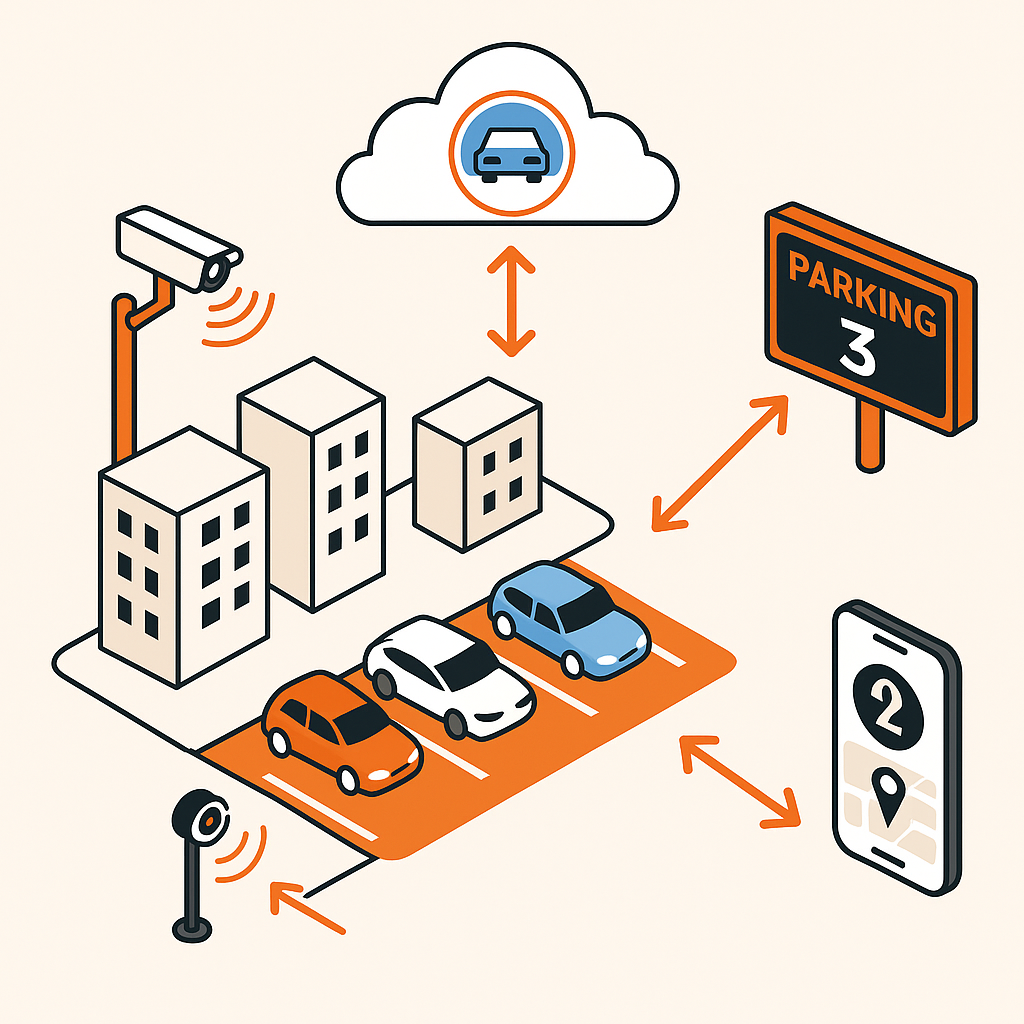
Sensor-driven parking systems represent the cutting edge of occupancy management, with one sensor detecting up to 100 parking spaces while using AI to analyze occupancy in real time. These systems dramatically reduce the time drivers spend searching for parking - a critical consideration when drivers waste about 100 hours annually looking for parking spaces in cities with heavy traffic.
Cleverciti's collaboration with Deutsche Telekom has created an AI-supported sensor network that halves the average time spent looking for parking spaces. The system mounts optical sensors on existing infrastructure like streetlights, eliminating the need for ground-level installation.
The solution includes:
This reduction in search time translates directly to reduced emissions, less traffic congestion, and increased customer footfall for downtown retailers.
Datakorum's PARK smart parking sensor combines radar and magnetic technologies to achieve 99% accuracy in vehicle detection. The sensors use secure NB-IoT mobile communication technology for real-time data transmission without requiring a private network.
Key specifications:
The comprehensive solution includes TRANGO IoT Device Management software for fleet management and real-time monitoring of parking space availability.
Mistall's Vision platform consolidates occupancy data from various sources - sensors, AI-enabled cameras, LPR systems, and transactional records - into a single cloud-hosted dashboard. This unified view enables strategic planning and operational efficiency improvements.
CleverPortal offers complete parking intelligence from curb to garage, including:
These platforms transform raw sensor data into actionable insights, enabling property managers to make data-driven decisions about pricing, enforcement, and capacity planning.
Selecting the optimal parking management system requires careful evaluation of your property's specific needs, revenue goals, and operational constraints. The average property owner that switches to AirGarage from a legacy parking operator sees a 23% NOI increase in the first year.
Key takeaways for downtown property owners:
For maximum revenue impact, consider full-stack operators like AirGarage that combine dynamic pricing, LPR enforcement, and comprehensive operations. Their proven track record of 20-30% NOI increases across 300+ properties demonstrates the power of integrated solutions.
If you have existing infrastructure, analytics platforms like Smarking can layer sophisticated pricing algorithms over your current hardware, delivering significant revenue uplifts without major capital investment.
For properties prioritizing the customer experience, sensor-based guidance systems reduce search time while providing valuable occupancy data for operational optimization.
The parking management landscape will continue evolving rapidly. Properties that embrace data-driven, technology-enabled solutions today position themselves to capture the full value of their parking assets while meeting the expectations of modern drivers.
Whether you manage a single garage or a portfolio of downtown properties, the right parking management system can transform your parking operations from a necessary amenity into a strategic revenue generator. With comprehensive management programs reducing required parking supply by 20-60% while improving convenience, the opportunity for downtown properties has never been greater.
AirGarage stands ready to help property owners navigate this transformation, offering proven technology, operational excellence, and a partnership approach that aligns incentives for long-term success. The future of downtown parking is gateless, dynamic, and data-driven - and it's available today.
Modern parking management systems optimize parking resources, maximize revenue, and improve user experience by integrating real-time occupancy tracking, dynamic pricing, and mobile payment options. These systems address congestion and enforcement challenges, leading to significant NOI improvements.
AirGarage offers a full-stack solution with license plate recognition, dynamic pricing, and 24/7 local operations. Their approach eliminates expensive hardware and has shown revenue increases of 12-27% for partners, making it a leader in gateless parking management.
Key trends include technology integration with IoT and mobile applications, a shift towards software-driven solutions, and a focus on enhancing driver experience. The market is projected to grow significantly, reflecting these technological advancements.
Smarking uses business intelligence and dynamic pricing tools to optimize parking rates based on real-time demand. This approach has led to an average revenue uplift of 163% by enabling properties to make data-driven pricing and operational decisions.
IoT sensors provide real-time occupancy data, reducing search times and improving space utilization. Systems like Cleverciti's AI-supported sensors halve the time spent looking for parking, enhancing efficiency and reducing emissions.