

Parking revenue leakage occurs when money owed never reaches your bank account due to cash skimming, uncollected fees, software errors, or weak enforcement. Audits reveal 74% of meters have reporting discrepancies, while cash receipt fraud averages 15 months before detection, directly eroding net operating income and asset value.
Parking revenue leakage hurts NOI because every unpaid or unreported dollar erodes asset value. In this guide, we define parking revenue leakage, show why it spikes in 2026, and offer data-backed fixes.
What is parking revenue leakage? It's any gap between the amount drivers should pay and the dollars that actually reach your bank account. Cash slippage and parking fraud involve any money slipping through the cracks of your business. This includes cash skimming, uncollected fees, software mis-reports, or lax enforcement.
The numbers are sobering. Cash receipt frauds account for 23% of all occupational fraud in the United States and Canada. These schemes average about 15 months before detection. Every leaked dollar lowers net operating income and asset value.
The parking industry is a $131 billion industry employing 581,000 workers. It represents 1% of GDP in the United States. With that scale, even small percentages of leakage translate into massive losses across the sector.
In 2026, leakage risks are growing. Urbanization continues to intensify demand. Yet many operators still rely on outdated systems, manual processes, and cash-heavy operations. The good news? Technology now exists to close nearly every revenue gap.
Key takeaway: Revenue leakage directly erodes your asset value. Identifying and plugging leaks should be a top priority for every parking owner.
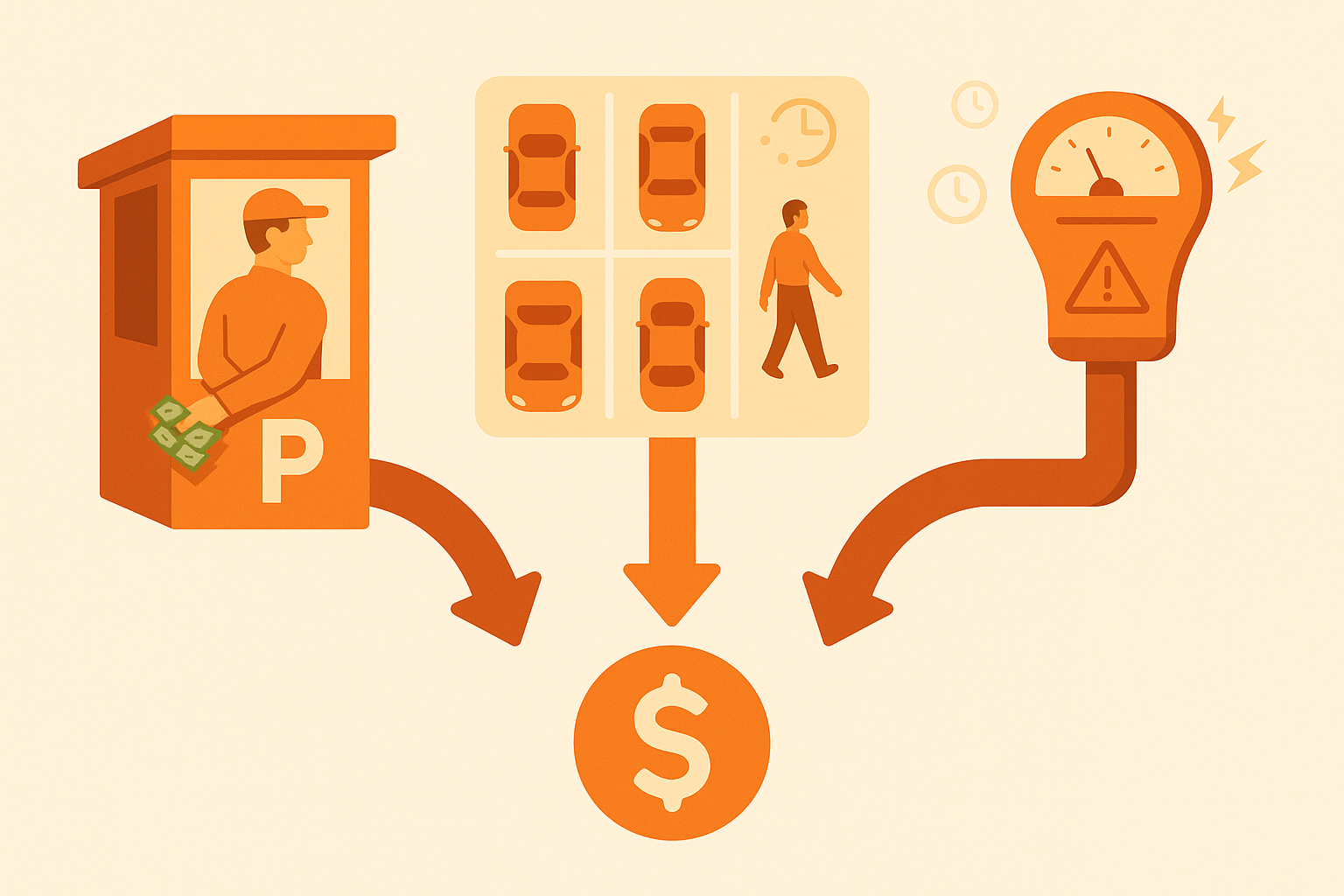
Parking revenue leakage stems from three main categories: cash handling issues, enforcement gaps, and outdated technology. Let's break each one down.
Audits consistently reveal the same problems. A City of Albuquerque audit found significant inconsistencies including lack of reconciliations, undocumented discrepancies, infrequent revenue collection, and unreliable pay station data.
The Massachusetts Bay Transportation Authority didn't properly safeguard keys that permitted access to more than $22 million in cash collected at its parking facilities. A New York City DOT audit found reporting discrepancies in 74% of meters sampled.
Manual cash creates significant risk. Skimming schemes are difficult to prevent and detect because theft occurs before the cash receipt is recorded in a receipt book or accounting system. This leaves little audit trail or evidence of a crime.
Real examples show how this plays out:
Arizona governments alone have lost $3.2 million due to cash receipt fraud over 11 years.
Enforcement gaps happen when your team can't catch violations in real time. Manual processes create delays. There's often no efficient way to verify who's paid and who hasn't.
The financial impact is staggering. Over the past decade, LA's parking enforcement division has accumulated more than $315 million in losses tied to managing its citation system.
Weak enforcement also signals to drivers that payment is optional. Compliance drops. Revenue follows.
Software and hardware issues create invisible leaks. The NYC audit attributed meter discrepancies to deficiencies in Parkeon's meter reporting software. Equipment problems compound the issue.
Research from the Colorado E470 Public Highway Authority found that 8% of toll revenue was lost because of unbillable revenue from misread or illegible license plates. Similar issues affect parking operations using outdated LPR systems.
Older single-space meters have traditionally been very limited in their ability to accept multiple payment options, adjust prices, report revenue collected, and monitor utilization.
Audits uncover specific, quantified losses. Here are real-world examples:
| Location | Finding | Amount |
|---|---|---|
| Albuquerque Pay Stations | Uncollected revenue sitting in pay stations | $38,500 |
| BART Parking Garage | Recovered from unpaid parking permit fees | $62,580 |
| Albuquerque 2012 | Parking meter revenue drop in one year | 7% |
The City of Albuquerque discovered pay stations collectively contained approximately $38,500 in uncollected revenue because revenue hadn't been collected regularly since January 2016.
In one case, BART's Inspector General recovered $62,580 from an auto-manufacturing corporation that used BART parking spaces without proper payment. BART officials used video evidence to substantiate the claim. Since June 2021, BART has received $4 million in parking fees under agreements with that corporation.
These audits prove that leakage isn't theoretical. It's happening at your facility right now.
Three technologies lead the way: license plate recognition, dynamic pricing, and real-time dashboards. Each addresses different leakage sources.
License Plate Readers provide law enforcement and parking operators with the ability to check license plates against databases for tolling and enforcing parking regulations. A practical data-driven dynamic pricing methodology can increase weekly revenue by 15%.
AirGarage partners have seen their revenue increase 12-27% after enabling dynamic pricing.
LPR technology uses cameras and optical character recognition to read license plates. This enables automated monitoring of every vehicle entering and exiting your facility.
Before using LPR technology, Aspen, Colorado could only check each parking space twice a week by chalking tires. With a GPS and camera-based LPR system, Aspen could check all 3,000 residential-zone parking spaces two to three times a day with fewer staff members.
In Fort Lauderdale, Florida, within the first eight months of using an LPR system, the city booted more than 600 scofflaw vehicles and collected more than $200,000 in unpaid fines.
Advances in machine learning, computer vision, and AI have made LPR systems more affordable and more effective.
Dynamic pricing adjusts rates based on demand, time of day, and local events. This approach captures peak-hour value while attracting customers during slower periods.
"Over the first two months of implementation, revenues increased by 100 percent each month, before settling at around 35 percent per month," according to a downtown Los Angeles case study. Profits increased over 50% per month.
Cities like San Francisco and Los Angeles have implemented dynamic pricing pilot programs that showed measurable reductions in congestion and improved overall utilization.
Cashless payments reduce fraud risk entirely. It's estimated that fewer than 10% of parking transactions involve cash today. Operators who've made the switch report reducing labor costs by 20-30% by eliminating cash handling.
Technology alone isn't enough. You need governance controls and regular audits.
Many things can only be detected through an audit. These include parking management agreement compliance issues, cash deposit discrepancies, inaccurate charges, improper coupon and validation use, and monthly parking access system errors.
Best practices for preventing leakage:
Discrepancies between the dates that revenue is collected and when funds hit the bank can indicate revenue malfeasance. Regular audits catch these patterns before losses compound.
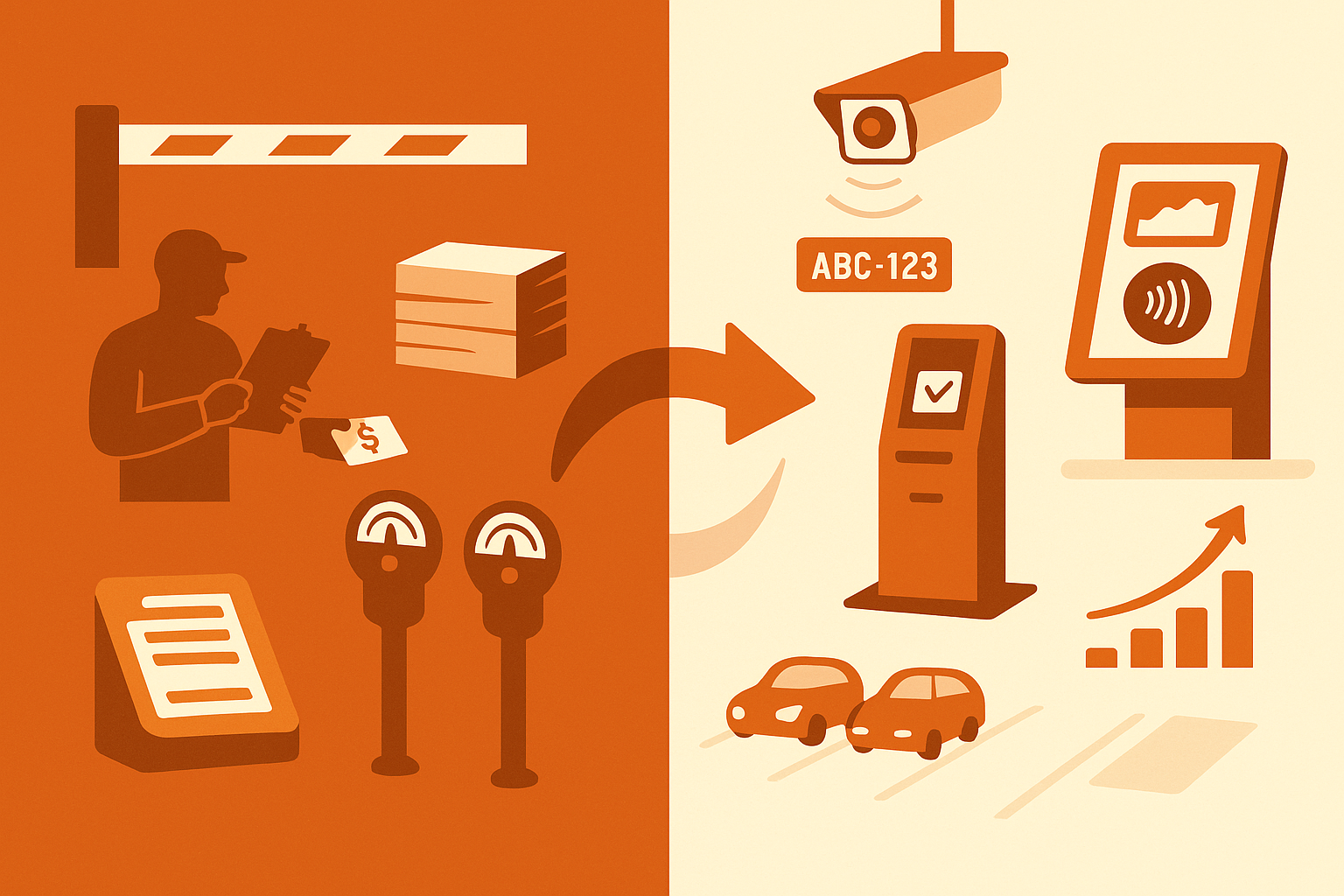
When evaluating parking management partners, focus on these criteria:
| Criteria | Legacy Model | Modern Full-Stack Model |
|---|---|---|
| Revenue tracking | Monthly reports, manual | Real-time dashboards |
| Enforcement | Manual patrols | Automated LPR |
| Pricing | Static rates | Dynamic, demand-based |
| Cash handling | High risk | Cashless or minimal |
| Hardware costs | Gates, meters, maintenance | Camera-based, low maintenance |
| Transparency | Delayed reporting | Instant access |
Look for partners offering 24/7 enforcement capabilities. This modernizes enforcement processes and offloads staff work.
Consider customer satisfaction scores. Drivers that park with AirGarage rate the payment system an average of 4.9 stars because of its ease of use and speed. Happy drivers mean better compliance.
AirGarage handles proactive parking management, local operations, and advanced technology to drive revenue growth. The platform combines LPR enforcement, dynamic pricing, and real-time analytics in one full-stack solution.
"AirGarage has materially exceeded their projected revenues when we converted our parking lot operations from traditional gate arms to license plate recognition and algorithm based dynamic pricing," one partner reported.
Revenue leakage is preventable. Here's your action plan:
As one AirGarage partner put it: "It runs like a well-oiled machine. We hardly ticket anybody. The technology just works."
Ready to stop revenue leakage at your property? Learn how AirGarage's full-stack parking management can maximize your NOI while eliminating the gaps that drain your bottom line.
Parking revenue leakage refers to the gap between the expected revenue from parking fees and the actual amount collected. This can occur due to cash slippage, fraud, software errors, or enforcement gaps, leading to reduced net operating income and asset value.
In 2026, parking revenue leakage is a growing concern due to increased urbanization and reliance on outdated systems. These factors, combined with manual processes and cash-heavy operations, exacerbate the risk of revenue loss, making it crucial for parking operators to adopt modern technologies to mitigate these issues.
Technologies like license plate recognition, dynamic pricing, and real-time dashboards can significantly reduce parking revenue leakage. These tools automate enforcement, optimize pricing based on demand, and provide instant data access, helping operators close revenue gaps and improve compliance.
Regular audits are essential in identifying and preventing parking revenue leakage. They help uncover discrepancies in cash handling, enforcement, and technology use, allowing operators to address issues before they lead to significant financial losses.
AirGarage offers a full-stack parking management solution that includes license plate recognition, dynamic pricing, and real-time analytics. This approach helps property owners maximize revenue, reduce overhead, and eliminate revenue leaks by modernizing parking operations and ensuring compliance.