

License plate recognition (LPR) parking uses cameras and optical character recognition to automatically identify vehicles entering and exiting commercial garages, eliminating physical barriers like gates and tickets. This technology reduces violator rates and boosts income by up to 15% while cutting hardware and labor costs, with some operators seeing 20-30% increases in net operating income after implementation.
• LPR systems capture and process license plates in real-time, enabling automatic billing and access control without physical tickets or gates
• Commercial garages typically see revenue increases of 15-30% through better payment capture and reduced violations
• Modern LPR cameras achieve 90-95% accuracy rates across varying lighting conditions and angles
• Gateless systems eliminate maintenance costs for gates, ticket dispensers, and payment machines while improving traffic flow
• Real-time data on occupancy, turnover, and duration enables dynamic pricing strategies that can boost revenue by an additional 12-27%
• Full-stack operators like AirGarage provide the technology, enforcement, and operations management as a complete service package
Picture rush hour at a busy commercial garage: cars queue behind a jammed gate, drivers fumble with lost tickets, and staff scramble to clear the bottleneck. License plate recognition parking eliminates that friction by replacing physical barriers with cameras that read every plate in real time. For garage owners, the payoff is faster throughput, lower operating costs, and stronger revenue capture. This guide walks you through how the technology works, the gains you can expect, and what to evaluate before making the switch.
License plate recognition (LPR) uses cameras and optical character recognition to read plates as vehicles arrive and depart (FHWA). The captured text is matched against a cloud database, enabling automatic billing, permit validation, and enforcement without tickets or gates. This frictionless approach delivers streamlined access control, enforcement, and data optimization that traditional systems simply cannot match.
Across the United States, LPR systems are eliminating physical barriers at parking facilities of all sizes. Gateless parking improves traffic flow, reduces maintenance headaches, and gives owners real-time visibility into occupancy and revenue. For commercial garages managing hundreds or thousands of spaces, these benefits compound quickly.
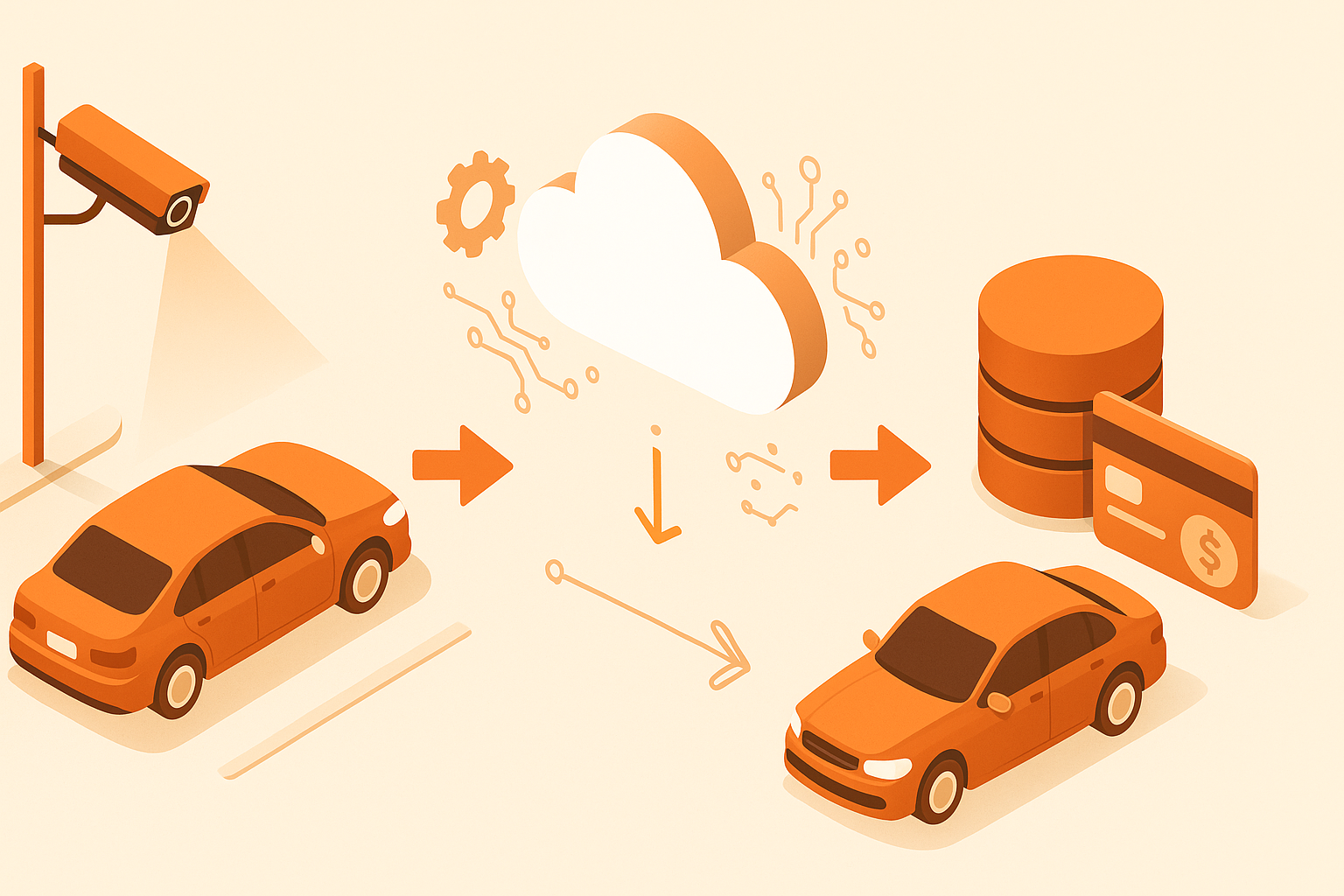
At its core, an LPR system combines specialized cameras, image processing software, and AI algorithms. Cameras capture images of approaching vehicles, and optical character recognition converts plate information into machine-readable data. AI then verifies each plate against a parking database, determining whether the vehicle is authorized, flagged, or requires payment.
Modern systems handle a wide range of plate types and conditions, including standard plates from all 50 states, vanity plates, temporary tags, and even damaged or partially obscured plates. Image processing algorithms enable accurate recognition by combining OCR with pattern recognition and machine learning.
Mounting options include wall or roof mounts, pole mounts, and ground-mounted cabinets with built-in lighting for low-light environments (Precise ParkLink). Infrared illumination allows cameras to capture plates around the clock, regardless of ambient lighting.
Here is a typical entry-to-exit journey in a gateless garage:
The result is a ticket-free, touchless experience for drivers and a steady stream of accurate data for operators.
Gateless LPR systems deliver measurable improvements across revenue, efficiency, and customer experience.
Tower Investments experienced these gains firsthand. After switching to AirGarage's gateless system at their 800-space Parkadelphia garage, "Revenue grew 20% month over month" (Tower Investments case study). Congestion at exits disappeared, and automated enforcement replaced manual oversight.
Key takeaway: Gateless LPR can raise net operating income by 20 to 30% while cutting hardware and labor costs.
LPR data becomes even more powerful when paired with dynamic pricing. By analyzing historical patterns, operators can predict peak hours and adjust rates accordingly. AirGarage's dynamic pricing engine increases partner revenue by 12 to 27% by raising prices during high demand and lowering them during slower periods.
Key inputs for dynamic pricing include:
This synergy benefits drivers too. Fair, responsive pricing means parkers are not overpaying during slow periods, improving satisfaction and repeat visits.
A successful deployment requires attention to camera selection, lighting, positioning, privacy compliance, and expected accuracy.
Industry guidance recommends accuracy of at least 90% for a viable LPR deployment. However, every percentage point below 100% represents missed revenue and billing exceptions.
Real-world testing reveals what top systems achieve. An IoT parking study showed 95% accuracy in daylight, 90% in low light, and 93% at 45-degree angles. FlashVision reports 95% LPR accuracy and 98% car-counting accuracy across its deployments.
Reconciliation rate, the overall average of successful license plate reads, is a better metric than raw accuracy because it accounts for plates obscured by snow, dirt, or damage. Higher reconciliation rates mean fewer billing disputes and stronger revenue control.
Choosing the right partner requires comparing accuracy, integration, and total cost of ownership.
| Criteria | AirGarage | FlashParking | National Parking (Parkify) |
|---|---|---|---|
| Camera design | Proprietary cameras built for maximum accuracy | 48-megapixel AI camera with dual illumination | AI-powered system, no upfront investment |
| Enforcement model | Full-service gateless enforcement | Integrates with existing access control | Cloud-based, continuous operation |
| Data access | Real-time Partner Dashboard | FLASH OS platform | Real-time occupancy tracking |
| Unique strength | Aligned incentives as full-stack operator | Extensive North American vehicle training data | Eliminates gate equipment entirely |
Traditional LPR often falls short in complex parking environments (FlashParking). AirGarage differentiates by managing the entire operation, aligning its incentives with owners to maximize net operating income rather than simply selling hardware.
Faster vehicle entry and exit eliminates bottlenecks from ticket dispensing or gate malfunctions, a common pain point with legacy systems.
Total cost of ownership varies widely depending on whether you purchase hardware outright, lease as a service, or rely on a full-stack operator.
| Cost component | Traditional gated system | Hardware-as-a-Service (HaaS) | Full-stack operator (AirGarage) |
|---|---|---|---|
| Upfront hardware | Gates, dispensers, payment machines | Minimal or none | None |
| Maintenance | Ongoing repairs, parts, labor | Included in subscription | Included |
| Software fees | Separate license or subscription | Bundled | Bundled |
| Enforcement labor | In-house or contracted staff | Varies | Included |
HaaS eliminates enormous capital expenditures and unexpected maintenance costs. Motorola offers cameras outright or as-a-service to give operators flexibility.
AirGarage goes further by eliminating gate equipment, ticket dispensers, and payment machines entirely, removing both upfront and ongoing hardware costs.
Real-world outcomes illustrate the technology's impact across different property types.
Tower Investments, Parkadelphia (Philadelphia, PA)
An 800-space downtown garage plagued by gate malfunctions and unreliable cash tracking partnered with AirGarage. "Revenue grew 20% month over month," exit congestion disappeared, and automated enforcement replaced manual oversight. Tower Investments expanded the partnership to The Showboat Resort in Atlantic City (Tower Investments case study).
BPG 360 (National portfolio)
This national developer struggled with spreadsheet billing and a failing gated LPR system. After switching to AirGarage's gateless platform, "Net operating income increased by 20 to 30%, driven by improved billing accuracy, better pricing, and more consistent enforcement" (BPG 360 case study).
Washington Hill (Baltimore, MD)
Owner Dave Holmes was skeptical of gateless parking but saw "revenue increase by 19.5% in the first few months" and 28% growth within two years. Customer satisfaction jumped from 2.3 to 4.25 stars thanks to seamless entry and exit (Washington Hill case study).
433 Bridge Street (Grand Rapids, MI)
A family-run facility with outdated coin-fed machines partnered with AirGarage and saw a dramatic increase in both revenue and efficiency. Within six months, the manager transitioned two additional properties to the platform.
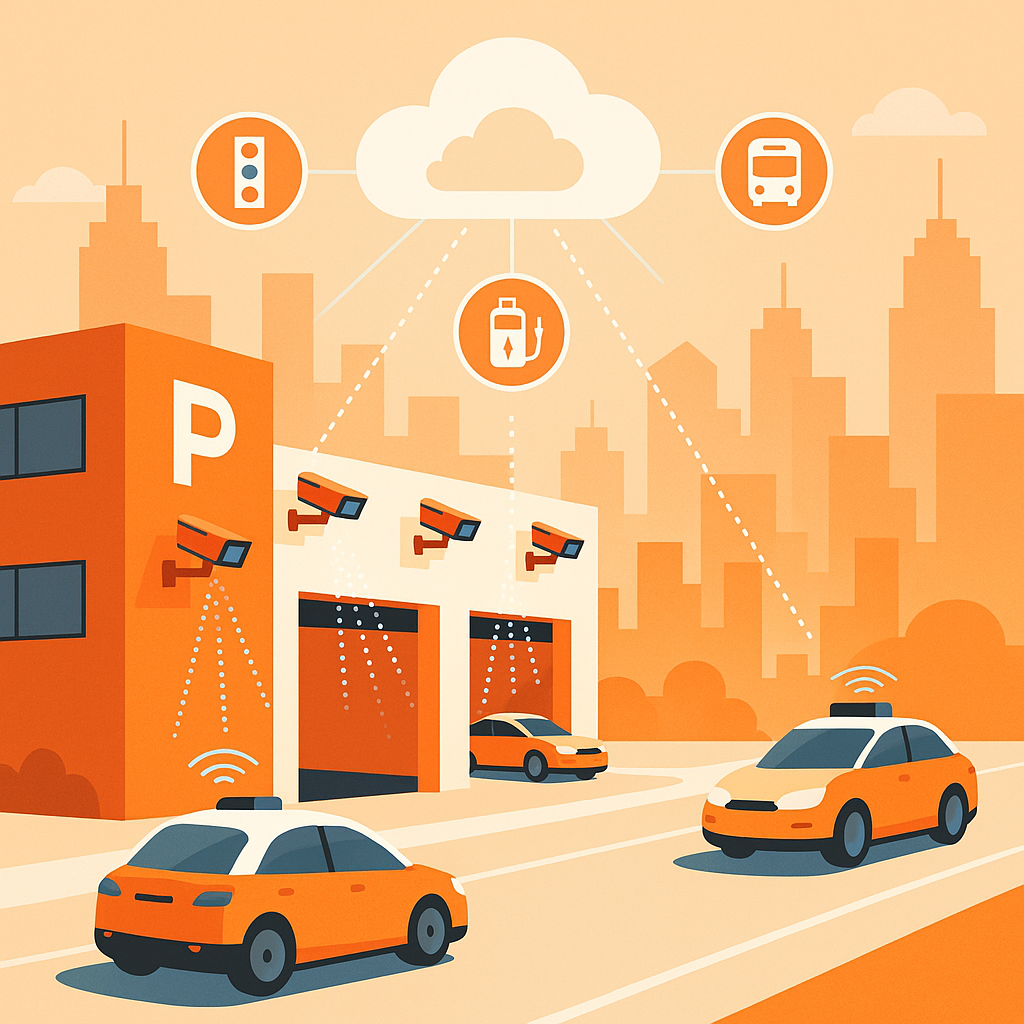
LPR is not just about parking today. The same cameras and data pipelines will support tomorrow's mobility infrastructure.
Shared autonomous vehicles now operate in more than ten cities worldwide, including Beijing, Phoenix, and San Francisco. As AVs proliferate, garages will need to communicate with vehicles to coordinate entry, charging, and payment. LPR systems already capture plate data that can integrate with vehicle-to-infrastructure (V2I) networks.
AI-powered data analysis tools enable operators to extract insights on parking patterns, traffic flow, and payment methods. These insights will become even more valuable as cities adopt smart-city frameworks that link parking, transit, and micromobility.
Scalable system design supports applications in parking management, toll collection, and traffic monitoring. Garage owners who invest in LPR today are building infrastructure that will remain relevant as mobility evolves.
License plate recognition parking delivers faster throughput, lower costs, and stronger revenue capture for commercial garages. The technology has matured to the point where accuracy exceeds 90% under most conditions, and full-stack operators like AirGarage remove hardware and staffing headaches entirely.
Before you commit, evaluate camera quality, lighting, positioning, and vendor track record. Demand transparency on reconciliation rates and total cost of ownership. And consider how dynamic pricing can layer on top of LPR data to unlock additional revenue.
As Kim Funkhouser, Operations Manager at Jefferson Apartment Group, put it: "The expertise that your team has brought in terms of problem solving and ways to set up parking and adapt to changes in needs has been super valuable" (AirGarage.com).
Dan Holmes of Washington Hill Parking summed up the outcome: "It runs like a well-oiled machine. We hardly ticket anybody. The technology just works" (AirGarage.com).
If you're ready to explore gateless parking for your garage, visit AirGarage's parking garages page to see how we help owners maximize net operating income.
License plate recognition (LPR) uses cameras and optical character recognition to read vehicle plates as they enter and exit parking facilities. This technology automates billing, permit validation, and enforcement, eliminating the need for physical tickets or gates.
A gateless LPR system uses cameras to capture vehicle plates, which are then processed by AI to verify authorization and automate payment. This system improves traffic flow and reduces maintenance by eliminating physical barriers.
LPR systems enhance revenue recovery by reducing violator rates and automating payment collection. They also lower operational costs by eliminating the need for gate equipment and manual enforcement, while providing real-time data for better decision-making.
AirGarage offers a full-stack solution with proprietary cameras and a focus on maximizing net operating income. Unlike traditional systems, AirGarage manages the entire operation, aligning incentives with garage owners to optimize revenue and efficiency.
Key considerations include camera quality, lighting, positioning, privacy compliance, and expected accuracy. It's important to select a system with AI-powered software for high accuracy and ensure compliance with regulations.