

Camera-based parking systems increase revenue by automating payment collection, enabling dynamic pricing based on real-time occupancy data, and reducing operational costs. License plate recognition captures 95% accuracy in daylight, converting unpaid stays into billable events while eliminating expensive gate hardware that can cost $470,000 over 10 years.
A camera-based parking system lets owners see every vehicle, charge automatically, and price dynamically. What was once a static asset becomes a real-time profit center. License plate recognition (LPR) cameras detect entries and exits, automate billing, and feed occupancy data into intelligent pricing engines. The result is higher revenue, lower costs, and a frictionless experience for drivers.
This guide explains the revenue levers a camera-based system unlocks, compares gateless models to traditional gated setups, and shows how AirGarage can help you capture untapped parking income.
Urban parking management is a growing challenge. Vehicle numbers keep rising while parking space stays limited. Traditional methods often fail during peak hours, leading to inefficiencies and revenue losses.
A camera-based parking system uses license plate recognition, optical character recognition, and real-time sensors to solve these problems. The technology captures every plate, links it to a payment method, and calculates fares automatically. Pilot implementations show a 30% reduction in billing discrepancies and a 20% surge in revenue generation for parking operators.
The market reflects this momentum. The North America smart parking market is expected to reach $9.62 billion by 2030, growing at a 20.5% compound annual rate. Cameras and LPR hardware are among the fastest-growing segments because they detect vehicles in motion, integrate with payment platforms, and require less physical infrastructure than gates or meters.
Tower Investments experienced this firsthand. Their Parkadelphia garage in downtown Philadelphia struggled with gate malfunctions and unreliable cash tracking. After switching to AirGarage's gateless, camera-powered system, "revenue grew 20% month over month," and congestion at exits disappeared.
Key takeaway: Camera-based systems replace guesswork with data, turning every entry and exit into a measurable, billable event.
License plate recognition converts unpaid stays into paid ones by automatically identifying vehicles and comparing them to a database of authorized parkers.
LPR technology enables enforcement officers to quickly enforce on-street spaces and off-street lots, discover scofflaw vehicles to collect outstanding fines, and enforce time-limited zones. LPR cameras capture license plates, make, model, color, date, time, and GPS location. When a vehicle overstays or fails to pay, the system triggers an alert.
Fort Lauderdale offers a compelling example. Within the first eight months of deploying LPR, the city booted more than 600 scofflaw vehicles and collected more than $200,000 in unpaid fines across 15,000 parking spaces.
AirGarage combines LPR cameras with boots-on-the-ground operations. Cameras monitor driver activity, capture plates, and compare them to authorized vehicles. When a violation occurs, AirGarage's network is instantly alerted. This enhanced enforcement system decreases violator rates and increases operating income by up to 15%.
Accuracy is critical for enforcement credibility. Testing under real-world conditions showed 95% accuracy in daylight, 90% in low light, and 93% for plates at 45-degree angles. Occupancy tracking achieved less than a 5% error margin compared to manual methods.
In operational deployments, 80-85% accuracy is typical for LPR systems. Dual-sensor verification, which pairs cameras with infrared sensors, reduces false reads further. The fare calculation module in advanced systems reduced billing errors by 90%, improving efficiency and revenue capture.
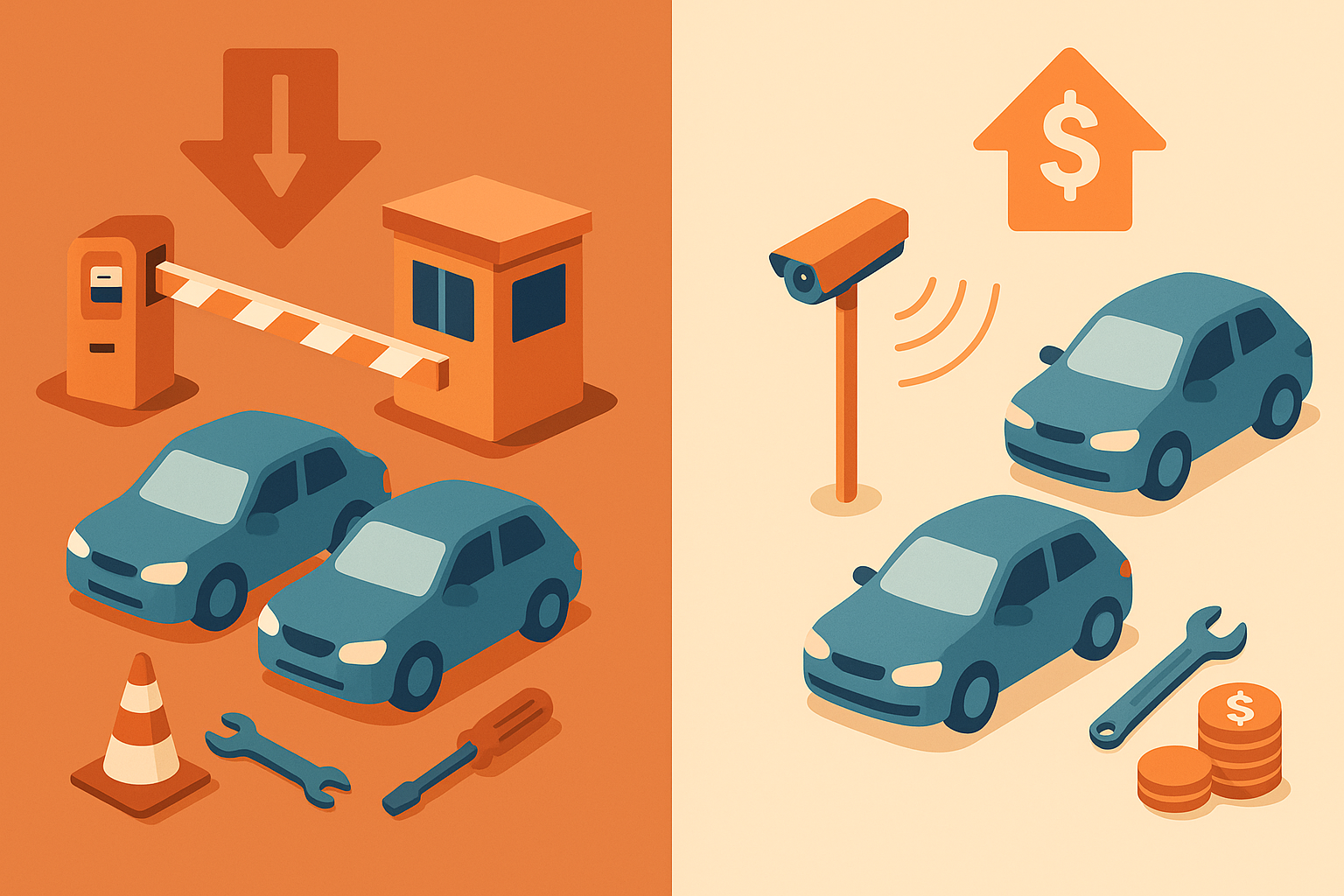
Gated systems promise 100% revenue capture because vehicles cannot exit without paying. However, the total cost of ownership often erodes that advantage.
A Premium Parking case study calculated the 10-year cost of a single gated entrance and exit:
| Cost Category | 10-Year Total |
|---|---|
| Equipment | $125,000 |
| Service calls | $50,000 |
| Maintenance and parts | $100,000 |
| Software upgrades | $60,000 |
| Paper tickets | $10,000 |
| Labor | $125,000 |
| Total | $470,000 |
Add staffing, and costs climb by an additional $40,000 per shift. "I've worked in parking for over 30 years and I have yet to see a fully automated gated PARCS system that didn't need human intervention," the case study notes.
Ungated facilities historically saw 15-25% lower revenue than the same lot when gated, because there was no way to ensure 100% payment compliance. Camera-based enforcement closes that gap. LPR systems identify non-payers, trigger citations, and create a compliance incentive without physical barriers.
BPG 360, a national real estate development firm, switched from a gated LPR system that caused traffic congestion to AirGarage's gateless model. The result: "Net operating income increased by 20-30%, driven by improved billing accuracy, better pricing, and more consistent enforcement."
Gateless systems slash operating expenses by removing the hardware that breaks most often. Gates jam, ticket dispensers malfunction, and pay stations require cash handling. Camera-based platforms automate these functions.
Rekor's vehicle recognition platform lets operators deep-dive into facility analytics by identifying low and peak volume periods on a daily, weekly, or monthly basis. This data replaces manual audits and spreadsheet billing with real-time reporting, cutting labor hours and reducing errors.
Dynamic pricing adjusts rates in real time based on demand and supply. For parking, this means charging more when lots fill up and less when spaces sit empty.
A Federal Highway Administration primer explains that technology advances allow parking managers to implement dynamic pricing, increase revenue generation, offer real-time reporting, and allow for more efficient enforcement. Cameras and sensors provide the occupancy data these algorithms need.
A Springer paper on dynamic pricing proposes an algorithm that uses real-time parking occupancy and traffic conditions within a 500-meter radius to optimize revenue. By aligning pricing with demand, the algorithm contributes to a more efficient urban transportation system.
Industry surveys confirm the impact. 34% of parking leaders expect dynamic pricing to yield additional revenue in 2025, and 47% cite technology as the top factor driving growth.
AirGarage's Intelligence Dashboard uses intelligent pricing algorithms that adjust parking rates based on demand, ensuring competitive pricing while optimizing occupancy levels. The dashboard provides instant information on property occupancy, pricing trends, and revenue.
SpotHero's Flex Rates product demonstrates the scale of dynamic coverage. It transforms traditional static rate bands into over 4,000 rates per week to cover demand for any duration and entry time. On average, partner facilities increase online revenue by 15% or more compared to standard rates.
AirGarage partners report similar gains. "AirGarage has dramatically increased revenue since switching and is very cooperative and easy to work with," says one property owner.
Drivers value convenience. A 2025 Parkopedia user experience study found that 100% of US drivers surveyed stated that having an easy-to-use in-car payment system would improve their driving experience. 97% would consider using in-car payments for parking, EV charging, fueling, and tolls if the setup were easy.
Contactless payment options, real-time parking information, and expiry reminders positively influence app adoption. Facilities with easy-to-use payment systems report up to 30% higher satisfaction ratings from customers.
AirGarage strips parking down to a lean, tech-first model with no gates or kiosks. Drivers register via a quick web-based process, and cameras handle the rest. This seamless entry and exit process helped Washington Hill Parking's rating climb from 2.3 stars to 4.25 stars after switching operators.
A Blueprint Advisory Council survey found that only 31% of CRE operators have adopted digital payment systems. Early adopters gain a competitive edge by meeting driver expectations for speed and simplicity.
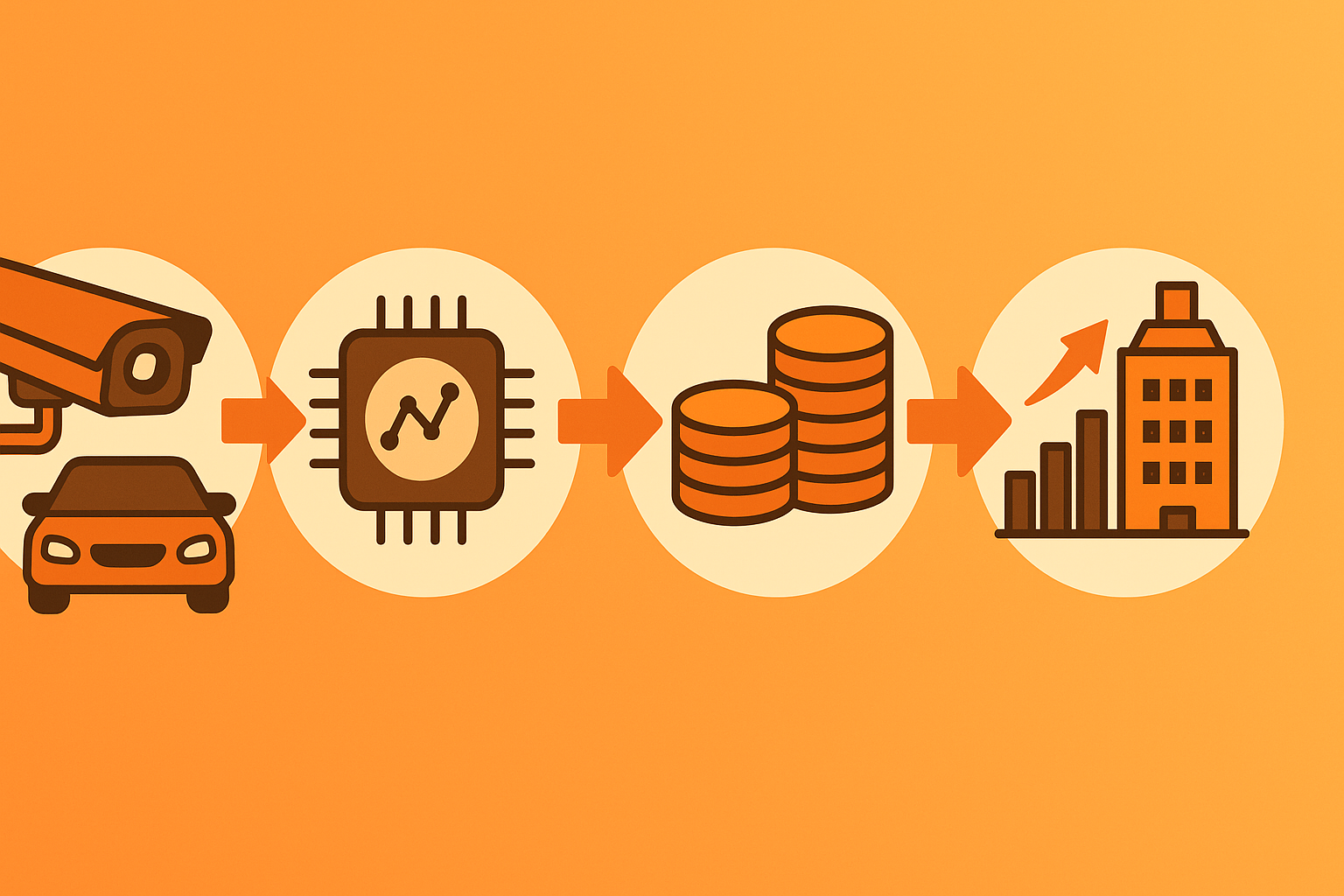
Parking technology pays for itself, sometimes in as little as two months. The metrics support aggressive investment.
AirGarage's enforcement system increases operating income by up to 15% by decreasing violator rates and recovering lost revenue through automatic charging. Combined with dynamic pricing and reduced hardware costs, the impact on net operating income (NOI) is substantial.
NOI matters because it directly affects property valuation. Real estate investors typically seek a cap rate between 5-10%. Parking can contribute up to 10% of revenue for multifamily operators, yet many owners underprice it compared to market rates. Optimizing parking pricing could boost annual NOI by over $63,000 for the average 50+ unit property in Los Angeles, or as much as $189,000 in Miami.
The parking industry is optimistic about the future. Fully 83% of operators are optimistic, and nearly half expect 10% or more revenue and location growth in 2025.
AirGarage delivers the camera-powered, gateless infrastructure to capture that growth. The Intelligence Dashboard provides real-time analytics, dynamic pricing, and automated enforcement in a single platform.
"AirGarage has dramatically increased revenue since switching and is very cooperative and easy to work with," reports one partner. Another adds, "AirGarage has saved us hundreds of thousands of dollars since we made them our parking operator, and we're hoping to expand that relationship even further."
If you own or manage a parking asset, schedule an assessment with AirGarage to see how camera-based technology can turn your lot into a high-performing revenue center.
A camera-based parking system uses license plate recognition (LPR) and optical character recognition to automate vehicle detection, billing, and enforcement, transforming parking lots into real-time profit centers.
AirGarage's system uses LPR cameras to automate billing and enforcement, reducing revenue leakage and increasing operating income by up to 15%. It also employs dynamic pricing to optimize occupancy and revenue.
Gateless parking systems eliminate the need for physical barriers, reducing maintenance costs and improving traffic flow. They use LPR technology to ensure 100% payment compliance, capturing revenue without the need for gates.
Dynamic pricing adjusts parking rates in real-time based on demand and occupancy data. This approach maximizes revenue by charging higher rates during peak times and lower rates when demand is low.
Frictionless payment systems enhance customer satisfaction by providing a seamless parking experience. Facilities with easy-to-use payment options report up to 30% higher satisfaction ratings, encouraging repeat visits.