

AirGarage's license plate recognition technology automates payment collection, flags violations instantly, and feeds dynamic pricing algorithms with real-time occupancy data. Properties using the system report 15% revenue increases from reduced violations alone, with many achieving 20-30% total growth when combined with dynamic pricing optimization.
• LPR cameras capture and convert license plates into digital credentials, enabling automated payments and instant violation detection
• Properties see 15% income boosts from violation reduction, with total revenue gains reaching 20-35% when dynamic pricing is enabled
• Gateless systems eliminate mechanical gate failures, reduce maintenance costs, and improve traffic flow compared to traditional gated operations
• Real-time occupancy data feeds pricing algorithms that increase revenue 12-27% through demand-based rate adjustments
• The Showboat Resort achieved 25-35% revenue growth while cutting operating costs by 20-25% after switching to LPR
• Washington Hill Parking grew revenue 28% in two years without raising base rates, improving customer ratings from 2.3 to 4.25 stars
License plate recognition (LPR) is transforming how parking assets generate income. LPR technology uses cameras and optical character recognition to read license plates, turning every vehicle into a digital credential that unlocks automated payments, real-time occupancy insights, and instant enforcement. For commercial lot and garage owners, the result is measurable: "This system reduces violator rates and helps property owners recover lost revenue, boosting income by 15%" from reduced violations alone, with many experiencing even larger gains when dynamic pricing enters the mix.
This guide breaks down exactly how the technology works, compares it to legacy gate systems, and shows what real properties have achieved after making the switch.
At its core, LPR is straightforward: high-speed cameras capture images of plates, and software converts those images into computer-readable data. That data then feeds into payment systems, enforcement workflows, and analytics dashboards in real time.
For parking operators, this creates three immediate advantages:
The platform's proprietary cameras are built for maximum accuracy, providing seamless tracking of entries and exits. That accuracy matters because it directly affects revenue recovery. Properties using the system report a reduction in unpaid parking that can boost operating income by 15%.
Sensor-equipped assets feeding digital platforms with pricing data and LPR-based payment systems represent a broader industry shift. According to Deloitte, the US parking market generates roughly $30 billion annually, and technology-driven improvements are unlocking new efficiencies across the sector.
Key takeaway: LPR replaces guesswork with data, converting every plate read into an opportunity to capture revenue that would otherwise slip through the cracks.
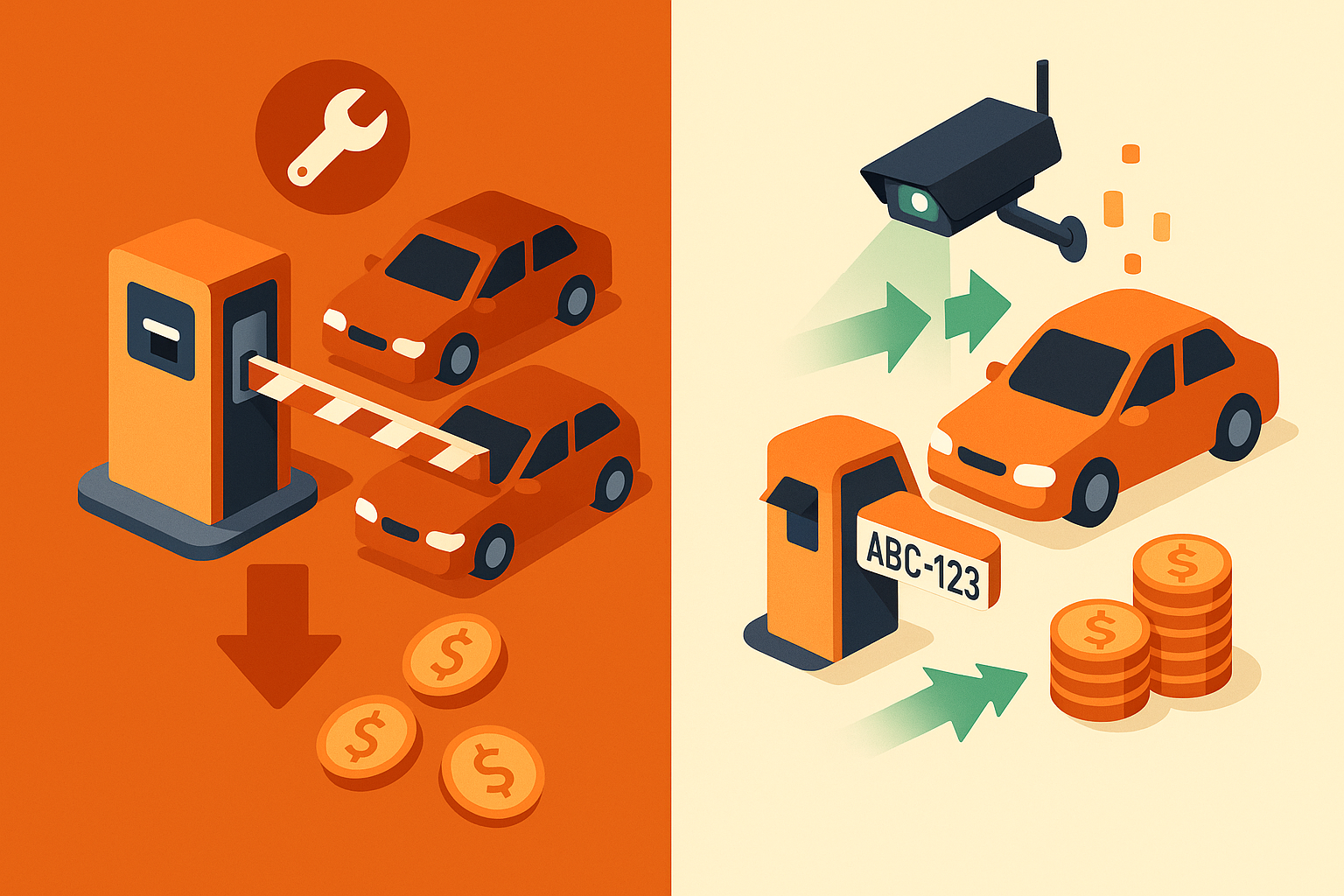
Traditional gate systems rely on mechanical arms, ticket dispensers, and often on-site staff. They create chokepoints, require constant maintenance, and still leave operators blind to what happens between entry and exit.
LPR-powered gateless operations flip that model:
| Factor | Gated System | Gateless LPR System |
|---|---|---|
| Hardware costs | High (gates, ticket machines) | Low (cameras, signage) |
| Maintenance burden | Frequent mechanical repairs | Minimal |
| Driver experience | Queues, lost tickets | Seamless entry and exit |
| Data visibility | Limited | Real-time occupancy and duration |
| Enforcement | Manual or delayed | Instant, automated |
Sensor-equipped cameras can offer operators real-time space availability and maintenance-needs updates, while feeding digital platforms with the pricing data needed to optimize rates.
Optical character recognition (OCR) systems, which use cameras and scanners to identify license plates upon entry and exit, have proven effective in high-throughput environments like ports and now scale down to commercial lots.
Tower Investments' Parkadelphia garage in Philadelphia illustrates the difference. Before switching, frequent gate malfunctions caused traffic jams, costly repairs, and unreliable revenue tracking. After implementing the gateless, camera-powered system, "Congestion at exits disappeared," and the property achieved steady monthly growth.
LPR is the foundation, but revenue growth comes from layering additional capabilities on top. The platform combines three levers:
Intelligent pricing algorithms adjust rates based on demand, ensuring competitive pricing while optimizing occupancy. That combination of visibility and responsiveness is what drives the 12 to 27% revenue lifts partners see after enabling dynamic pricing.
With automatic license plate recognition, enforcing parking rules becomes more efficient. The system knows which plates have paid, which have permits, and which are overstaying. Enforcement officers equipped with the mobile app receive real-time alerts, and the advanced ALPR system accurately identifies vehicles, reducing human error and labor costs.
T2 Systems, a legacy vendor, offers a gateless system that combines LPR with permits and enforcement, but requires integration across multiple products. AirGarage handles enforcement end-to-end within a single platform, with no additional modules to purchase.
"It runs like a well-oiled machine. We hardly ticket anybody. The technology just works."
— Dan Holmes, Washington Hill Parking
The dynamic pricing system adjusts rates based on time of day, demand, and local events. Partners have seen revenue increase 12 to 27% after enabling the engine.
The approach mirrors what airlines and hotels have done for years. Los Angeles' demand-based LA Express Park program achieved a 37% reduction in parking duration downtown and a 16% increase in revenue in some areas.
Pricing elasticity research from the Victoria Transport Policy Institute shows that the price elasticity of vehicle trips with respect to parking price is typically -0.1 to -0.3. That means small rate adjustments, applied intelligently, can meaningfully shift demand without driving parkers away.
Key takeaway: Automated enforcement recovers lost revenue; dynamic pricing captures additional yield from every stall.
Across hotels, mixed-use developments, and surface lots, partners report consistent gains:
| Property | Asset Type | Revenue Change |
|---|---|---|
| The Showboat Resort (Atlantic City) | Hotel garage | 25 to 35% increase |
| BPG 360 portfolio | Mixed-use | 20 to 30% NOI increase |
| Washington Hill (Baltimore) | Surface lot | 28% growth in two years |
At The Showboat Resort, the largest non-casino hotel in New Jersey, broken gates and equipment malfunctions had created long wait times and revenue leakage. After implementing the gateless system with LPR cameras, mobile payments, and real-time reporting, "Revenue increased 25 to 35%" while operating costs dropped by 20 to 25%.
BPG 360, a national real estate development firm, struggled with spreadsheet-based tenant billing and a gated LPR system that caused congestion. Switching to the gateless model delivered "Net operating income increased by 20–30%," and "Customer experience improved dramatically as drivers no longer faced gate delays, manual payments, or confusing parking processes."
Washington Hill's 400-space lot in Baltimore saw "revenue increased by 19.5%" in the first few months, reaching 28% total growth within two years, all without rate increases. Customer satisfaction improved from 2.3 to 4.25 stars thanks to seamless entry and exit.
Property owners often ask three questions before committing to LPR:
1. How accurate is the technology?
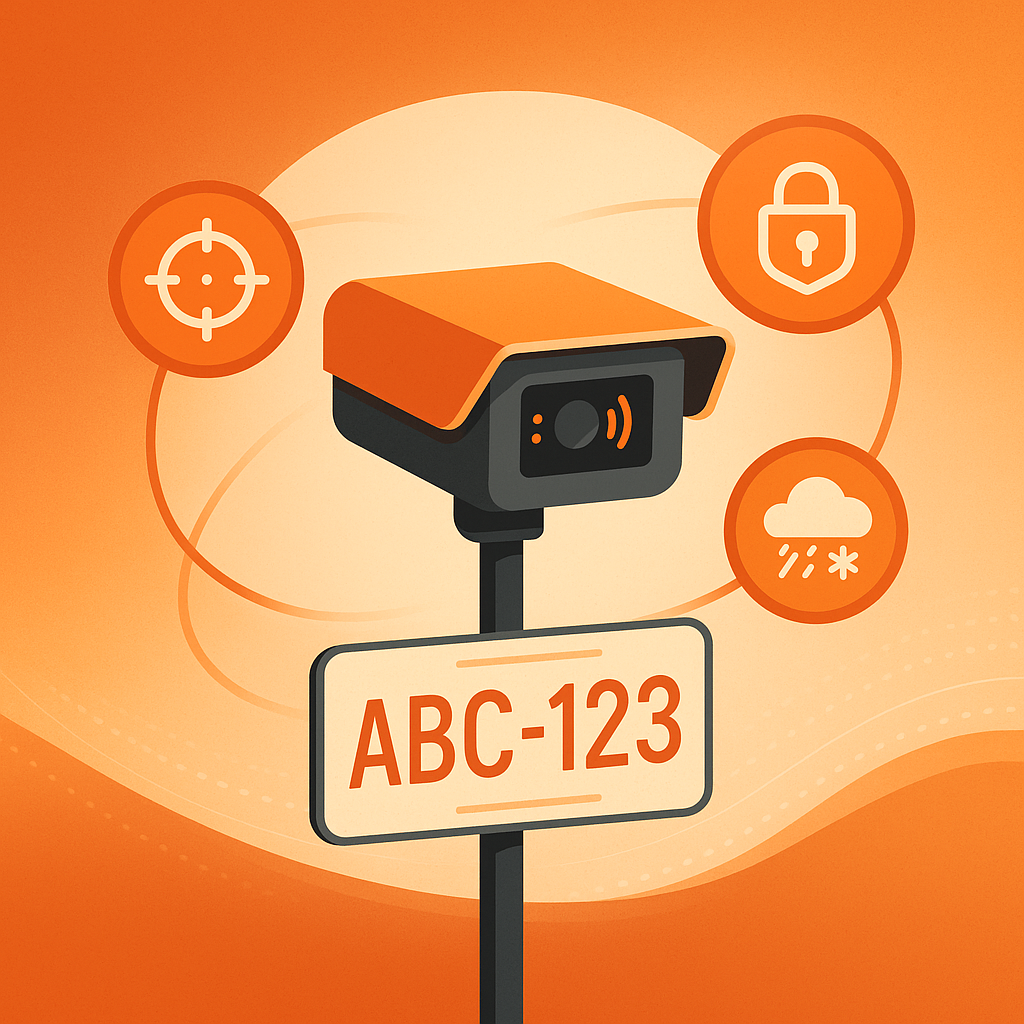
Testing under real-world conditions has shown 95% accuracy in daylight, 90% in low light, and 93% for plates at 45-degree angles. Purpose-built cameras with integrated infrared lighting and weather-adaptive AI models mitigate errors that plagued first-generation tools.
However, accuracy can degrade in extreme weather. Research from the Journal of Imaging Science and Technology found that certain weather distortions drastically reduced ALPR accuracy, sometimes approaching zero. That's why camera placement, lighting, and angle tolerances matter. The proprietary hardware is designed specifically for parking environments, reducing the risk of misreads.
2. What about privacy?
California's Senate Bill 34, effective since January 1, 2016, prohibits public agencies from selling or sharing ALPR information except to other public agencies as permitted by law. Agencies from San Francisco to Santa Barbara rely on ALPR for fee calculation while limiting data retention. San Francisco's SFMTA, for example, retains images not linked to citations for just 14 days.
AirGarage owns its camera data and does not sell or share it with third parties.
3. What happens at night or in harsh conditions?
Capturing license plates at night requires artificial lighting. Infrared (IR) light is invisible to drivers and prevents blinding. Cameras include integrated IR, ensuring 24/7 operation.
The parking technology market includes legacy operators like T2 Systems and newer entrants like ParqEx. Here's how they compare:
| Capability | AirGarage | T2 Systems | ParqEx |
|---|---|---|---|
| Gateless LPR enforcement | Included | Requires T2 Velocity add-on | Enforcement module |
| Dynamic pricing | Included | Limited | Not primary focus |
| Full-service management | Yes | Software only | Software only |
| Pricing model | Revenue share | Tiered licensing | Usage-based |
ParqEx leverages advanced AI and machine learning for superior LPR capabilities, but its platform is designed primarily for enforcement and permitting, not full-service parking management.
T2 Systems combines LPR, permits, enforcement, and collections into T2 Velocity, a gateless access and revenue control system. However, implementation can be complex, and pricing often involves tiered licensing with extra fees.
AirGarage differentiates by bundling technology with on-the-ground operations. We handle signage, enforcement patrols, customer support, and payment collection, so property owners don't manage multiple vendors. The advanced ALPR system reduces human error and labor costs, while the dynamic pricing engine optimizes rates automatically.
For owners who want to focus on real estate rather than parking operations, that full-stack approach simplifies the transition and accelerates results.
If you're considering LPR-powered parking management, use this framework:
LPR technology allows you to make strategic decisions with a clear understanding of where, when, and for how long customers park. That visibility is the starting point for every revenue optimization conversation.
License plate recognition isn't just a security upgrade. It's a revenue engine. By automating payments, flagging violations in real time, and feeding dynamic pricing algorithms with occupancy data, LPR turns every vehicle into an opportunity.
AirGarage is a full-service parking management company that helps property owners maximize the revenue potential of their parking assets. We handle technology installation, operations, enforcement, and customer support so you can focus on your core business.
Partners consistently see results like The Showboat Resort's 25 to 35% revenue increase and Washington Hill's 28% growth without rate hikes. The technology works. The question is whether you're ready to unlock the untapped potential sitting in your parking asset.
Reach out to explore what LPR-powered management could mean for your property.
License plate recognition (LPR) technology uses cameras and optical character recognition to read vehicle license plates, enabling automated payments, real-time occupancy insights, and instant enforcement in parking management.
LPR technology increases parking revenue by reducing violator rates, automating payment collection, and enabling dynamic pricing. This leads to a measurable boost in income, with some properties experiencing a 15% increase from reduced violations alone.
Gateless LPR systems offer lower hardware costs, minimal maintenance, seamless driver experience, real-time data visibility, and automated enforcement, compared to traditional gated systems that require mechanical arms and ticket dispensers.
AirGarage's LPR system enhances enforcement by instantly flagging violations, reducing the need for manual patrols, and providing real-time alerts to enforcement officers, which decreases human error and labor costs.
Properties like The Showboat Resort and Washington Hill have reported revenue increases of 25-35% and 28% respectively, after implementing AirGarage's LPR system, along with improved customer satisfaction and reduced operating costs.