

Gateless parking systems eliminate traditional barriers like gate arms and ticket dispensers, using license plate recognition cameras and mobile payments to create seamless entry and exit. Studies show this technology reduces parking time by 27.5% and cuts driver stress measurably, with properties converting to gateless systems seeing customer ratings jump as much as two stars while increasing revenue by 23% on average.
• Faster entry and exit: Gateless systems reduce wait times by 50-70% compared to traditional gated facilities, with some operators reporting 3x faster entry and exit
• Lower driver stress: Research shows drivers using assistive parking technology experience heart rates 13 bpm lower than those dealing with manual systems
• Higher customer satisfaction: Real-world conversions show rating improvements from 2.3 to 4.25 stars, with 84% fewer support calls after going gateless
• Revenue growth through dynamic pricing: Properties implementing gateless systems with dynamic pricing see revenue increases of 12-27% without raising base rates
• Simple technology stack: License plate recognition cameras, mobile payments, and real-time enforcement replace gates, tickets, and pay stations entirely
If you've ever sat behind a broken gate arm, waited for a ticket dispenser to spit out a crumpled stub, or circled a garage hunting for a pay station, you already know how traditional parking can sour an otherwise good trip. Gateless parking removes those pain points entirely. Drivers pull in, park, pay from their phone, and leave without stopping. For property owners, it means higher revenue and happier customers. For drivers, it means less stress and more time back in their day.
This guide explains what a gateless parking system actually is, how it works, and why the data shows it delivers a better experience for everyone involved.
Gates create bottlenecks. A single malfunctioning arm can back traffic onto a public street, and ticket machines add seconds to every entry and exit. Those seconds add up. Research shows that removing gates is frictionless for drivers, eliminating delays at entry and exit points.
The frustration is measurable. A study published in Applied Ergonomics found that drivers using assistive parking technology experienced heart rates that were on average 13 bpm lower compared to manual parking scenarios. Lower heart rate correlates directly with lower stress.
Industry surveys back this up. According to Parking Magazine, 47% of parking leaders cite technology as the top factor driving growth, and automation ranks as a critical success factor for both near-term and long-term performance.
Key takeaway: Gates create friction, and friction creates stress. Removing barriers lets drivers enter, park, and leave without interruption.
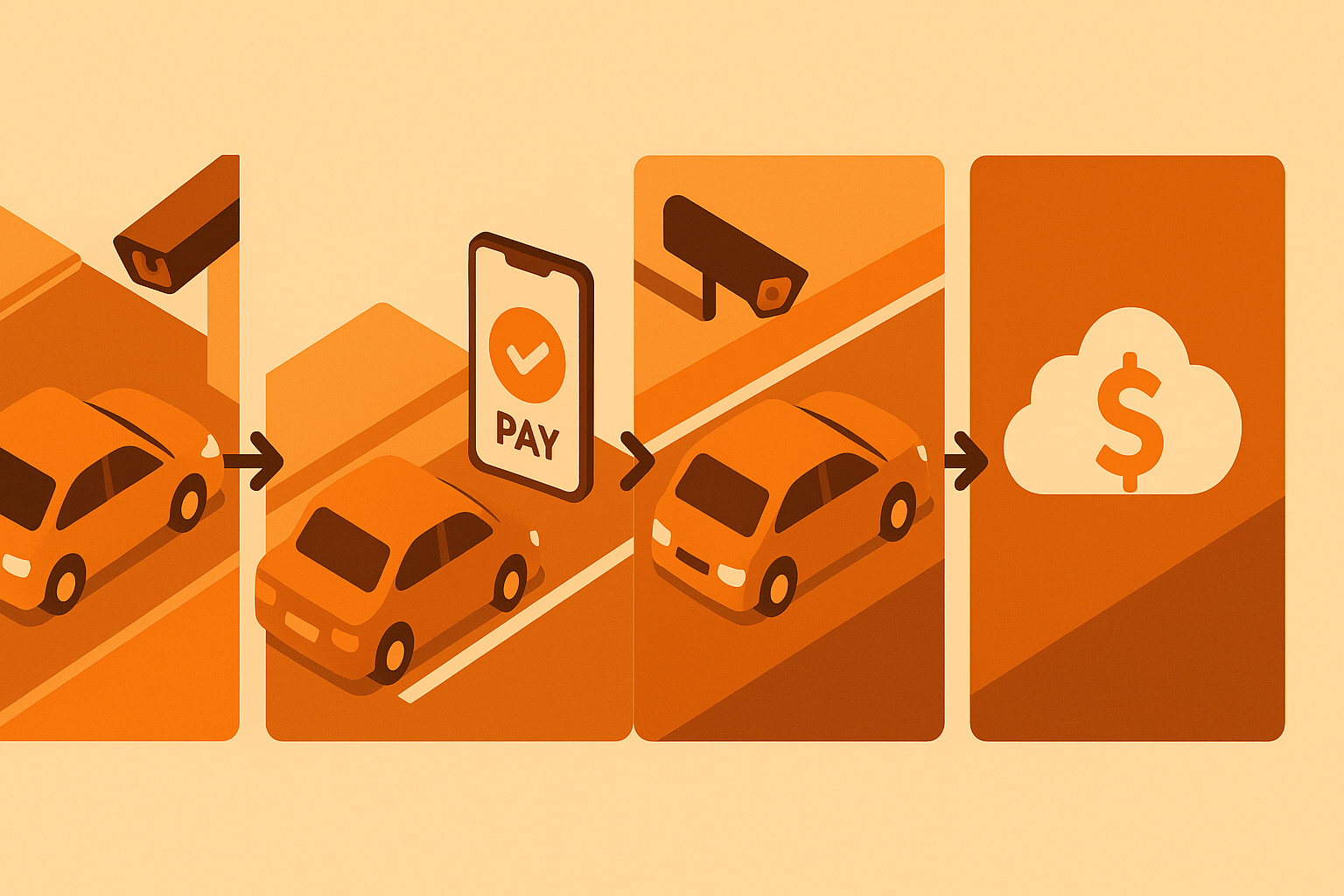
A gateless parking system replaces barrier arms, ticket dispensers, and pay stations with license plate recognition (LPR) cameras, mobile or web-based payments, and real-time enforcement. The driver journey looks like this:
Because drivers can make mobile payments with their personal devices, there's no need to roll down a window, insert a credit card, or wait for a receipt. Systems like Get My Parking's ExpressLane report 3x faster entry and exit compared to ticketed facilities.
The technology that replaces gate arms is straightforward:
| Touch-point | Traditional System | Gateless System |
|---|---|---|
| Entry | Ticket dispenser, gate arm | LPR camera, automatic session start |
| Payment | Pay station or exit booth | Mobile, text, or web payment |
| Exit | Insert ticket, pay, wait for gate | Camera closes session, payment auto-charged |
AirGarage, for example, operates over 300 properties without expensive hardware or access gates. Their system uses LPR to track every vehicle entering and exiting, linking plates to payment methods for automatic billing.
EnSight Plates adds another layer by incorporating automated License Plate Recognition for both gated and ungated facilities, enabling operators to monitor dwell times, flag unauthorized parkers, and integrate with payment databases.
Drivers notice when parking is easy. They also notice when it isn't.
The Applied Ergonomics study mentioned earlier found that assistive technology reduced parking time by 27.5% compared to manual parking. Faster parking means less time in the lot and less time feeling anxious about holding up the car behind you.
Real-world conversions confirm these findings. When Washington Hill, a 400-space lot in downtown Baltimore, switched to AirGarage's gateless system, customer ratings climbed from 2.3 stars to 4.25 stars. As the case study notes: "Improved signage, seamless entry/exit, and a fast web-based registration process helped the lot's rating climb from 2.3 stars to 4.25 stars."
At 433 Bridge Street in Grand Rapids, the gateless transition delivered similar results. Manager Jes Slaydon described the change: "With AirGarage, it's not just that we don't have to fix machines anymore, it's that the parking actually works. The whole system just flows." (AirGarage)
Automated systems also reduce exit idle time. Industry data shows that automated entry-exit systems reduce idle time by 15–20%, and systems integrating AI-based LPR and mobile payments reduce average exit wait times by 50–70%.
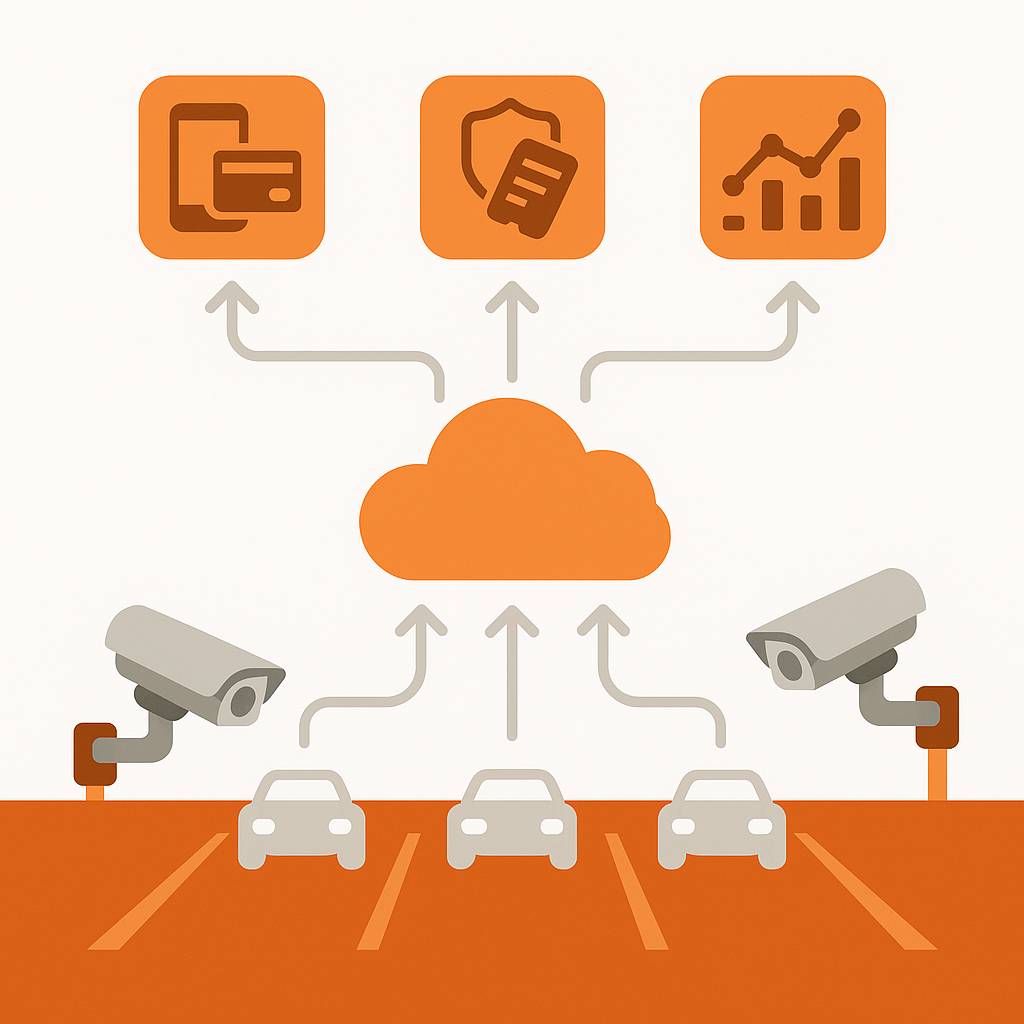
Three technologies make gateless parking possible:
OpenALPR describes the analytics benefit: operators can identify low and peak volume periods on a daily, weekly, or monthly basis, enabling smarter staffing and pricing decisions.
AirGarage's Intelligence Dashboard lets property owners view real-time parking availability and usage trends, turning raw data into actionable insights. The platform also adjusts pricing based on demand, ensuring lots stay filled during slow periods and capture premium rates during peak hours.
ParkHub frames the broader value: "Parking analytics is the systematic analysis of data related to parking operations to derive actionable insights that enhance efficiency, profitability, and user experience." (ParkHub)
Dynamic pricing adjusts rates in real time based on demand, time of day, and local events. Hotels and airlines have used this model for decades. Now parking is catching up.
The concept is simple: when a lot is nearly full, prices rise to encourage turnover. When occupancy is low, prices drop to attract drivers who might otherwise park elsewhere. A Springer conference paper defines dynamic pricing as "a pricing strategy that adjusts prices in real-time based on demand and supply," noting that aligning parking pricing with demand factors contributes to "a more efficient, resilient, and environmentally responsible urban transportation system." (Springer)
Drivers benefit because pricing reflects actual conditions. There's no sticker shock when you arrive at 3 p.m. on a Tuesday and find the same rate as Saturday night. Partners report revenue increases of 12–27% after enabling dynamic pricing, and the company notes that "dynamic pricing not only benefits you as an operator but also enhances the experience for your customers."
Industry-wide, Parking Magazine reports that 34% of leaders expect dynamic pricing to yield additional revenue, making it one of the top growth strategies heading into 2025.
Numbers tell the story better than promises. Here are three examples:
| Property | Revenue Change | Profit Change | Customer Rating |
|---|---|---|---|
| Washington Hill (Baltimore) | +28% over two years | — | 2.3 → 4.25 stars |
| 433 Bridge Street (Grand Rapids) | +84% | +300% | 4.4 stars |
| Get My Parking ExpressLane clients | — | — | 84% fewer support calls |
At Washington Hill, owner Dave Holmes saw results within months. "In just the first few months, Washington Hill's revenue increased by 19.5%. Within two years, that number reached 28% total growth, all without any rate increases." (AirGarage)
At 433 Bridge Street, the family-run facility experienced an 84% revenue increase and over 300% profit growth after removing outdated gates and switching to mobile payments with real-time enforcement.
Get My Parking reports that ExpressLane clients reduce support calls by 84%, freeing staff to focus on higher-value tasks instead of troubleshooting ticket jams.
A smooth transition requires attention to three areas: signage, support, and fair enforcement.
Clear signage is non-negotiable. Portland's city code, for example, requires that pay-and-park facilities post signs stating payment requirements at each entrance, with letters at least seven inches high. Facilities with payment devices must display "PAY HERE" signs in letters at least nine inches high and visible from every vehicle entrance.
Best practices include:
Gateless doesn't mean unsupported. Drivers will have questions, especially during the transition. Parker Technology notes that "customer service is key. And this doesn't stop with removing gates in your parking facility." (Parker Technology)
AirGarage provides 24/7 support for drivers and a dedicated asset manager for property owners, ensuring issues get resolved quickly whether it's 2 p.m. or 2 a.m.
Enforcement should be rigorous but reasonable. Grace periods, clear violation notices, and easy appeal processes prevent the negative reviews that undermine customer satisfaction. AirGarage's enforcement technology uses automated LPR to ensure only authorized vehicles use designated spaces, but the system is "built to be both rigorous and fair." (AirGarage)
Gateless parking fits into a broader transformation in how cities think about transportation.
McKinsey projects that the mobility ecosystem will undergo changes "not seen since the early days of the automobile" over the next decade. The United States, one of the world's most car-dependent countries, now has eight available parking spots for every car. That's an enormous amount of land, and cities are rethinking how to use it.
Autonomous vehicles will accelerate the shift. McKinsey notes that AV integration could reshape urban spaces, reducing the need for parking and easing congestion. When cars can drop passengers and park themselves in remote lots, the demand for prime real estate dedicated to parking will decline.
Future Market Insights projects the global parking management market will grow from $4.5 billion in 2024 to $11.7 billion by 2034, a compound annual growth rate of 10%. Much of that growth will come from AI-powered technologies that solve urban congestion challenges.
Gateless systems position property owners to adapt. Without hardware locked into aging technology, operators can integrate new payment methods, connect to smart city infrastructure, and respond to autonomous vehicle requirements as they emerge.
The evidence points in one direction. Removing gates:
AirGarage delivers these benefits through a full-service management system that includes payments, enforcement, and real-time analytics. Property owners who switch from legacy operators see an average 23% NOI increase in the first year.
If you manage a parking asset and want to improve the driver experience while growing revenue, AirGarage offers a gateless solution designed to do exactly that.
A gateless parking system eliminates traditional barriers like gate arms and ticket dispensers, using license plate recognition and mobile payments to streamline entry and exit, enhancing the driver experience.
Gateless parking reduces stress by eliminating delays at entry and exit points, as drivers can enter and leave without stopping. Studies show that this reduces heart rates and parking time, leading to a more relaxed experience.
Gateless parking systems use License Plate Recognition (LPR) cameras, real-time enforcement software, and mobile payment platforms to manage parking operations efficiently and provide a seamless experience for drivers.
Dynamic pricing adjusts parking rates in real-time based on demand, time of day, and local events. This strategy helps manage occupancy levels and maximizes revenue by aligning prices with current demand conditions.
AirGarage's gateless parking solution offers increased revenue, reduced operational costs, and improved driver satisfaction through a full-service management system that includes payments, enforcement, and real-time analytics.