

Gateless parking systems reduce operating costs by 20-30% while increasing revenue through dynamic pricing and automated enforcement. Properties using AirGarage's camera-based technology report 20% month-over-month revenue growth compared to traditional gated systems. The elimination of gate hardware saves apartments between $100-500 per stall annually in maintenance alone.
Apartment owners are swapping gate arms for a gateless parking system because it cuts costs and headaches. We'll compare both models side-by-side so you see where the numbers, security, and resident experience land.
Traditional access control methods, such as manual gatekeeping and key fobs, are increasingly being replaced by advanced technologies. The shift comes down to three pain points: broken hardware, unreliable revenue tracking, and traffic jams at entry lanes.
License Plate Recognition systems use high-resolution cameras with OCR software to capture and interpret license plate information. Instead of forcing drivers to stop, swipe a fob, or pull a ticket, the camera reads the plate and grants access in seconds.
Electronic parking meters have essentially replaced mechanical meters, offering improved security and a simplified process for changing parking rates. That same evolution is now reaching apartment garages.
Tower Investments saw this firsthand at Parkadelphia, an 800-space garage in downtown Philadelphia. After switching to AirGarage's gateless system, "manual oversight was replaced with automated enforcement and clear reporting." The result? Revenue grew 20% month over month.
Key takeaway: Gates create friction; gateless systems remove it while delivering cleaner data and higher revenue.
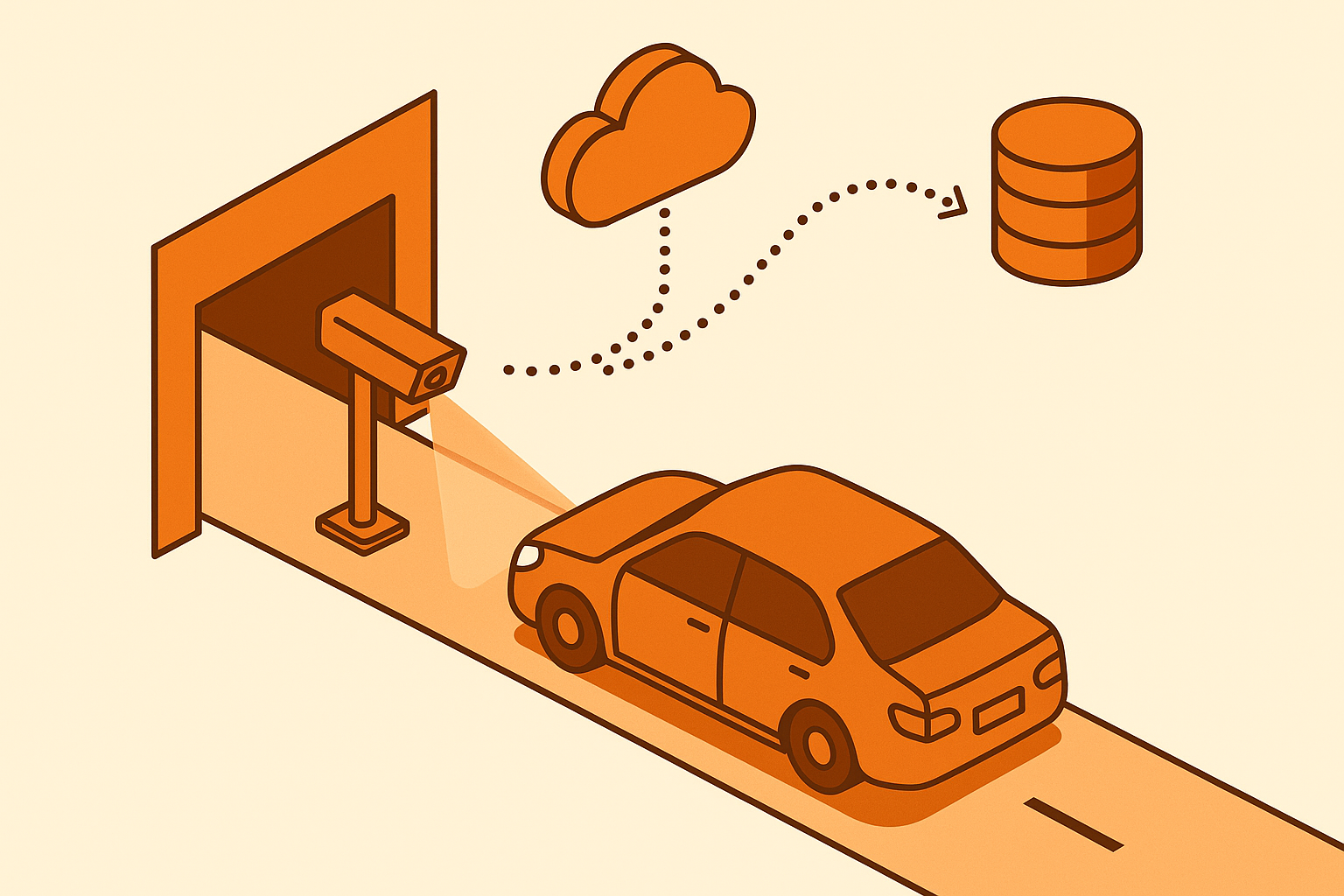
At the heart of any gateless parking system are high-definition cameras installed at entries. These cameras capture license plates, and optical character recognition software translates them into digital data.
The system then compares each plate against an authorized-vehicle database. If the plate matches a resident permit or a paid session, the driver proceeds without stopping. If it does not, enforcement kicks in automatically.
A solid accuracy rate of 95% or higher means fewer headaches and a smooth entry experience every time. Cloud-based platforms let property managers update permissions, review logs, and adjust pricing from anywhere.
AirGarage's enforcement technology utilizes automated license plate recognition to ensure only authorized vehicles use your spaces. The platform also delivers instant access to occupancy, duration of stays, and turnover rates, allowing operators to optimize availability and pricing.
Gated systems come with steep upfront and ongoing expenses. One industry breakdown shows:
| Cost Category | 10-Year Estimate |
|---|---|
| Initial equipment | $125,000 |
| Service calls | $50,000 |
| Maintenance and parts | $100,000 |
| Software upgrades | $60,000 |
| Paper tickets | $10,000 |
| Labor | $125,000 |
| Total | $470,000 |
Source: Tower Investments case study
Add an additional $40,000 per staffed shift if you keep an attendant on-site.
Gateless systems flip the equation. AirGarage reports a 20-30% net operating income increase by removing gates and letting dynamic pricing do the heavy lifting.
Neighbor's 2025 Multifamily Parking Report found that optimizing parking pricing could boost annual NOI by over $63,000 for the average 50-plus-unit property in Los Angeles, or as much as $189,000 in Miami.
Data suggests that a condominium should expect to spend between $100 and $500 per stall per year to keep a gated garage in working order and save for long-term renewal. Gateless systems eliminate most of that line item.
Key takeaway: A gateless model trades high cap-ex and op-ex for a revenue-share structure that grows NOI instead of draining it.
Traditional key fobs and access cards have significant security vulnerabilities. Fobs can be copied, shared, or lost. Shared entry codes spread quickly beyond intended users.
LPR systems operate with precision 24/7, capturing every entry and exit in real time. When an unauthorized vehicle attempts to follow a resident through, the system detects and flags it immediately.
Residents experience hassle-free entry without needing physical keys or access cards. Customer satisfaction at Washington Hill Parking climbed from 2.3 stars to 4.25 stars after adopting a gateless approach.
A quality LPR system should reach an accuracy rate of 95% or higher, minimizing false denials and keeping traffic flowing. The NMHC 2024 Renter Preferences Report reveals that 75% of renters desire community-wide access control that uses digital credentials rather than physical keys.
Switching from gates to cameras is simpler than it sounds, but a few steps keep the project on track.
One community budgeted about $400,000 to install a full LPR system with license plate readers, RFID tags, and kiosks, plus roughly $1,600 a month in operating expense. For many properties, that investment pays back faster than years of gate repairs.
Several players compete for apartment parking management:
AirGarage differs by providing a full-service management system that includes payments, enforcement, and a cutting-edge analytics dashboard. The company eliminates gates entirely and uses dynamic pricing to maximize revenue without expensive hardware.
Parkade focuses on resident self-service and short-term rentals. SmartRent emphasizes hardware sensors. ParqEx targets mixed-use and hospitality with gate and door control. AirGarage owns the full stack, from marketing and pricing to enforcement and reporting, so owners hand off day-to-day operations entirely.

Numbers tell the story better than promises.
Jes Slaydon, manager of 433 Bridge Street, summed it up: "With AirGarage, it's not just that we don't have to fix machines anymore, it's that the parking actually works. The whole system just flows."
Gateless parking systems offer a clear path to higher NOI, lower maintenance, and happier residents. Here's the short list:
Dan Holmes of Washington Hill Parking put it simply: "It runs like a well-oiled machine. We hardly ticket anybody. The technology just works."
If you're ready to turn parking from a cost center into a profit driver, AirGarage offers the technology, operations, and support to make that happen.
Gateless parking systems reduce costs, improve security, and enhance resident satisfaction by eliminating the need for physical gates and manual oversight. They use technology like License Plate Recognition to streamline access and provide real-time data for better management.
AirGarage's gateless system increases revenue by utilizing dynamic pricing and automated enforcement, which optimizes parking space usage and reduces operational costs. Case studies show a 20-30% increase in net operating income after implementing their system.
Gateless parking systems use high-definition cameras and optical character recognition software to capture and process license plate data. This technology allows for seamless entry and exit, reducing the need for physical access controls like gates and fobs.
Traditional gated systems have high upfront and ongoing costs, including equipment, maintenance, and labor. Over a decade, these costs can total around $470,000, whereas gateless systems offer a more cost-effective, revenue-sharing model.
Gateless systems provide enhanced security by using License Plate Recognition to monitor and control access in real-time, reducing the risk of unauthorized entry. They eliminate vulnerabilities associated with physical keys and fobs, which can be lost or copied.