

Traditional parking enforcement relies on manual patrols, paper tickets, and physical barriers like gates that struggle with modern demand. These methods result in 30% billing discrepancies, missed violations during peak hours when lots exceed 90% occupancy, and lost revenue. License plate recognition (LPR) technology automates enforcement through cameras that capture plates with 95% daylight accuracy, enabling 24/7 monitoring, timestamped evidence, and real-time occupancy tracking.
• Manual enforcement misses violations during breaks and shift changes, while LPR provides continuous automated monitoring
• Traditional methods have over 5% error rates in occupancy tracking versus less than 5% with LPR systems
• LPR reduces billing errors by 90% and increases revenue generation by 20% for parking operators
• Mobile LPR systems cost $50,000-$65,000 to deploy but deliver ROI within 6-12 months
• Real deployments show 20-30% increases in net operating income after switching to gateless LPR solutions
License plate recognition is transforming how property owners manage parking. If you've ever relied on manual ticket books, aging gate systems, or foot patrols to enforce your lot, you know the frustration: missed violations, billing errors, and endless customer complaints. Traditional parking enforcement simply wasn't built for today's high-demand urban environments.
This guide breaks down the most common problems with legacy enforcement and shows you how LPR parking technology closes each gap.
Traditional parking enforcement depends on human patrols, paper tickets, and physical barriers like gates and meters. Officers walk or drive through lots, manually check permits, and chalk tires to track overstays. This approach worked when parking was simpler, but it struggles to keep pace with modern demand.
Traditional methods often fail during peak hours, leading to inefficiencies, unauthorized usage, and revenue losses. The manual nature of the work means enforcement is only as consistent as your staff's availability and attention.
License plate recognition (LPR) takes a fundamentally different approach. LPR systems use optical character recognition algorithms that enable computer software to read vehicle license plates. The technology usually consists of three basic components: a camera, software, and a database of previously read plates.
LPR technology has been used for decades by law enforcement agencies worldwide to generate leads and close cases. Now, parking operators are leveraging the same technology to automate enforcement, eliminate manual errors, and unlock real-time data insights.
Key takeaway: Traditional enforcement relies on human presence and manual processes; LPR automates plate reading, time tracking, and violation detection around the clock.
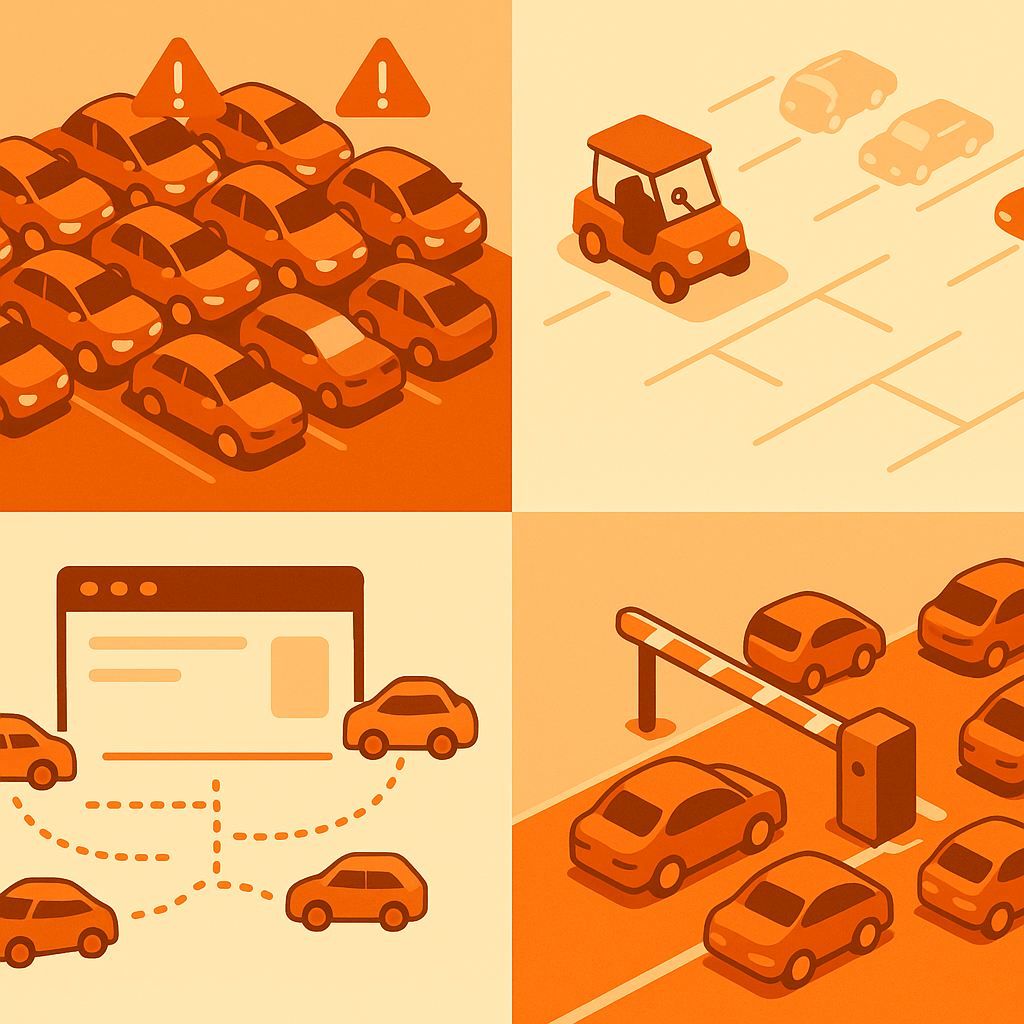
Traditional enforcement breaks down in several predictable ways. Understanding these weaknesses helps you see why smart parking solutions are gaining ground so quickly.
These systemic weaknesses add up to lost revenue, wasted labor, and poor customer experiences.
Manual enforcement is expensive and inconsistent. Patrols require dedicated staff, vehicles, and ongoing training. Even with a security team walking the lot consistently, enforcement was nearly impossible for properties like Artistry Cincy due to unreliable records.
The numbers tell the story:
| Challenge | Impact |
|---|---|
| Patrol coverage gaps | Violations missed during breaks, shift changes, or high-traffic periods |
| Record-keeping errors | Incorrect tickets, disputed citations, and staff time spent on appeals |
| Implementation cost | Mobile LPR systems cost $50,000 to $65,000 to deploy on an existing vehicle, but can cover far more ground than foot patrols |
Parking enforcement vehicles equipped with LPR technology can provide highly efficient time-limit monitoring, payment status checks, and residential permit enforcement. They also generate a continuous stream of occupancy data that manual patrols simply can't match.
LPR systems come in three main configurations, each suited to different enforcement needs:
The report discusses positive and negative aspects of all three types, including performance under different light conditions, speeds, and accuracy levels. For most parking operators, a combination of fixed and mobile LPR delivers the best coverage.
Signage requirements vary by city and state, and getting them wrong can void your citations entirely. Portland's code, for example, requires that all signs must be unobstructed, reflectorized and visible during all hours of operation. Pay facilities need "PAY HERE" signs in letters at least seven inches high.
Texas vehicle storage facilities face similar scrutiny. Common violations include failure to have a clearly visible sign in the proper lettering size and color contrast that lists all required documents.
New York City regulations add another layer: if the garage or lot is full, a sign stating "Capacity Full" in 6-inch letters must be posted at each public entrance.
When signage is unclear or non-compliant:
LPR systems don't just read plates. They create a timestamped record of every vehicle's entry, exit, and duration. LPR provides visual evidence of when infractions occurred and when citations were issued, supporting adjudication with objective data.
When using digital chalking with mobile and fixed LPR, users are alerted when a vehicle overstays a time-limited zone. The system captures the plate, the time, and the GPS location, creating evidence that holds up in disputes.
This shifts enforcement from "he said, she said" arguments to verifiable data.
Manual systems lose money in ways you may not even see. Without accurate occupancy tracking, you can't identify:
The data is striking. Occupancy tracking with manual methods has more than a 5% error margin, while automated systems achieve less than 5% error. Even more significant, fare calculation modules in automated systems reduced billing errors by 90%.
Lisbon reported a 22% increase in parking fee compliance after installing AI-powered systems, generating $4.8 million in additional annual revenue.
LPR enables two powerful revenue strategies:
Pilot implementations showed a remarkable 30% reduction in billing discrepancies and a 20% surge in revenue generation for parking operators.
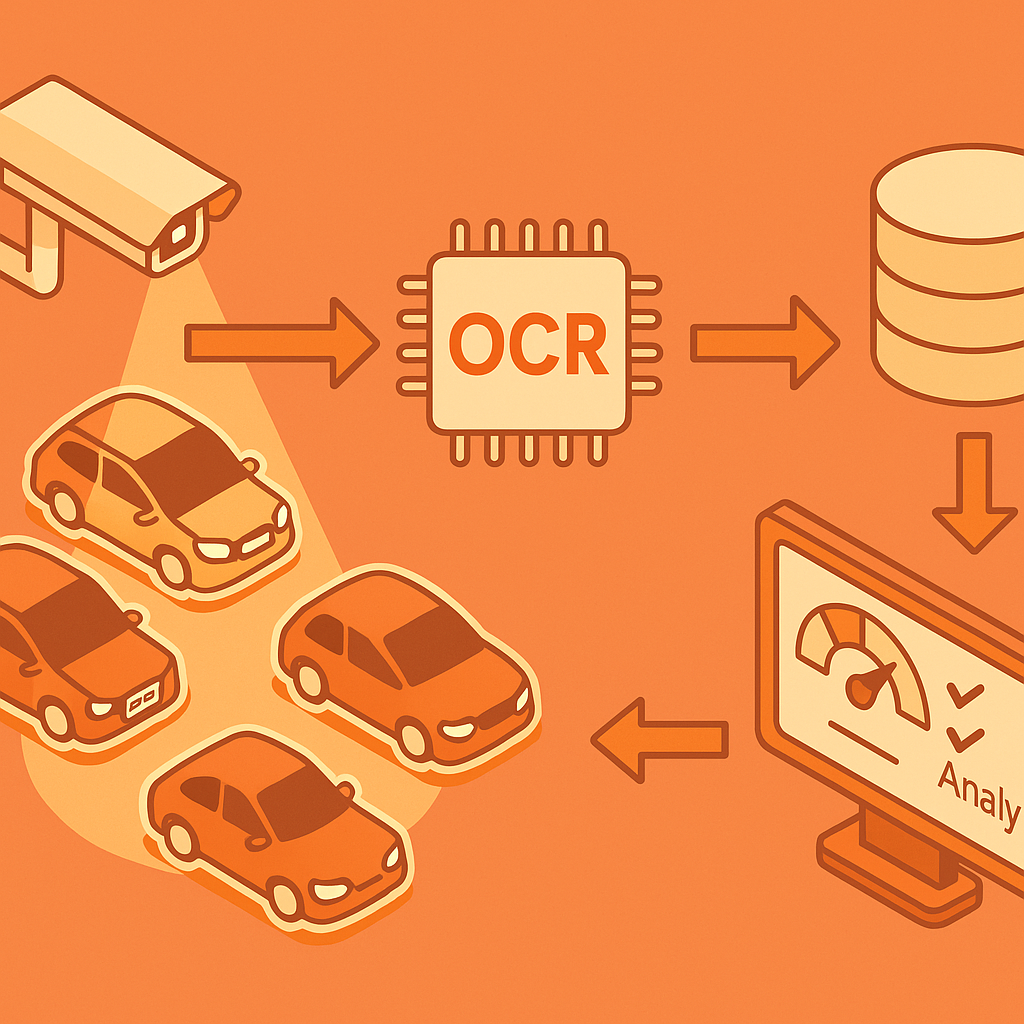
Modern LPR systems deliver accuracy and reliability that manual methods can't match:
| Capability | Performance |
|---|---|
| Daylight accuracy | 95% under real-world conditions |
| Low-light accuracy | 90% |
| Angled plates (45 degrees) | 93% |
| Occupancy tracking error | Less than 5% vs. manual methods |
LPR technology enables parking enforcement officers to quickly enforce on-street and off-street lots, discover scofflaw vehicles to collect outstanding fines, and enforce time-limited zones.
The system's scalable design supports applications in parking management, toll collection, and traffic monitoring. A single camera can extract multiple license plates simultaneously, reducing hardware costs while increasing coverage.
The transition from traditional to LPR-based enforcement produces measurable results. Here's what actual operators have experienced:
BPG 360: A national real estate firm struggled with manual billing, spreadsheet tracking, and a gated LPR system that caused traffic jams. After switching to AirGarage's gateless approach, "Net operating income increased by 20-30%, driven by improved billing accuracy, better pricing, and more consistent enforcement."
Tower Investments (Parkadelphia): An 800+ space garage in Philadelphia dealt with frequent gate malfunctions and unreliable cash payments. The gateless LPR solution delivered dramatic results: "Revenue grew 20% month over month." Congestion at exits disappeared, and manual oversight was replaced with automated enforcement.
Citadel Square Church: A 175-space lot in Charleston was plagued by violators and lacked effective pricing. Within two months of implementing AirGarage's system, "Monthly parkers increased from 700 to 1,200, revenue jumped from $23,000 to $39,000," and the lot is on track to generate an additional $274,000 annually.
These aren't isolated examples. Across hundreds of properties, gateless LPR consistently delivers higher revenue, lower operational costs, and better customer experiences.
Implementation costs depend on your configuration:
| System Type | Estimated Cost |
|---|---|
| Mobile LPR on existing vehicle | $50,000 to $65,000 (includes training, infrastructure, equipment) |
| Fixed camera systems | Varies by coverage area; can be purchased outright or as-a-service |
| Full-service gateless solutions | Often no upfront hardware cost with revenue-share models |
The market opportunity is substantial. The parking management solutions market will grow from $4.14 billion in 2024 to $4.44 billion in 2025 at a 7.3% CAGR.
By 2029, it's expected to reach $6.72 billion at a 10.9% CAGR.
The global smart parking market tells an even bigger story: valued at $10.5 billion in 2024 and projected to reach $33.8 billion by 2030, growing at 21.6% CAGR.
You can estimate your potential return with a straightforward formula:
Monthly ROI = (New Revenue + Recovered Violations + Labor Savings) - System Cost
Based on pilot data, expect:
For a 300-space lot generating $50,000 monthly, a 20% revenue lift adds $10,000 per month. Most operators see full ROI within 6 to 12 months.
Traditional parking enforcement wasn't designed for today's high-demand, data-driven environment. Manual patrols miss violations, unclear signage fuels disputes, and billing errors drain revenue you never knew you were losing.
LPR technology addresses each of these problems:
The best part? Modern gateless systems require no expensive hardware or gate systems. AirGarage combines LPR cameras, dynamic pricing algorithms, and on-the-ground enforcement to deliver 20-30% increases in net operating income for parking lot owners.
If you're ready to stop losing revenue to outdated enforcement methods, AirGarage can help you make the switch.
Traditional parking enforcement struggles with inefficiencies like missed violations, billing errors, and customer complaints due to its reliance on manual processes and human patrols.
LPR technology automates license plate reading, time tracking, and violation detection, providing real-time data insights and reducing manual errors, which enhances enforcement efficiency.
LPR systems can be costly initially, with mobile systems ranging from $50,000 to $65,000, but they offer significant long-term savings and revenue increases through improved enforcement and data accuracy.
LPR technology enables dynamic pricing and accurate violation recovery, leading to increased revenue by ensuring optimal rates and capturing all overstay and non-payment incidents.
Real-world deployments of LPR systems have shown significant revenue increases, reduced operational costs, and improved customer experiences, with some operators seeing a 20-30% increase in net operating income.