

Parking revenue optimization for multi-property portfolios combines dynamic pricing, real-time analytics, automated enforcement, and AI-driven demand capture to maximize income while cutting costs. Research shows dynamic pricing increases weekly revenue by 15%, while comprehensive optimization strategies can boost NOI by 20-30% across diverse property types.
• Dynamic pricing algorithms adjust rates based on occupancy, events, and demand patterns, with partner facilities seeing 15%+ revenue gains compared to static pricing
• License plate recognition enforcement reduces violator rates and can increase operating income by up to 15% through automated violation detection
• Real-time analytics dashboards provide portfolio-wide visibility into occupancy rates, revenue per space, and turnover metrics across all properties
• Online marketplace integration and geofencing expand reach to millions of drivers actively searching for parking
• Properties optimizing parking operations report annual NOI increases ranging from $63,000 to $189,000 per property depending on market
• AI-powered predictive analytics forecast demand patterns and enable proactive pricing adjustments across entire portfolios
If you own or manage parking assets across multiple locations, you're probably leaving money on the table.
Parking revenue optimization is the disciplined practice of maximizing every dollar your parking facilities generate while cutting leakage and overhead. A disciplined approach can increase revenues by up to 50%, yet many portfolio managers still rely on static pricing, manual enforcement, and fragmented reporting.
AirGarage's tech-first model tackles these gaps head-on. By combining dynamic pricing, license plate recognition, real-time analytics, and automated enforcement, we help property owners unlock untapped revenue and simplify operations at scale. Below, you'll find a comprehensive guide to the strategies that drive measurable NOI gains across multi-property portfolios.
Parking revenue optimization is "the practice of maximizing the income from these parking assets while minimizing losses and costs." For portfolio managers overseeing dozens or even hundreds of sites, fragmented systems create blind spots that leak revenue.
Consider the scale of opportunity:
When you manage mixed-use properties, apartment complexes, or retail centers, consistent optimization across every location compounds quickly. Centralizing pricing rules, enforcement protocols, and reporting onto one platform transforms parking from a cost center into a high-margin revenue driver.
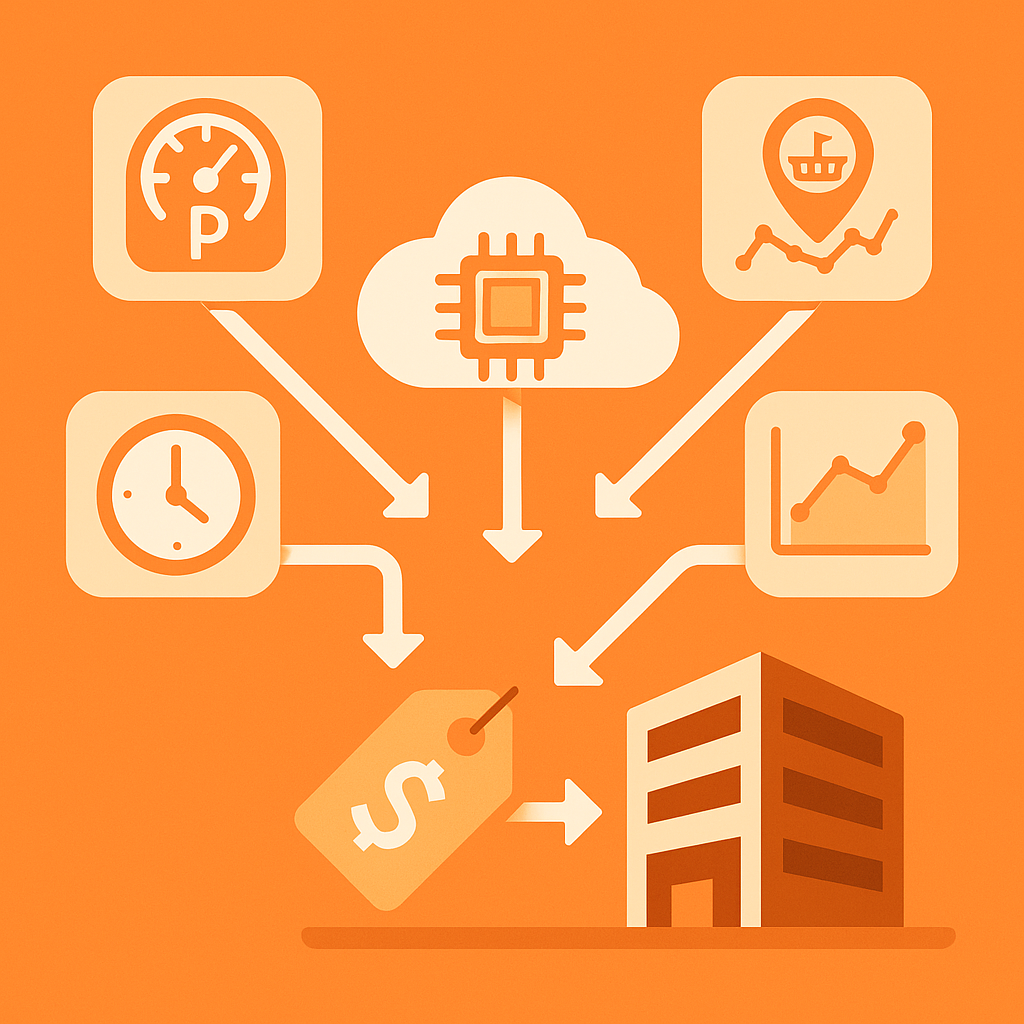
Dynamic pricing adjusts rates in real time based on occupancy, time of day, local events, and historical demand. Rather than guessing at the "right" price, you let data decide.
Research published in The Engineering Economist found that a bid-price-based dynamic pricing system increased weekly parking revenue by 15%. SpotHero reports that partner facilities using Flex Rates see online revenue climb by 15% or more compared to static rates. Partners that enable our dynamic engine typically see revenue gains of 12-27%.
Beyond revenue, dynamic pricing benefits customers. During slow periods, lower rates attract additional parkers. During peak times, higher rates discourage over-stay and improve turnover. The result is a fairer, more market-responsive experience for drivers and a fuller lot for owners.
Effective dynamic pricing starts with guardrails. You define:
KERB's dynamic pricing feature illustrates best practices. It combines real-time parking activity data, anonymized historical data, and third-party municipal data to recommend optimal rates. Landlords can toggle the feature on or off at different times, maintaining control while benefiting from automation.
AirGarage follows a similar philosophy. Our system factors in demand signals, local events, and competitive benchmarks to adjust prices within your approved band, ensuring you never leave money on the table or price yourself out of the market.
Data without visibility is useless. A centralized analytics dashboard converts raw transaction logs into actionable insights.
OPS Parking describes its dashboard as a tool that "unifies data on occupancy, revenue, transactions, and operational alerts—so you can make informed decisions with a single glance." Real-time occupancy tracking lets operators drill down by zone or floor, spot capacity patterns, and manage traffic flow.
YourParkingSpace positions its cloud-based analytics dashboard as the "parking industry's most comprehensive business intelligence tool," offering real-time occupancy analysis, customer profiling, and predictive recommendations to optimize yield.
AirGarage's Intelligence Dashboard delivers similar capabilities tailored for multi-property portfolios. It provides "a comprehensive view of revenue drivers, where customers are finding you, and the behavior of people parking at your location to inform revenue and customer experience optimization." Property owners can monitor occupancy, pricing trends, and maintenance needs across all sites from one intuitive interface.
Key takeaway: Portfolio-level visibility turns reactive management into proactive strategy, letting you replicate winning tactics across locations and address underperformers before they drag down NOI.
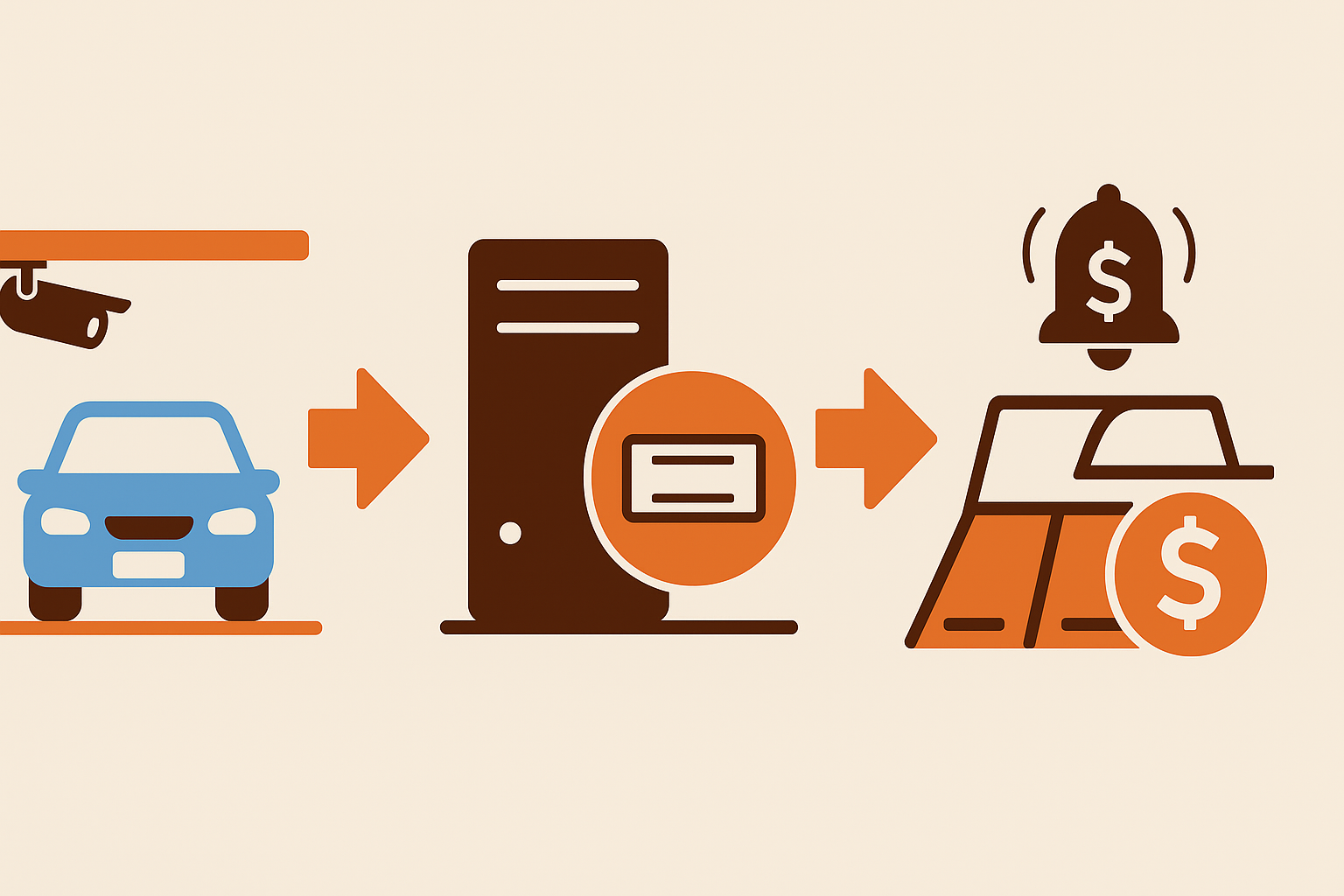
Yes. Automated enforcement powered by license plate recognition (LPR) technology dramatically reduces unpaid parking and recovers lost income.
AirGarage's LPR cameras track every vehicle entering and exiting your facility. When the system detects an unpaid parker, it instantly alerts our enforcement network. This combination of technology and on-ground operations can increase operating income by up to 15% by reducing violator rates and recovering revenue that would otherwise disappear.
Gtechna's fixed LPR solution takes a similar approach, using continuous plate recognition to verify parking rights upon entry or exit. Their system tracks vehicles with violations and alerts officers only after a threshold is reached, allowing more efficient use of enforcement resources. Facilities can even issue violations through Ticket by Mail, minimizing on-site staffing.
AirGarage's enhanced enforcement system also prioritizes customer experience. Drivers can contest and waive tickets through a streamlined digital process, reducing confrontations and improving satisfaction scores. As Randall Cropper, an analyst at Tower Investments, put it:
"I love working with AirGarage. It makes my life significantly easier by allowing me to see everything that happens in the garage and providing me with quick, accurate data. Due to the technology that AirGarage uses, I can trust this data fully and don't have to worry about any issues."
Even the best-priced, best-enforced lot underperforms if drivers can't find it. Marketing and distribution are the final levers for maximizing utilization.
ParkWhiz, SpotHero, and similar platforms aggregate demand from millions of drivers searching for parking before they arrive. ParkWhiz "provides the last mile of mobility to consumers, enabling travelers to find, prepay, and access affordable parking services." Partners can embed booking widgets directly on their own sites or tap into ParkWhiz's marketplace reach.
SpotHero IQ's dynamic pricing platform is now live at over 1,000 parking facilities across North America. Operator partners leveraging the platform see an average revenue increase of greater than 40%. One Parking, a national operator with more than 80,000 spaces, reported a 44% revenue boost across 19 locations using SpotHero IQ.
AirGarage ensures your properties are visible across major booking sites while automatically optimizing rates and availability. This multi-channel presence captures transient demand that would otherwise park elsewhere.
Geofencing marketing uses GPS technology to create virtual boundaries around specific areas. When a driver's mobile device enters the boundary, they receive targeted notifications or ads. Semrush defines geofencing as "the use of technology to create a virtual perimeter" used to "identify and connect with potential customers based on their proximity to a particular location." (Semrush)
Retail case studies demonstrate the power of this approach. A gym used geofencing to target competing fitness centers and gained 73 new memberships worth roughly $38,000. While parking-specific geofencing data is still emerging, the principle applies: reach drivers when they're actively searching for parking nearby.
Neighbor's Multifamily Parking Intelligence Report notes that "renting vacant parking to non-resident neighbors is a growing revenue channel" and can even deliver free apartment leads. Combining marketplace listings with hyper-local geofencing captures both planned and spontaneous demand.
AI and machine learning are moving from buzzword to business impact in parking management.
Parking.net explains that "AI addresses this by analyzing historical data, local events, traffic patterns, and weather conditions to adjust prices dynamically." Beyond pricing, AI enables predictive analytics that forecast demand with impressive accuracy, helping operators allocate resources and prevent overbooking.
Flowpath highlights that AI algorithms can "predict potential issues before they occur" through predictive maintenance, reducing downtime and repair costs across facility portfolios. AI-driven data analytics also delivers "deep insights into operational dynamics," enabling strategic enhancements that compound over time.
A study on AI-optimized urban parking found that the system "reduced city-wide traffic congestion by 20% and improved parking revenue by 25%." (MDPI)
The parking management market reflects this momentum. Research and Markets projects the sector will grow from $7.33 billion in 2025 to $14.24 billion by 2032 at a CAGR of 9.93%, driven by "demand-responsive pricing and enforcement models" that support operational flexibility and revenue optimization.
Gartner research on generative AI adoption across industries shows early adopters reporting an average 15.8% revenue increase, 15.2% cost savings, and 22.6% productivity improvement. Through 2026, more than 80% of independent software vendors will embed generative AI capabilities into enterprise applications. Parking platforms that integrate these advances will compound their competitive edge.
Key takeaway: AI isn't a future promise; it's already lifting revenue and cutting costs for early adopters. The ROI case grows stronger as algorithms learn from larger datasets.
Tracking the right metrics ensures you can replicate wins and diagnose problems quickly. Below is a scorecard for multi-property parking portfolios:
| KPI | Definition | Why It Matters |
|---|---|---|
| Occupancy rate | (Occupied Spaces ÷ Total Spaces) × 100 | Reveals utilization patterns and pricing opportunities |
| Turnover rate | Number of unique vehicles per space per day | Indicates demand velocity and space efficiency |
| Revenue per space | Total revenue ÷ Total spaces | Benchmarks profitability across locations |
| Average parking duration | Mean time vehicles remain parked | Informs pricing tiers and turnover strategies |
| Net operating income (NOI) | Gross revenue minus operating expenses | The ultimate measure of parking asset performance |
ECO Parking Technologies emphasizes that these metrics are "crucial for optimizing parking operations, enhancing customer satisfaction, and boosting revenue." Their systems use AI and machine learning to detect available spaces with 99% accuracy, feeding real-time data into dashboards.
AirGarage partners consistently report a 20-30% NOI increase after adopting our platform. Neighbor's Multifamily Parking Intelligence Report found that "optimizing parking pricing could boost annual NOI by over $63,000 for the average 50+ unit property in Los Angeles—or as much as $189,000 in Miami."
By standardizing KPI tracking across your portfolio, you gain the visibility needed to justify investments, negotiate better management contracts, and demonstrate value to stakeholders.
Parking revenue optimization isn't a single tactic; it's a system. Dynamic pricing captures demand fluctuations. Real-time analytics reveal hidden patterns. LPR enforcement plugs revenue leaks. Marketplace listings and geofencing marketing expand your reach. AI amplifies every lever.
BPG 360, a national real estate development firm, experienced this transformation firsthand. After partnering with AirGarage, they saw:
"Net operating income increased by 20–30%, driven by improved billing accuracy, better pricing, and more consistent enforcement."
Customer experience improved as well, with drivers no longer facing gate delays or confusing payment processes.
If you're ready to turn your parking assets into high-performing revenue generators, AirGarage offers a full-stack solution that handles proactive management, local operations, and advanced technology. We manage 300+ properties across 40+ U.S. states and Canada, delivering unparalleled revenue growth without expensive hardware or access gates.
Get a proposal and see how much untapped revenue your portfolio is leaving behind.
Parking revenue optimization involves maximizing income from parking assets while minimizing losses and costs. It uses strategies like dynamic pricing and automated enforcement to increase revenue and reduce overhead.
Dynamic pricing adjusts rates in real time based on factors like occupancy and local events, leading to revenue gains of 12-27%. It helps attract more parkers during slow periods and optimizes turnover during peak times.
License plate recognition (LPR) technology automates enforcement, reducing unpaid parking and recovering lost income. It can increase operating income by up to 15% by efficiently managing violator rates.
Online marketplaces like ParkWhiz and SpotHero increase visibility and capture demand, while geofencing targets drivers nearby with notifications, maximizing lot utilization and revenue.
Key performance indicators include occupancy rate, turnover rate, revenue per space, average parking duration, and net operating income (NOI). These metrics help optimize operations and boost revenue.