

The best parking facility management systems combine license plate recognition, real-time dashboards, dynamic pricing, and unified enforcement tools. Leading platforms help operators increase daily transactions by 15-20% while dynamic pricing alone can boost revenue 12-27% annually. Modern systems require no costly infrastructure upgrades and integrate seamlessly with existing operations.
• The real-time parking system market will grow from $7.8 billion in 2025 to $19.5 billion by 2035 at a 9.6% CAGR
• Revenue management software in parking reached $825.3 million in 2024, heading toward $1.46 billion by 2030
• Dynamic pricing implementations show consistent results: 15% weekly revenue gains in academic studies and 35% monthly increases in real deployments
• Modern LPR systems achieve 95-99% accuracy rates with AI-powered cameras handling various plate types and conditions
• AirGarage customers report 20-35% year-over-year revenue increases with 20-25% lower operating costs
• API-driven dashboards replace monthly reports with real-time visibility into occupancy, revenue trends, and customer behavior
Parking facility management systems that surface real-time data now set the bar for profitable operations. The real-time parking system market is expected to grow from $7.8 billion in 2025 to $19.5 billion by 2035, expanding at a 9.6% CAGR. Meanwhile, the revenue management segment alone reached $825.3 million in 2024 and is climbing toward $1.46 billion by 2030.
If you own or manage a parking asset, you're probably used to waiting on static monthly reports that arrive too late to act on. That's changing. Businesses that modernize their payment systems often see a 15-20% increase in daily transactions after going digital. This post walks you through the features that matter, how leading vendors compare, and how to unlock untapped revenue from your parking portfolio.
Real-time parking analytics and smart parking solutions have moved from "nice to have" to table stakes. Why? Because the data you need to maximize revenue changes by the hour.
Contactless on-site payments via QR scanning or location ID now require no costly infrastructure. That removes a major barrier for owners who want to modernize without a capital overhaul.
Key takeaway: Real-time analytics compress the feedback loop between what's happening on your lot and the actions you take, turning parking from a passive asset into an active revenue driver.
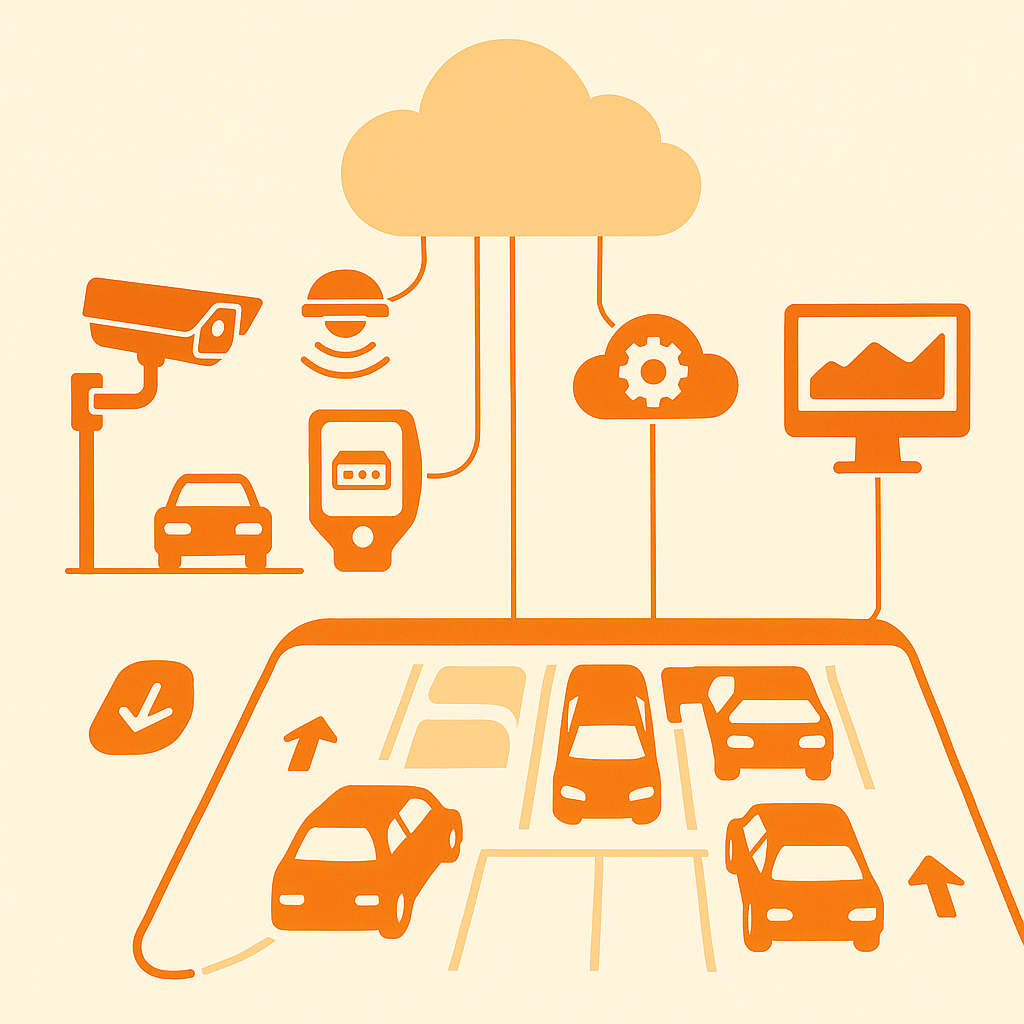
When evaluating parking facility management systems, look for platforms that cover data capture, dashboards, enforcement, and pricing in a single stack.
| Capability | Why it matters |
|---|---|
| License Plate Recognition (LPR) | Automates access control, contactless payments, and enforcement |
| Real-time occupancy monitoring | Surfaces supply-demand dynamics so you can adjust pricing or staffing |
| Parking enforcement software | Reduces manual ticketing and increases compliance |
| Revenue dashboard | Shows gross and net revenue, trends, and projections in one view |
| Dynamic pricing engine | Adjusts rates based on demand, time of day, and events |
Traditional license plate recognition falls short in complex parking environments. Look for AI-enabled cameras that handle varying lighting, plate types, and angles.
Enforcement software should simplify, streamline, and automate parking enforcement with citizen-centered features like AI LPR and next-generation ticket processing.
Fast, contactless payments become simple when customers connect their license plate to their payment method. This reduces friction and speeds throughput.
API-driven dashboards matter because they replace static monthly updates with a dynamic, always-on view. AirGarage's revenue dashboard, for example, supports real-time performance visibility, providing a clear breakdown of gross and net revenue, customizable timeframes, and projections based on how the current month is pacing.
A strong dashboard should let you:
Dynamic pricing has revolutionized industries like airlines and hotels. Now it's transforming parking. AirGarage partners have seen revenue increase 12-27% after enabling dynamic pricing. The system adjusts rates based on time of day, demand, and local events, all without manual intervention.
Key takeaway: A modern platform should unify LPR, enforcement, dashboards, and pricing so you can manage operations from one place instead of juggling point solutions.
AirGarage is a technology-driven parking management company that offers a full-stack solution for parking lot and garage owners across the United States and Canada. The platform automates payment collection, enforcement via license plate recognition, dynamic pricing, and marketing, helping property owners maximize revenue and reduce overhead.
The Intelligence Dashboard turns data into strategy. You can monitor occupancy, revenue, and maintenance trends in one place to increase efficiency and profitability across your parking portfolio. Key features include:
Tower Investments saw results at Parkadelphia, an 800+ space garage in downtown Philadelphia. After switching to AirGarage's gateless, camera-powered system, "Revenue grew 20% month over month" while congestion at exits disappeared.
The table below summarizes how other platforms compare across key capabilities.
| Vendor | Strengths | Gaps |
|---|---|---|
| Mistall Vision | Modular system, 30+ integrations, 1,100+ lots | Limited native dynamic pricing tools |
| Gtechna BI | Strong enforcement analytics, specialized parking dashboard | Focused on enforcement, less on revenue optimization |
| FlashParking Vision | AI camera with 48MP sensors, 95-98% accuracy | Higher deployment cost, currently at 11 locations with 60K processed cars |
| EnSight Plates | Greater than 99% count accuracy, LPR hotlists | Basic revenue tools |
| ParqEx | Granular heat maps, hourly utilization data | Limited automation |
| Smarking / JustPark Insights | Centralized data, competitor pricing alerts | Manual pricing adjustments |
Mistall's occupancy monitoring platform consolidates parking data across lots, garages, and zones into a single, cloud-hosted dashboard. Vision integrates inputs from sensors, AI-enabled cameras, LPR systems, and transactional records.
With 1,100+ lots, 8 years in business, and 30+ integrations, Mistall offers flexibility. However, pricing automation is limited compared to full-stack operators.
Gtechna's specialized Parking Dashboard helps optimize operations by displaying data across timeline, workforce, infraction type, or geography dimensions. You can generate reports on officer productivity, ticket aging, and payment summaries.
The platform excels at enforcement analytics but doesn't offer integrated dynamic pricing or full revenue management.
FlashParking's Vision system uses 48-megapixel optical sensors and AI trained on hundreds of thousands of North American vehicles. The system reads plates, identifies vehicle make, color, and type, and handles flat, embossed, vanity, and even temporary paper plates.
FlashVision achieves 95% LPR accuracy and 98% car-counting accuracy. Currently, it's deployed across 11 locations with 60,000 processed cars. The advanced technology comes with higher upfront deployment costs.
EnSight Plates offers greater than 99% count accuracy and adds analytics on inventory, average dwell time, and capture rates. The platform integrates with payment systems to flag unauthorized parkers via hotlists.
Revenue tools are basic. If you need dynamic pricing or demand-based rate changes, you'll need to layer in additional software.
ParqEx's heat map module shows spot utilization by day and hour. The platform serves 10K+ properties and offers real-time dashboards for parking, access, and revenue management.
Automation is limited. Rate changes and overselling decisions still require manual input.
JustPark Insights centralizes parking data from equipment, payments, and apps. Features include smart overselling based on historical redemption rates and competitor pricing alerts to stay competitive.
The platform provides strong data visibility but relies on manual pricing adjustments rather than automated dynamic pricing.
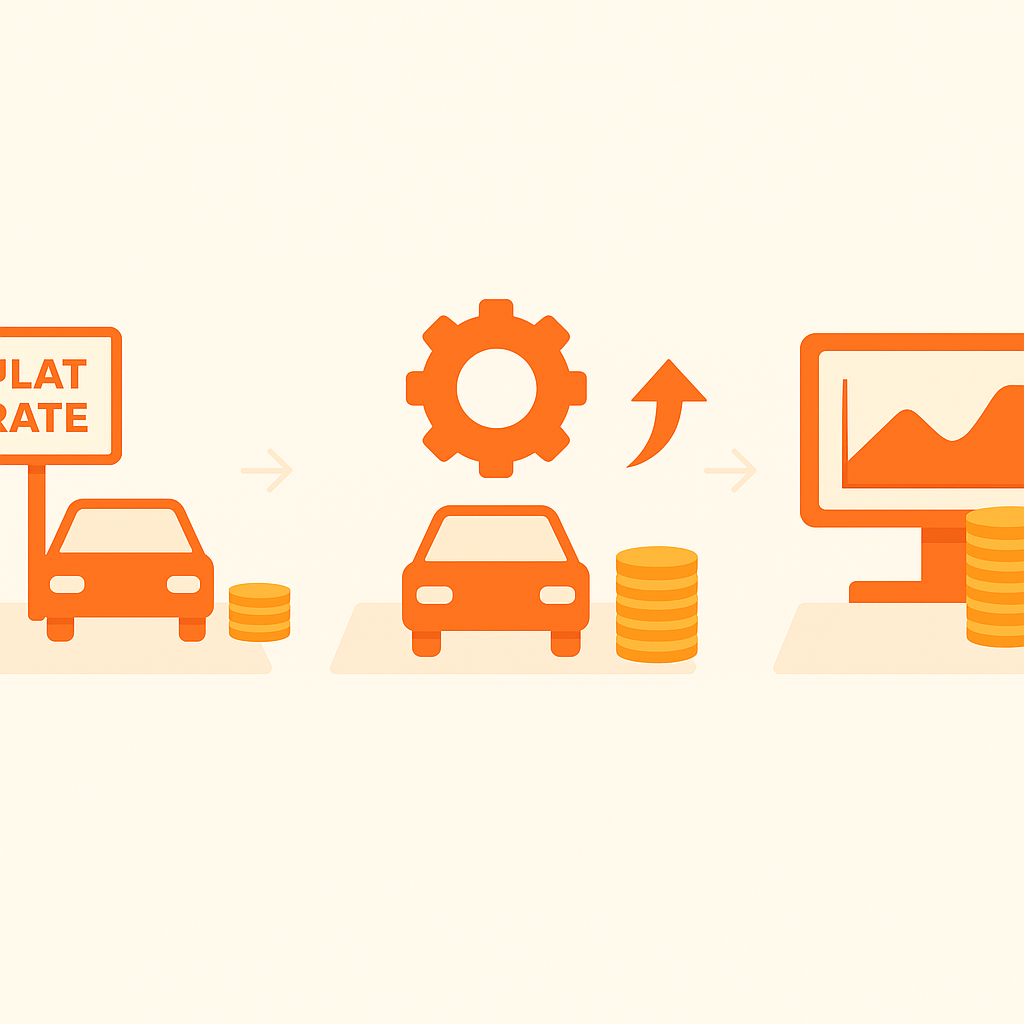
How much revenue can dynamic pricing add? The research is clear.
Key takeaway: Dynamic pricing and occupancy-based rate adjustments routinely deliver double-digit revenue lifts, with ROI often measured in months rather than years.
Rolling out a new parking management system doesn't have to be painful. Follow this checklist to avoid the most common mistakes.
The Showboat Resort in Atlantic City faced poor maintenance, unreliable equipment, and customer dissatisfaction. After partnering with AirGarage, the resort achieved a 25-35% year-over-year increase in topline revenue and a 20-25% decrease in operating costs across all parking assets.
Real-time analytics have become the foundation for profitable parking operations. The platforms that deliver the best results combine LPR, enforcement, dynamic pricing, and unified dashboards in a single stack.
AirGarage stands out by fully managing lot operations with aligned incentives. The Intelligence Dashboard gives you the same data depth airlines use, without the hardware headaches.
As Dan Holmes from Washington Hill Parking put it: "It runs like a well-oiled machine. We hardly ticket anybody. The technology just works."
— Washington Hill Parking Review
If you're ready to unlock untapped revenue from your parking asset, explore how AirGarage can help you modernize operations and maximize NOI.
Real-time parking analytics allow for faster decision-making, increased transaction volumes, and improved revenue management. They provide immediate insights into parking operations, enabling operators to adjust pricing and staffing dynamically.
Dynamic pricing adjusts rates based on demand, time of day, and local events, leading to significant revenue increases. AirGarage partners have reported a 12-27% rise in revenue after implementing dynamic pricing.
A modern parking management system should include license plate recognition, real-time occupancy monitoring, parking enforcement software, a revenue dashboard, and a dynamic pricing engine to optimize operations and revenue.
AirGarage's Intelligence Dashboard provides real-time insights into occupancy, revenue, and customer behavior, enabling efficient space management and dynamic pricing to maximize profitability.
Common pitfalls include inadequate site assessment, poor system integration, lack of ongoing monitoring, and insufficient stakeholder communication. Starting with a test phase can help identify issues before full deployment.