

AirGarage leads parking dynamic pricing software for mixed-use developments, delivering 20-30% NOI increases through automated rate adjustments based on real-time occupancy data. The platform combines gateless technology with full-service operations across 300+ properties, eliminating hardware costs while increasing revenue 12-27% through intelligent pricing algorithms that respond to demand shifts between office hours and evening entertainment peaks.
• Revenue Impact: Properties typically see 10-30% revenue growth within first 3 months of implementing dynamic pricing
• Market Growth: Parking management software market projected to reach $4.81 billion by 2034, growing at 12.2% CAGR
• Optimal Occupancy: Dynamic pricing maintains 85-95% occupancy rates for maximum efficiency
• AirGarage Performance: 20-30% Net Operating Income increase across 300+ managed properties
• Technology Requirements: Success requires real-time occupancy sensors, LPR cameras, and automated pricing algorithms
• Implementation Timeline: Full deployment typically achievable in 4 steps without infrastructure overhaul
Mixed-use garages live and die by real-time demand swings. Parking dynamic pricing software lets you raise or lower rates automatically, protecting occupancy and NOI even when office workers turn into dinner crowds.
Dynamic parking pricing refers to the adjustment of the price of parking to achieve the required occupancy rates. It plays a significant role in parking management systems to minimize traffic congestion and cruising time, as well as to maximize revenue.
Mixed-use developments present a unique challenge. Parking occupancy provides valuable insight into how well a parking operation is running. It reflects the difference between the demand for parking and the capacity available, providing immense opportunities for revenue. When office tenants leave at 5 p.m. and restaurant patrons arrive at 6 p.m., static rates fail to capture that shift.
Parking pricing (also called user pay and metered parking) refers to direct charges for using a parking space. Efficient parking pricing means that motorists pay directly for using a parking space, with rates that increase with demand. For mixed-use properties, this approach ensures you capture full value during peak restaurant hours without overcharging morning commuters.
Sensors, software and apps make dynamic pricing feasible and profitable. The technology has matured to the point where property owners can implement sophisticated pricing strategies that were once reserved for airlines and hotels.
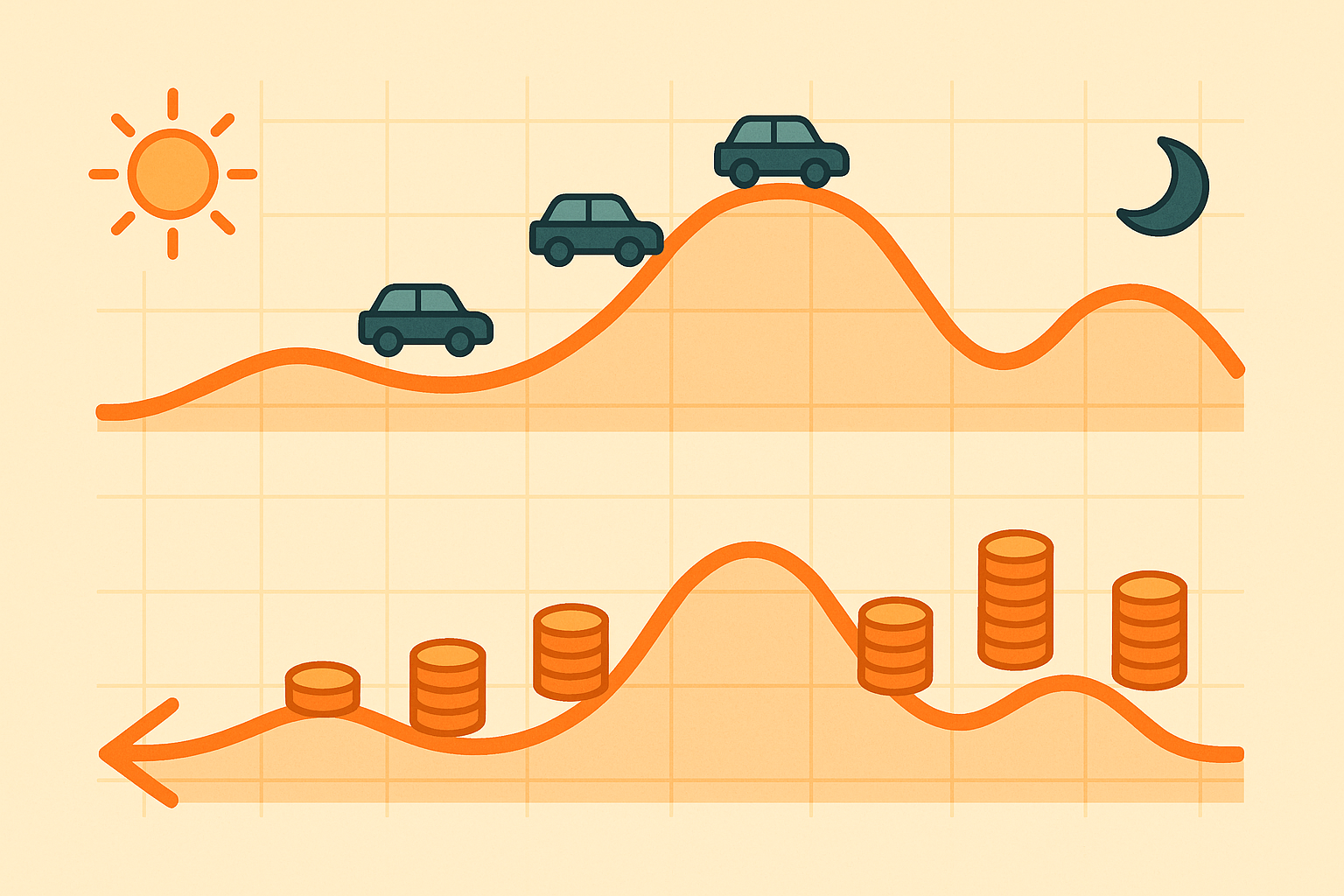
The results speak for themselves. "Within the first three months, average revenue increased by 10.5% per month," according to a case study from The Yard at Ivanhoe, a Greystar property in Orlando.
When AirGarage took over parking operations and implemented dynamic pricing at a property in Charleston, they achieved a 44% revenue uplift via dynamic pricing. Driver retention held strong, and sentiment from online reviews remained positive.
The LA Express Park system demonstrated even broader benefits. The results for all four of the sites pointed to faster traffic circulation. Downtown LA saw a 37% reduction in parking duration, Venice saw 26%, and Hollywood saw 19%. Results also revealed a 10% increase in parking availability and a 16% increase in parking revenues in some areas.
Dynamic pricing is also part of an occupancy management strategy. A parking system operates most efficiently at an occupancy rate between 85 and 95% of capacity. By adjusting rates in real time, you keep occupancy in that sweet spot while maximizing revenue per space.
Key takeaway: Dynamic pricing consistently delivers double-digit revenue gains while improving the guest experience through better availability.
Not all dynamic pricing solutions are created equal. Here's what to evaluate:
The key to success begins with parking guidance sensors that have become increasingly popular over the past few years. These sensors measure utilization and transmit that data to software that can automatically adjust pricing as occupancy rises and falls.
The parking agency is able to decide the spatial and temporal distribution of parking prices to achieve a variety of objectives. Research shows that an approximate dynamic programming approach to solve multi-period pricing models consistently outperforms alternative policies in achieving greater performance of the parking system.
Modern systems incorporate multiple data inputs:
This data-driven approach can increase weekly parking revenue by 15%, according to research published in The Engineering Economist.
AirGarage partners have seen their revenue increase 12-27% after enabling the dynamic pricing engine. The platform combines real-time rate adjustments with full-service operations, eliminating the need for traditional gate hardware.
The results extend beyond revenue. At Washington Hill, a 400-space parking lot in downtown Baltimore, "In just the first few months, Washington Hill's revenue increased by 19.5%. Within two years, that number reached 28% total growth, all without any rate increases," according to the case study.
The platform's dynamic pricing system adjusts parking rates based on a variety of factors such as time of day, demand, and local events. This approach mirrors what has revolutionized industries like airlines and hotels, allowing them to maximize revenue, optimize demand, and stay competitive in real time.
The platform operates over 300 properties and reports a typical 20-30% Net Operating Income increase for clients. Unlike legacy systems that require gate maintenance and manual audits, the solution uses license plate recognition and algorithm-based dynamic pricing to automate the entire process.
AirGarage's Intelligence Dashboard serves as your central command center for tracking, understanding, and optimizing every aspect of your parking operations. The platform provides:
"I love working with AirGarage. It makes my life easier by allowing me to see everything happening in the garage," notes Randall Cropper, Analyst at Tower Investments.
The parking technology landscape is increasingly crowded, with companies taking very different approaches to modernization.
| Feature | AirGarage | ParkMobile | FlashParking |
|---|---|---|---|
| Full-service operations | Yes | No | Varies |
| Gateless technology | Yes | N/A | Optional |
| Dynamic pricing engine | Automated | Manual controls | Cloud-based |
| Reported NOI lift | 20-30% | Not disclosed | 28% (case study) |
| Properties/Users | 300+ properties | 18M+ users | 1B+ transactions |
ParkMobile focuses on the consumer payment experience. Currently, over 500 municipalities and operators use ParkMobile 360 to manage rates and policies in real-time, and more than 1,000 clients use reporting and analytics to track performance. However, ParkMobile primarily provides software rather than full-service management, leaving property owners to handle operations themselves.
The platform offers tools to spot occupancy gaps or missed revenue early with real-time data, then take quick, informed action. But the onus remains on operators to execute pricing changes.
FlashParking takes a cloud-native approach. Their platform processes insights from over 1 billion annual transactions across North America's largest parking network. One case study reports a 28% NOI lift across 20+ locations. The company guarantees 99.9% system uptime and offers AI-enabled Vision cameras for license plate recognition.
FlashParking's strength lies in enterprise-scale deployments. However, the platform emphasizes hardware integration, which can mean higher upfront costs and more complex implementations for mixed-use properties.
The key distinction: AirGarage operates as a full-service parking management company, not just a software provider. This means aligned incentives, local operations teams, and proactive optimization without requiring property owners to become parking experts.
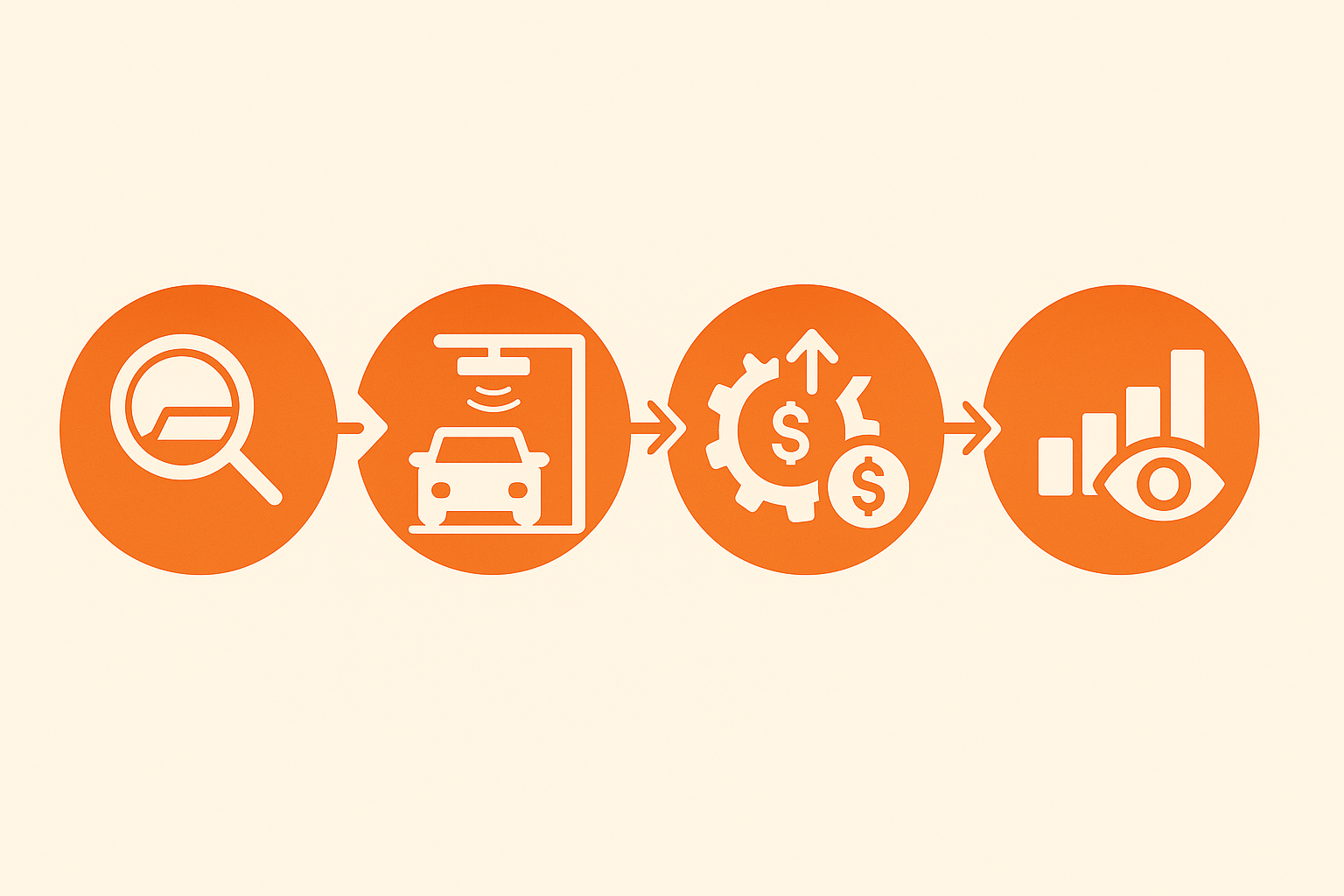
Implementing dynamic pricing doesn't require a complete infrastructure overhaul. Here's the practical roadmap:
Step 1: Baseline your current performance
Start by collecting parking occupancy data. The price elasticity of vehicle trips with respect to parking price is typically -0.1 to -0.3, meaning a 10% price increase reduces demand by 1-3%. Understanding your baseline helps calibrate initial pricing rules.
Step 2: Install monitoring technology
Demand-based parking strategies use technology to increase the availability of limited parking spaces. The LA Express Park system demonstrated the core components needed: an advanced pricing engine, integrated meters, vehicle sensors, and a parking guidance system. Modern solutions like AirGarage consolidate these into a single platform.
Step 3: Configure pricing rules
Set target occupancy ranges and price adjustment thresholds. Research shows optimal performance occurs at 85-95% occupancy. Configure the system to raise prices when approaching this ceiling and lower them during slow periods.
Step 4: Monitor, learn, and refine
The ADP-based pricing policy consistently outperforms alternative policies in achieving greater performance of the parking system. But algorithms improve with data. Review performance weekly during the first month, then shift to monthly optimization.
Before launch, ensure compliance with local regulations. Key considerations include:
Working with an experienced operator like AirGarage helps navigate these requirements across different jurisdictions.
The parking management software market is estimated at $1.68 billion in 2025, with a forecasted value of $4.81 billion by 2034, growing at a compound annual growth rate of 12.2%.
With the rise of electric vehicles, autonomous driving technologies, and demand for contactless services, the need for parking solutions that offer seamless digital experiences, dynamic pricing, and efficient space allocation is set to grow further.
Key trends shaping the next five years:
The Parking Management Market grew from USD 6.67 billion in 2024 to USD 7.33 billion in 2025. With continued expansion at a CAGR of 9.93%, the sector is projected to reach USD 14.24 billion by 2032.
Dynamic pricing isn't just a technology upgrade. It's a fundamental shift in how you manage parking assets. Here's what to remember:
"Net operating income increased by 20-30%, driven by improved billing accuracy, better pricing, and more consistent enforcement," according to the BPG 360 case study.
As Dan Holmes of Washington Hill Parking puts it: "It runs like a well-oiled machine. We hardly ticket anybody. The technology just works."
For mixed-use property owners ready to unlock untapped revenue, AirGarage offers the combination of proven technology and full-service operations that delivers results. With 300+ properties in operation and consistent 20-30% NOI increases, the platform represents the current state of the art in parking dynamic pricing software.
Dynamic parking pricing involves adjusting parking rates based on real-time demand to optimize occupancy and maximize revenue. This approach helps manage traffic congestion and ensures efficient use of parking spaces.
Dynamic pricing allows mixed-use developments to adjust parking rates in real-time, capturing shifts in demand, such as office workers leaving and restaurant patrons arriving. This maximizes revenue and maintains optimal occupancy levels.
Key features include a real-time data engine, license plate recognition integration, intelligent pricing algorithms, event and time-based flexibility, and comprehensive reporting and analytics to make informed decisions.
AirGarage's dynamic pricing engine has increased client revenue by 12-27%, with full-service operations that eliminate the need for traditional gate hardware, optimizing demand and maximizing revenue.
Future trends include AI and IoT integration, EV charging convergence, demand-responsive models, and preparation for autonomous vehicles, all aimed at enhancing user experience and operational efficiency.