

Camera-based parking systems deliver the highest ROI for mixed-use developments by eliminating gates, automating enforcement, and enabling dynamic pricing. Leading providers report 20-30% NOI increases through real-time occupancy tracking and demand-based rate adjustments, while reducing parking supply needs by 20-60% through efficient management.
Camera-based parking systems are quickly becoming the standard for mixed-use developments. The smart parking market is growing at a rapid pace, driven by urbanization, rising vehicle ownership, and the need for efficient space management.
For property owners juggling residential, retail, and office tenants, a camera-powered approach delivers what legacy gated systems cannot: real-time data, automated enforcement, and flexible pricing. AirGarage leads this category with a full-stack, gateless solution built specifically for the complexity of mixed-use assets.
This guide breaks down how camera-based parking works, what to look for in a provider, and why AirGarage stands out as the top choice.
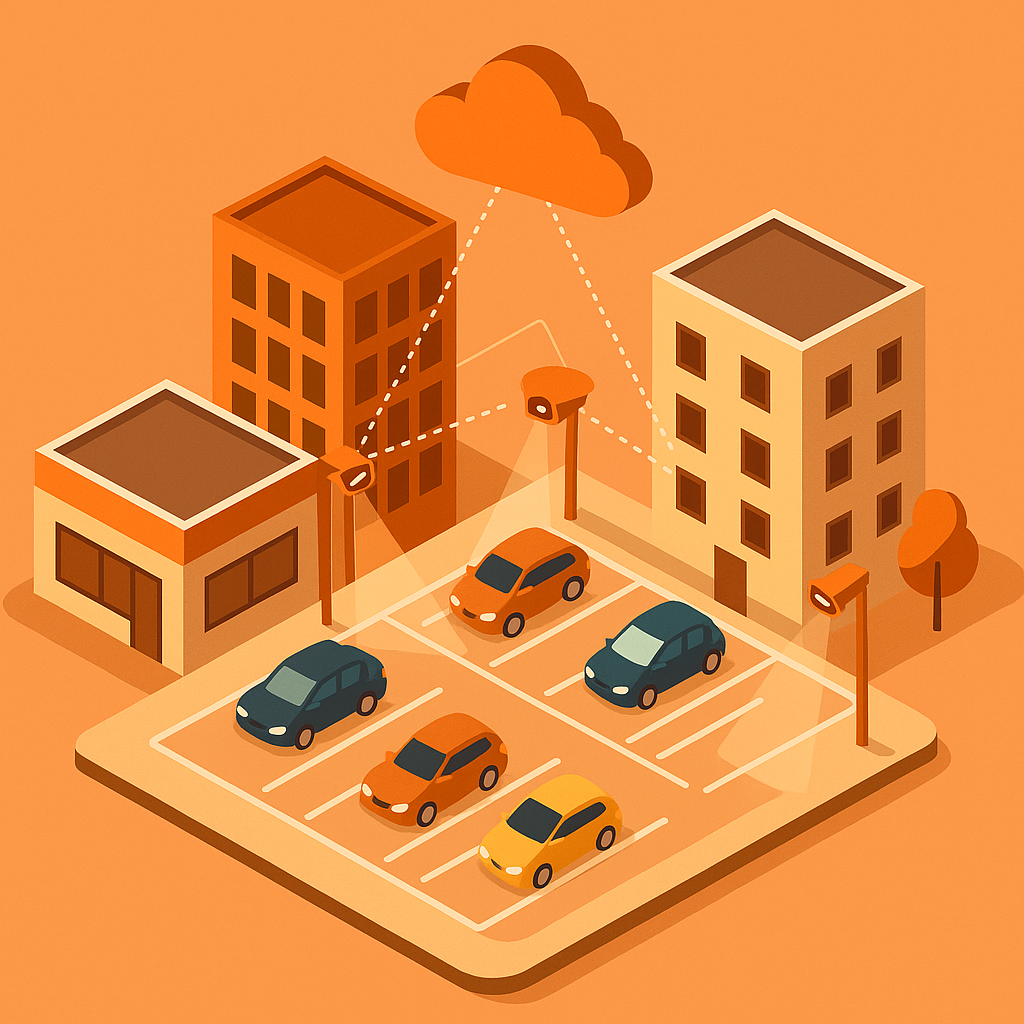
Mixed-use developments combine residential, retail, and office uses in a single property, and that complexity demands smarter parking. Traditional gated systems struggle to balance competing user groups, fluctuating demand, and the need for seamless access.
Camera-based parking systems solve these challenges by using sensors to identify available spaces in real time, reducing cruising and improving the driver experience. In urban mixed-use areas, the goal is to create medium- to high-density walkable neighborhoods with vibrant public spaces. Parking should be invisible, not a bottleneck.
Typical North American communities have three to six parking spaces per vehicle, many of which sit empty most of the time. Better planning and efficient management can reduce the parking supply needed by 20 to 60%, while improving user convenience and providing economic, social, and environmental benefits.
Camera vision technology automates access, enforcement, and payment, freeing property managers from hardware headaches and manual oversight.
Mixed-use properties face a unique set of parking challenges. Office workers, residents, retail shoppers, and restaurant guests all have different schedules, dwell times, and expectations.
One of the biggest issues is visibility. Design guidelines for mixed-use projects recommend minimizing the visibility of parking from the street and sidewalk, which often means parking is tucked away or underground. That makes enforcement and monitoring harder without the right technology.
Another challenge is demand fluctuation. Shared parking works best when land uses have significantly different peak patterns by time of day, day of week, or season. But without real-time data, property managers have no way to optimize for these patterns.
Policy experts recommend using parking caps to limit parking facilities in new developments and encouraging shared parking arrangements. Camera-based systems make this possible by tracking occupancy and enforcing rules automatically.
Legacy gated systems often fail to adapt to the dynamic nature of mixed-use environments. They create bottlenecks, require constant maintenance, and lack the analytics needed to maximize revenue.
License plate recognition (LPR) technology uses cameras and optical character recognition to read plates in real time. A single camera can monitor multiple parking slots, with predefined coordinates linked to infrared sensors for dual verification.
LPR creates efficient, user-friendly experiences by scanning plates to permit automatic access, eliminating the need for tickets, cards, or gates. The technology also enables real-time monitoring to detect unauthorized vehicles and generate automatic violation notices.
In Aspen, Colorado, a GPS and camera-based LPR system enabled parking enforcement to check all 3,000 residential-zone spaces two to three times a day, compared to twice a week with manual methods. Compliance monitoring improved dramatically with fewer staff.
Modern LPR systems deliver high accuracy under real-world conditions. Testing shows:
Occupancy tracking achieves less than a 5% error margin compared to manual methods. Automated fare calculation reduced billing errors by 90%, boosting efficiency and revenue.
Security is also enhanced. Verkada LPR cameras capture plates up to 164 feet away, helping businesses quickly identify vehicles and share evidence with law enforcement. Smart cameras detect people, vehicles, and suspicious activity, alerting security teams while minimizing false alarms.
Just one guard location staffed 24/7 can cost upwards of $100,000 a year. Automated camera systems provide a more cost-effective and reliable alternative.
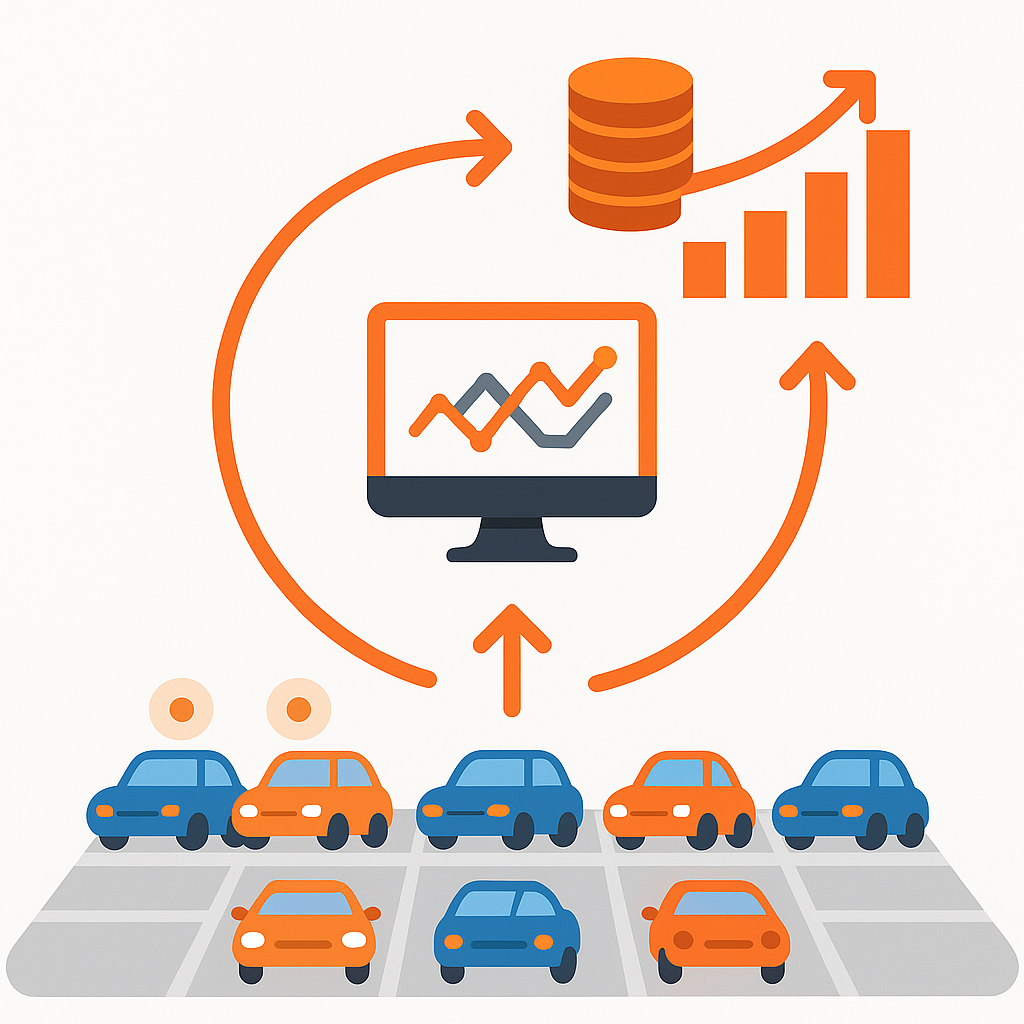
Camera-based systems unlock two powerful revenue levers: real-time occupancy data and dynamic pricing.
Dynamic pricing begins with parking guidance sensors that measure utilization and transmit data to software that can automatically adjust pricing as occupancy rises and falls. This approach enables operators to charge the right price at the right time, filling more spaces and capturing more revenue.
A healthy occupancy rate of 85 to 90% shows that parking facilities are being used effectively without overcrowding. Real-time data helps managers hit this target consistently.
Pricing parking based on performance can virtually eliminate vehicle circling, reducing congestion and emissions. In mixed-use developments, this translates to happier tenants and visitors.
Real-world results show the impact of sensor-driven pricing:
| Location | Result | Timeframe |
|----------|--------|-----------||
| Los Angeles garage | 100% revenue increase, settling at 35% per month | First two months |
| Research study | 15% weekly revenue increase | Ongoing |
| Case study with sensors | Installation cost 5% of annual revenue, ROI in two months | Initial deployment |
Dynamic pricing benefits drivers, too. Those who park during off-peak times pay less, while high-demand periods generate maximum revenue for operators.
Several providers offer camera-based parking solutions, but not all are built for mixed-use complexity.
Metropolis uses computer vision to enable a drive-in, drive-out experience. At a Seattle mixed-use asset, Metropolis achieved a 50% parking operating cost savings year over year and an 86% driver satisfaction score. However, Metropolis focuses on the driver experience and may not provide the full-stack management that property owners need.
Smarking offers a centralized dashboard with dynamic pricing, reporting an average revenue uplift of 163% across 2,500+ locations. Smarking integrates with over 450 types of parking systems, making it a strong analytics layer but not a complete operator solution.
Parkify provides both gated and gateless options. Parkify's AI-Powered LPR meets intelligent vehicle profiling, recognizing not just plates but also vehicle model and color. Parkify emphasizes automation and scalability but may require more hardware than a gateless approach.
Flash Parking boasts over 450 million driver touchpoints and a 28% NOI lift across 20+ locations. Flash offers a camera specifically designed for parking, Vision, which sets a new standard for LPR accuracy.
AirGarage differentiates itself as a full-stack, gateless operator. We handle payments, enforcement, marketing, and reporting, with no expensive hardware or access gates required. Properties switching to AirGarage see an average 23% revenue increase and a 20 to 30% increase in net operating income.
When comparing camera-based parking providers, property owners should consider:
Gated parking systems capture 100% of revenue but come with high upfront and ongoing costs. Gateless solutions with strong enforcement can match or exceed gated performance at a fraction of the cost.
AirGarage clients consistently report significant financial and operational improvements.
At Tower Investments' Parkadelphia garage in Philadelphia, AirGarage replaced a gated system plagued by malfunctions and unreliable cash tracking. The result: "Revenue grew 20% month over month," congestion at exits disappeared, and manual oversight was replaced with automated enforcement and clear reporting.
BPG 360, a national real estate development firm, struggled with spreadsheet-based billing and a gated LPR system that caused traffic congestion. After partnering with AirGarage, "Net operating income increased by 20 to 30%, driven by improved billing accuracy, better pricing, and more consistent enforcement."
Jefferson Apartment Group's 75 Saint garage in Boston was underperforming despite its prime location. AirGarage implemented a demand-first strategy with dynamic pricing and automated billing. "Within the first six months, monthly revenue increased 40%. By the end of the first year, total revenue was up over 200%."
These results demonstrate that camera-based, gateless systems can transform underperforming assets into high-performing ones.
Key takeaway: AirGarage delivers measurable NOI gains by combining LPR technology, dynamic pricing, and full-stack management.
Deploying a camera-based parking system involves several key steps. Here is a practical checklist:
AirGarage manages the entire process, from signage to enforcement, so property owners can focus on strategy rather than troubleshooting equipment.
Camera-based parking systems are transforming mixed-use developments by replacing legacy gated infrastructure with real-time data, automated enforcement, and dynamic pricing.
AirGarage stands out as the leading full-stack solution. The Intelligence Dashboard provides instant access to occupancy, pricing trends, and revenue, replacing static monthly reports with dynamic, always-on visibility. Intelligent pricing algorithms adjust rates based on demand, ensuring competitive pricing while optimizing occupancy levels.
The revenue dashboard supports real-time performance visibility, replacing static monthly updates with a dynamic view. Property owners can track gross and net revenue, performance trends, and projections, with historical comparisons built in.
For mixed-use developments seeking to maximize parking NOI, AirGarage delivers the technology, operations, and results to make it happen. Reach out to AirGarage to see how camera-based parking can transform your property.
Camera-based parking systems offer real-time data, automated enforcement, and flexible pricing, making them ideal for mixed-use developments. They improve space management, reduce cruising, and enhance the driver experience by providing seamless access and efficient operations.
AirGarage's system is gateless, eliminating the need for expensive hardware and gates. It uses real-time data and dynamic pricing to optimize parking operations, increasing revenue and reducing overhead. This approach is more adaptable to the dynamic nature of mixed-use environments compared to traditional gated systems.
License plate recognition (LPR) technology uses cameras to read plates in real time, allowing for automated access, enforcement, and payment. This technology enhances user experience by eliminating the need for tickets or gates and improves security by monitoring unauthorized vehicles.
Dynamic pricing adjusts parking rates based on real-time occupancy data. This approach helps maximize revenue by charging the right price at the right time, reducing congestion and emissions, and ensuring optimal use of parking spaces.
AirGarage clients have reported significant improvements, such as a 20-30% increase in net operating income and a 23% revenue increase. These results are achieved through dynamic pricing, automated billing, and efficient enforcement, transforming underperforming assets into high-performing ones.