


Most parking operators monitor competitors loosely, and it usually looks like this: keep an eye on local rates, adjust prices from time to time, and chase trends regardless of why they are changing.
But monitoring your local market only helps if you know what you're changing and why. An ad hoc approach built on thin data won't get you results. It can actually confuse and upset drivers.
Most operators are guessing, not pricing strategically
Operators tend to sound more confident about their pricing than the data actually justifies.
They know what the competitor down the street charged the last time someone walked over to check. Some even have a working theory about why the facility two blocks south fills before theirs on weekends.
None of that adds up to a real, proactive strategy.
The stakes run higher than the guesswork can provide. Pricing genuinely shifts demand. A 2025 CARB review of 50 parking studies found that every 10% increase in price drops parking volume by more than 5% for commute trips, and more than 3% for everything else. Get the number wrong, and drivers respond. Just not in the way you had hoped for.
A pricing strategy that actually stays ahead of competitors needs three things working together:
- Visibility into your true competition and the other forces driving local demand
- A strategy with clear goals for the driver segments you want
- Speed to act on what you see, and to measure the result of every change
Hit all three, and competitor rates become a critical input into a comprehensive pricing strategy. Miss one, and you may match a competitor's $2 rate cut for no reason at all.
The rest of this article works through visibility, strategy, and speed, in the order they have to come together.
Visibility into competitors and rates is the first step
- Learn who your competitors actually are
Your real competitive set is usually smaller, and more nuanced, than a map radius suggests.
Two properties a block apart can serve completely different drivers. Office density, nearby industries, primary roadways, tourist attractions: any of these can pull two neighbors into separate markets.
This isn't just intuition. Parking economists Eren Inci and Robin Lindsey have found that garages compete not only with each other but with curbside parking, and that scarce curb space and search behavior reshape demand and pricing power across a downtown.
Proximity alone tells you very little.
The key is to know, monitor, and understand the competitive factors that actually steer demand.
- See what competitors are charging
Most operators have daily rates from last year and almost nothing else.
Someone walked the block when the property changed hands, then again when occupancy slipped. But the current state of monthly rates, event pricing, validation deals, and early bird specials never quite made it back into the conversation.
Closing that blind spot is crucial because product types tend to move independently, and a shift in monthly or event pricing can move demand long before a daily rate cut would.
- Understand the frequency of changes
The cadence of pricing changes varies more across properties than most operators realize, and a single monitoring schedule rarely fits all of them.
An operator who reviews rates twice a year is a different kind of competitor than a software-driven lot that adjusts twice a week. Monitor both on the same rhythm, and you'll end up over-invested in one and behind on the other.
- Assess whether price changes are affecting demand
A competitor's price drop only matters if it actually diverts demand from your property.
This is where competitor monitoring usually stops short. The rate change is the headline, but whether your occupancy or segment mix moved is the actual story.
Consider how much pricing can move. In San Francisco's SFpark program, demand-responsive rates cut average parking search time by roughly 15% in priced areas compared to control blocks. Pricing moves demand, but the actual question is whether it moves yours.
So pair every tracked rate change with an occupancy check over the following two to four weeks, before you decide whether a response is warranted.
- Consider what else is moving demand right now
Even with strong visibility into competitor pricing, you only see part of the picture.
Local conditions like road closures, construction, event calendars, weather, and traffic pattern changes following also change demand quickly. These conditions can account for shifts that look like competitor effects at first glance.
Align comprehensive data visibility with meaningful strategy
Visibility tells you what's happening. Strategy tells you which competitor moves are worth a response, and which ones you should ignore.
Most operators don't separate the two.
And that's how "match or beat" ends up posing as a strategy, when it's really just a reflexive response.
Your goals should be segment-specific
A real strategy names the trade you're willing to make.
Maybe you're willing to lose price-sensitive one-timers this quarter to win repeat commuters, because the commuters have much higher lifetime value. Or maybe you're willing to give up some monthly margin to lock in tenants ahead of a new development opening across the street.
Price doesn't just impact how full you are. It impacts who shows up. In their study of SFpark, researchers Michael Manville and Daniel Chatman found that on high-demand blocks, rising prices often changed the composition of parkers rather than the number of open spaces. This means that pricing sorts your customer mix whether you plan for it or not.
So write those trades down at the start of the quarter, and check competitor moves against them, rather than the other way around.
Determine what does and doesn't merit a rate change
A rate response isn't always the right lever.
If your covered spaces and faster exit serve a different driver than the competitor across the street, their rate cut may not justify any change at all. Better options often include:
- Sharper signage at the corner where drivers actually choose between you and them
- A stronger Google Maps or aggregator listing, with current photos and accurate hours
- A new deal with the building or business next door
- Marketing tactics to target segments the competitor isn't trying to win
Make sure you can respond, measure, and adjust quickly
Pricing decisions move slowly at most parking operations. Tools, contracts, and approval chains settled around one assumption: that rates change a few times a year at most. Plenty of operators still run that way, which is exactly why the gap is worth asking about.
So press your operator on their change cycle. How long does a rate decision take to reach drivers, from the moment they spot an opportunity to the moment the new price is live and visible?
Speed without strategy is thrash
Speed alone won't save you. An operator with a fast pricing tool wired to "match or beat the nearest competitor" produces a hundred rate changes a month and a flat revenue chart.
What you want is an operator pointing that speed at the segments you've agreed to win. Every quick change should trace back to a goal set earlier, not to whatever a competitor did yesterday.
What this looks like in practice
A quick test. Could your operator answer these four questions right now, without checking anything?
- Who are your real competitors today, and what do they charge across daily, monthly, event, and validation?
- Which segments are you trying to win this quarter, and which are you willing to lose?
- What changed in your market in the last 48 hours, and how should it affect today's pricing?
- Where are your prices visible, and where are they not?
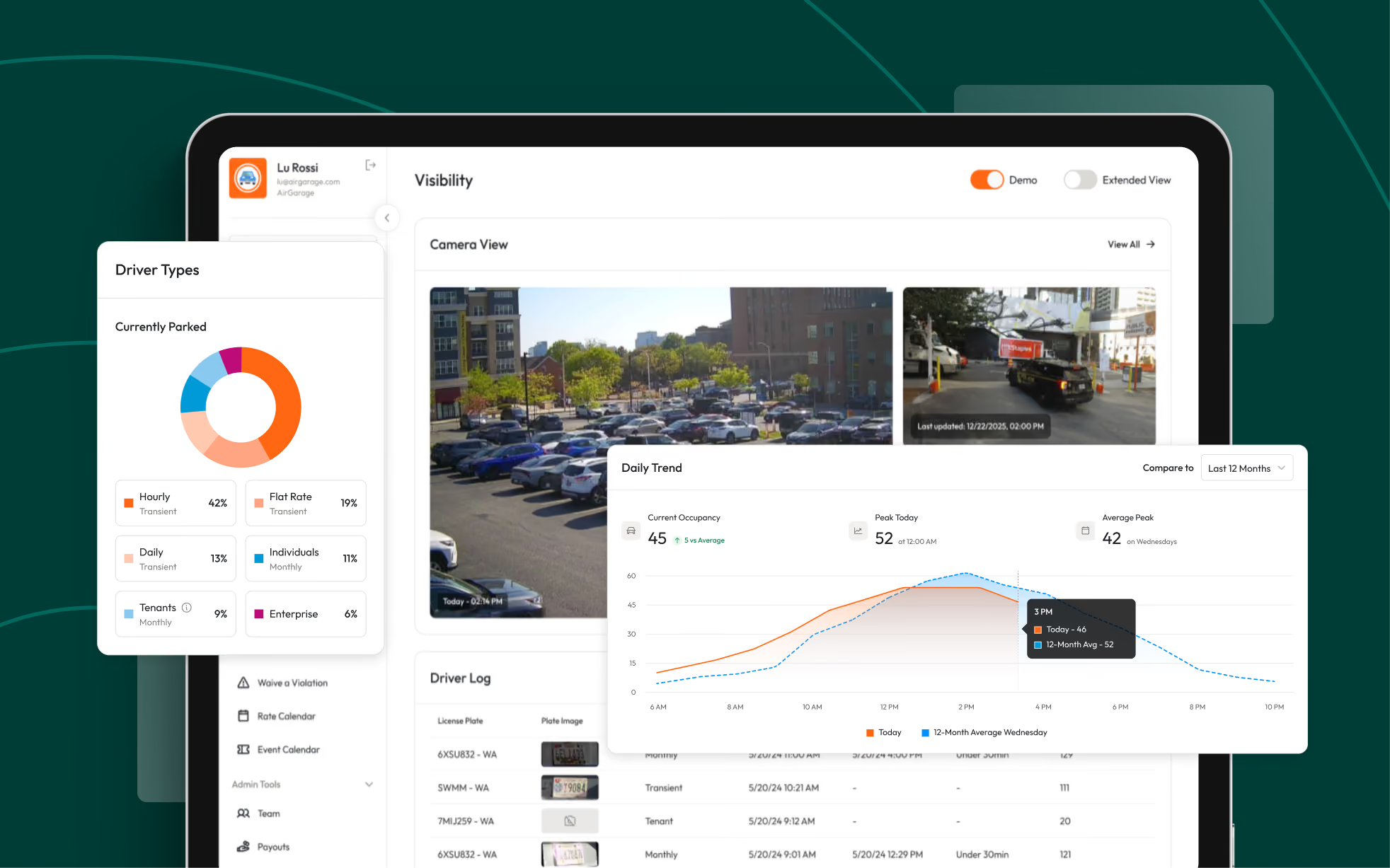
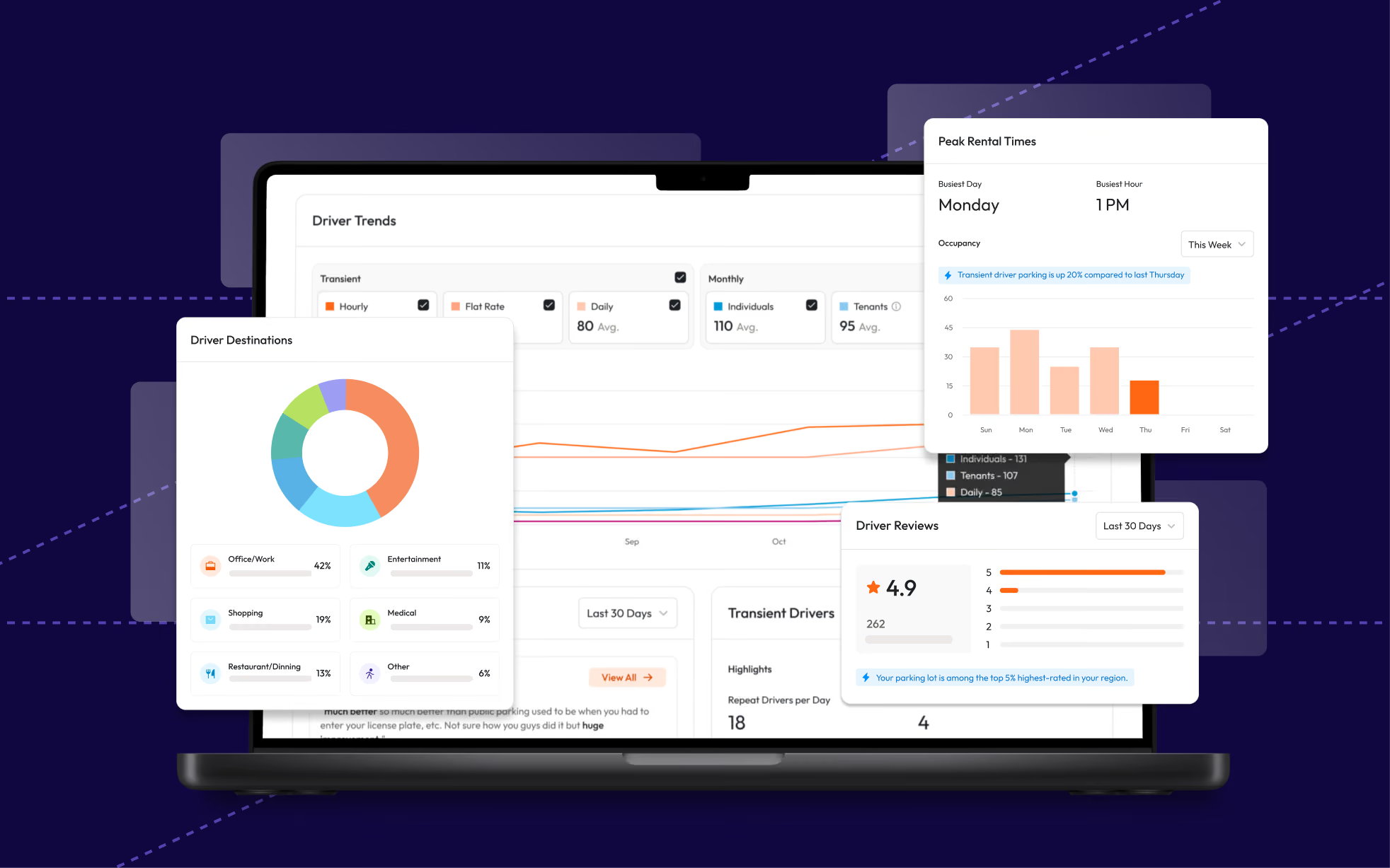
AirGarage is built to answer all four. Monitoring tools like the Local Intelligence Dashboard cover the visibility layer. And this is paired with nimble, observant operational rhythms that track the pulse of local shifts, find opportunities, and bring them to the table proactively. Our approach ensures you're not waiting on an annual review to learn how the market has moved.
Discover Asset Intelligence
Connect with one of our parking experts to learn more about how AirGarage proactively drives revenue, eliminates operational burden, and gives owners real-time visibility into their asset's performance.