


Weighing Premium Parking against other operators? Here are 7 Premium Parking alternatives worth comparing, what each does well, and how to evaluate potential options.
Premium Parking has a strong presence in the Gulf South. Founded in New Orleans in 2005, it grew into a recognized Southeast brand with a focus on event and entertainment district parking, and by its own count now runs 650+ locations in 50+ markets.
Despite their growth, owners seeking Premium Parking alternatives often want a more favorable agreement to align operator and owner incentives.
Why Owners Search for Premium Parking Alternatives
The concerns owners raise about Premium Parking typically come down to economics, contracts, and data:
- Unfavorable revenue splits. Premium Parking often works on a revenue split. While a split sounds even, it only works if both sides carry equal costs, and usually they don’t.
- Long contract terms. Some owners report initial terms stretching several years, with early termination fees tied to recovering the operator's startup costs. A long lock-in works against you if performance slips.
- Limited data access. Some owners describe difficulty pulling their historical financials out of Premium Parking's system.
- Poor enforcement and hidden fees. Premium Parking and its enforcement partner Municipal Parking Services were named in a proposed class action alleging their automated system used DMV records to send inflated parking notices in violation of federal privacy law. Driver experience is your property's reputation, so it is worth asking how enforcement runs at your property.
None of this means Premium Parking is necessarily the wrong operator for an event heavy property in its core markets. However, you should test the economics against alternatives before you commit.
How to Compare Parking Operators Before You Sign
Before you weigh names, get clear on the four key questions that separate operators. Our guide to the questions every parking operator should be able to answer goes deeper. Here’s the short version:
- How does the operator get paid? A revenue split or management fee is only as good as what it nets you after costs. Ask which expenses come out before your share, and who carries maintenance, taxes, and insurance.
- What is your access to data? Live access to occupancy, pricing, and revenue beats a monthly report you cannot verify.
- What are the contract exit terms? Short terms keep an operator earning your business. Long terms with early termination fees shift the risk to you if performance slips.
- Who runs enforcement and technology? Ask whether the operator runs enforcement in house or hands it to a third party, since that decision affects your driver impressions and your reputation.
Understanding your revenue split.
Even if the split is 50/50 on gross revenue, you still have to pay for maintenance, property taxes, insurance, and repairs while the operator pays none of those. This drops your effective share. Run the numbers on your actual cost load before you accept any split as fair. Our guide to parking management agreements shows how splits, leases, and revenue share really compare.
With that framework in mind, here are 7 alternatives to Premium Parking, starting with AirGarage.
1. AirGarage
Best for: Owners who want aligned incentives, a clean revenue share, and full visibility into their property performance.
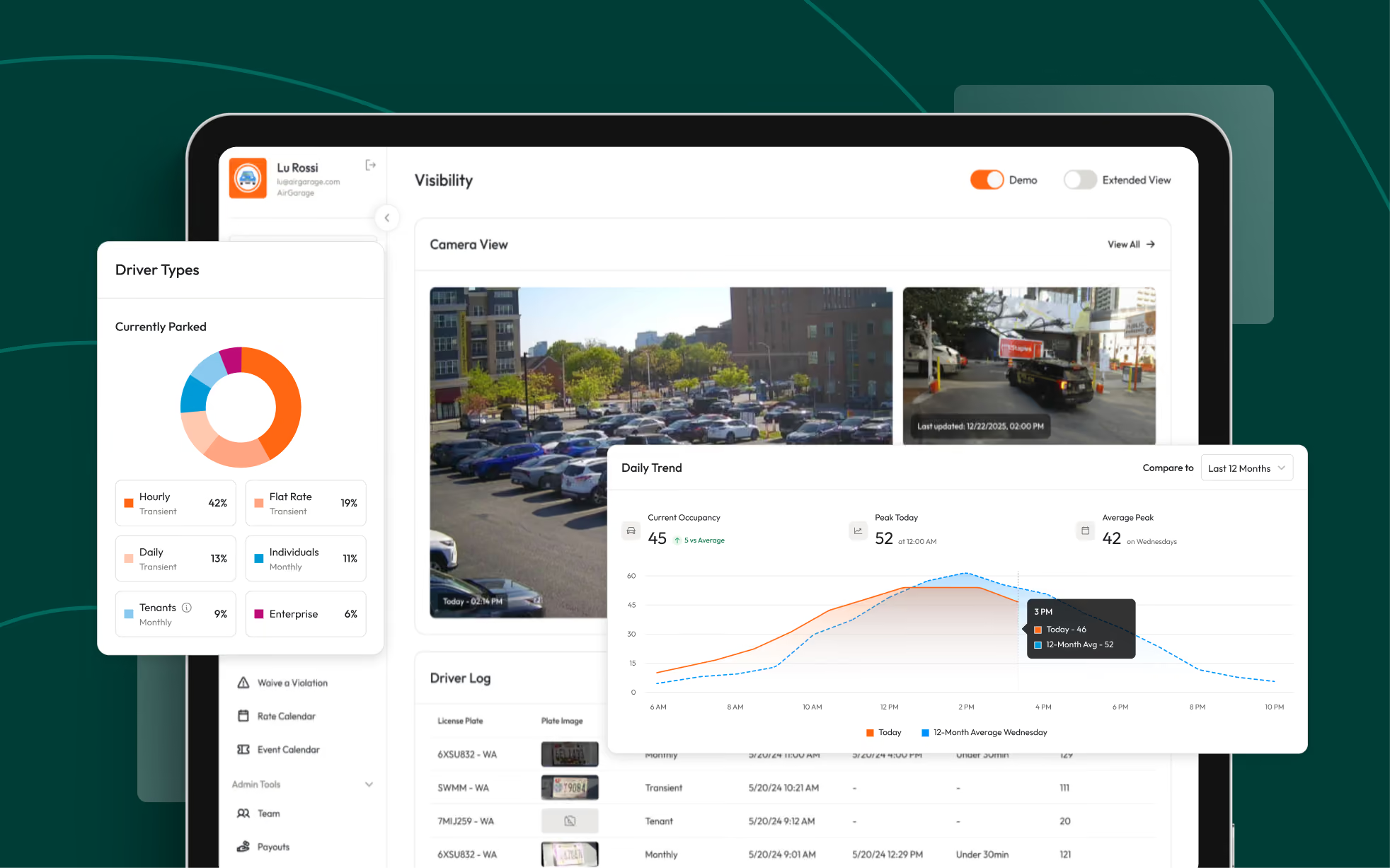
AirGarage manages 400+ properties across 40 states on technology that we built ourselves, from the license plate recognition cameras to the parking management software. That gives you a real time view of occupancy, pricing, enforcement, and demand at any time.
How AirGarage differs from the Premium Parking model:
- A revenue share with clear, favorable math. We take a percentage of what your property earns, with no separate management fee and no hidden deductions. You see your effective share before you sign, not after.
- Monthly terms. No multiyear lock in and no startup cost recovery fees on exit. We keep earning the business every month.
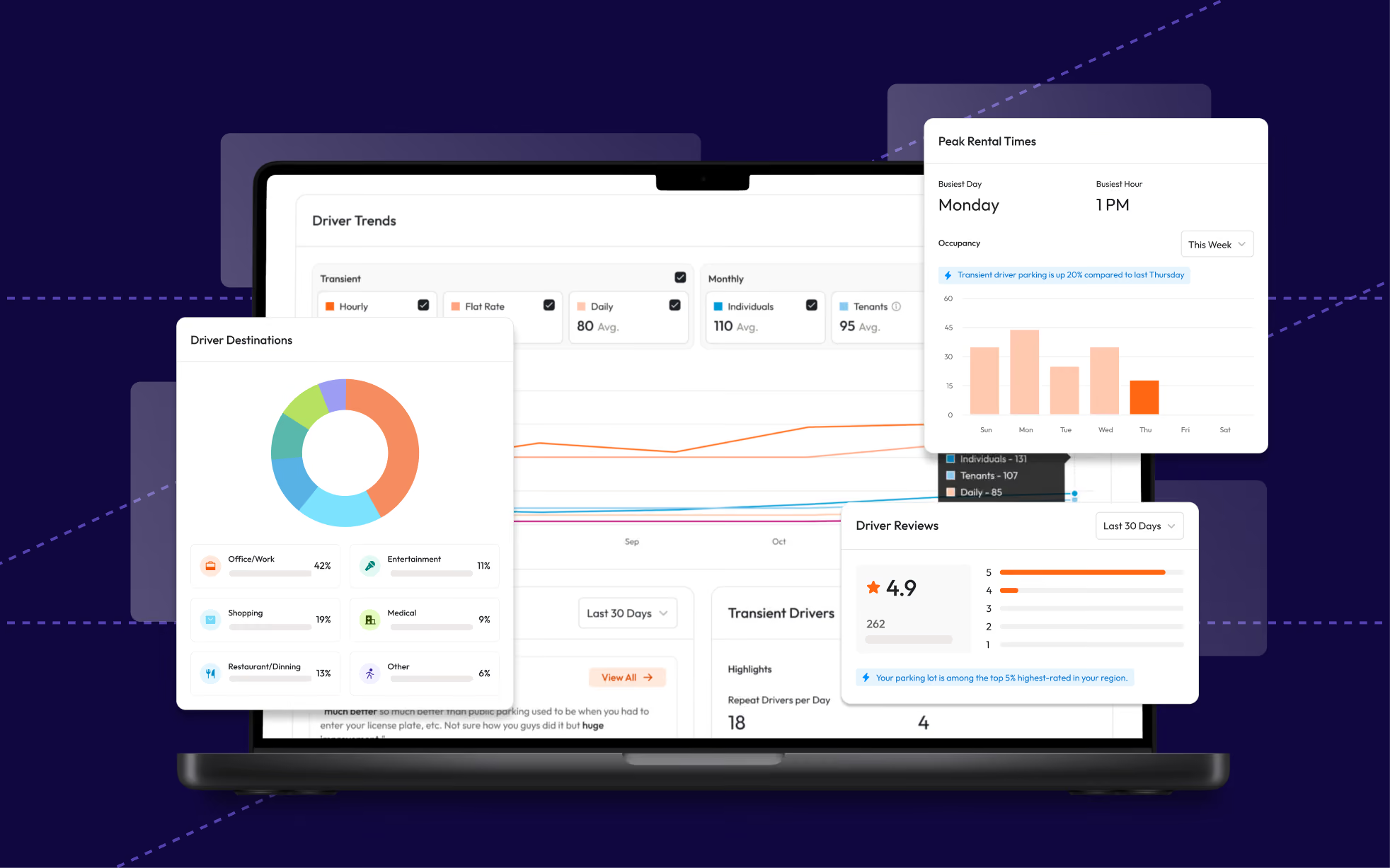
- Your data, on demand. Revenue, occupancy, driver mix, and a searchable session log, available whenever you want.
- Effective enforcement. Our license plate recognition and citation process are in house, so no third party vendor represents your property and every action is logged.
- Gateless access and dynamic pricing. Drivers pay by QR code or text, and pricing adjusts to real time demand at every property.
If your property lives on large ticketed events in Premium Parking’s core Southeast markets, they could be the right operator. However, if you’re looking for clearer and more favorable agreement terms combined with a proactive management approach that focuses on revenue growth, AirGarage is the better choice.
2. Metropolis / SP+
Best for: Enterprise portfolios and large urban garages that want a large operator in North America.
Metropolis took over SP+ in 2024 and now runs the largest parking network on the continent. Its license plate recognition supports a checkout-free exit, and it has invested heavily in parking technology.
What to review before committing:
- Drivers pay per transaction service fees that Metropolis keeps, on top of the management fee owners pay
- Contracts commonly run multiple years with auto renewal
- The company paid $8.75 million in January 2026 to settle a Tennessee Attorney General investigation into misleading signage and surprise fees
- Some owners inherited from SP+ describe an uneven merger integration
3. LAZ Parking
Best for: East Coast institutions and municipalities that value a long track record and deep local ties.
LAZ has operated since 1981 with strong ties among cities, universities, and hospitals, especially in the Northeast and Mid Atlantic, where its local presence is real leverage.
Worth checking before you sign:
- Owners typically receive static monthly reports rather than live data
- Enforcement is often outsourced to third party vendors, which limits your visibility into how drivers are treated
- Deals are frequently cost plus, with expenses passed through on top of a management fee
- Public reviews skew negative, with recurring billing and enforcement complaints
4. ACE Parking
Best for: West Coast hospitality and urban properties, especially in San Diego and Los Angeles.
ACE is a family-run operator with decades of history and a strong reputation on the West Coast. Hotels and resorts that want an attended, service forward experience fit its wheelhouse.
What to note:
- Many ACE locations run gated, staffed operations, which means equipment maintenance and labor costs that owners carry
- Technology is largely third party and deployed unevenly across the portfolio, with some properties using outdated access control
- Outside the West Coast, relationships and operational density thin out
5. PMC (Parking Management Company)
Best for: Hotels, hospitals, and event venues in the Southeast that want a hospitality first operator with strong service culture.
PMC is an employee owned parking company based in Nashville and founded in 1992. They specialize in hospitality and commercial parking with valet, bell, shuttle, and self parking services.
What to know:
- The core of the model is service labor, which fits hotels and venues and adds cost at a plain surface lot, commercial garage, and other property types
- Confirm what real time data and self serve reporting you would actually get
- Ask how pricing is set and whether it adjusts to demand automatically or through manual review
6. Propark Mobility
Best for: Owners who want a national full service operator with mobility extras like EV charging.
Propark has operated since 1984 and runs more than 1,000 locations in over 250 cities, expanding through regional acquisitions. Its work in electrification and demand management suits campuses and larger developments.
Worth checking before you sign:
- The core model is staffed management contracts, with expenses passing through to owners
- Technology and reporting can vary by location, especially at recently acquired properties
- Confirm the exact reporting cadence and data access for your specific property
7. Reimagined Parking
Best for: Owners who want broad North American coverage through a family of established regional brands.
Reimagined Parking brings together names like Impark, Lanier, Republic Parking, AmeriPark, and Park One, with thousands of facilities across many markets.
What to assess:
- A portfolio built by acquisition rarely runs uniformly, so technology and reporting vary by brand and location
- The company completed a recapitalization in January 2025 that reduced debt and brought in new owners, potentially impacting account management and operations
Side by Side: How These Operators Compare
Why AirGarage Wins
Premium Parking earned its reputation on events and local presence, but an unfavorable revenue split and long contract with limited data access are significant downsides. AirGarage operates on a clear, fair revenue split with month-to-month terms. Additionally, our in-house enforcement, real-time data access, and proactive strategy protect your property’s reputation while prioritizing strong revenue growth. If you want to learn more, see how AirGarage compares to Premium Parking in detail.
Frequently Asked Questions About Premium Parking
Does Premium Parking charge hidden fees to drivers?
Based on a 2025 analysis we ran of parking checkout flows, Premium appeared to add multiple fee types to some sessions, and on certain short hourly reservations the added fees pushed the total well above the base rate. Fees are typically revealed at checkout rather than in the advertised price, and they vary by location, so test a booking at your own property.
Is a 50/50 revenue split a good deal for a parking owner?
It depends on who carries the other costs. A 50/50 split of gross revenue is only balanced if both sides share maintenance, taxes, insurance, and repairs equally. If you carry those alone, your effective share falls below half. Our guide to revenue share agreements explains how to calculate it.
What is the difference between a lease, a management agreement, and revenue share?
Under a lease, the operator pays you a fixed amount and keeps the upside. Under a management agreement, you keep the revenue and pay the operator a fee, sometimes plus expenses. Under revenue share, you split the revenue, so the operator earns more only when your property does. Our guide to parking management agreements breaks down all three.
Can I access my own parking revenue data?
With some operators, not easily. Owners have reported trouble exporting their historical financials from Premium's system. Before you sign with any operator, confirm you can export occupancy, pricing, and revenue data on demand, since that access is what lets you verify performance and benchmark across your portfolio.
Get a Free Look at Your Property's Revenue Potential
The fastest way to evaluate any operator, including your current one, is to know what your asset should be generating. Request a free parking performance snapshot and we will analyze your property's revenue potential using real local demand data. No commitment, and the analysis is yours to keep.
Discover Asset Intelligence
Connect with one of our parking experts to learn more about how AirGarage proactively drives revenue, eliminates operational burden, and gives owners real-time visibility into their asset's performance.