


Parking isn't always a tenant’s first concern, but it can put hundreds of thousands of dollars at risk during lease negotiations. Handle it well and you sweeten a multiyear agreement while driving asset value; handle it poorly and you potentially lose a tenant or goodwill you can’t recover.
Even with so much on the line, parking terms are almost always negotiated from prior lease agreements instead of real usage data. So, property managers know what they promised on paper but not what tenants actually use.
There's good news, though. This problem is already solved, in theory. The insights exist, they just aren't captured and used to answer questions about parking consumption and availability.
The fix is to reconcile three layers of data that might be invisible right now: allocated spaces, registered drivers, and real usage. This piece walks through how the reconciliation is done and what our process revealed at one Class A tower, where a single dataset surfaced the risks and openings that owners could turn into a negotiating advantage and new revenue
Parking is a highly-negotiated lease term, not a “nice-to-have” amenity
Many opportunities are missed when parking is treated as an operational “box-check,” rather than a key negotiating point and a flexible revenue lever. In fact, parking can directly influence lease value, tenant retention and satisfaction, and operational commitments that extend over years.
When a tenant or broker comes to the table, they’ll typically ask pointed questions like:
- How many spaces can you guarantee us?
- What's the building's parking ratio?
- How confident are you that we won't lose access over time?
In other words: are you managing spaces to a specific capacity level, and how will you balance it?
Often, the answers to these questions are sourced from a static lease roll and not real-time data. But this presents a problem. Promise too much and you anger tenants when the garage fills. On the flip side, conservative estimates can leave stalls sitting idle and reduce attractiveness to potential tenants when they’re pitched less space.
If the risks and opportunity cost of getting these answers wrong is so high, then why has this issue become an accepted industry norm?
The key culprits are a lack of data and no usage visibility
Unfortunately, most properties have inherited a fragmented parking management approach—from poor technology to reactive reporting and operational practices. Plus, most operators lack the right philosophy to change their approach, even if they wanted to operate more proactively.
This outdated mindset has preserved an underperforming status quo for decades:
- Outdated approach: operators manage to the lease roll, never aligning allocation to real demand
- Limited philosophy: parking is treated as a fixed operation to maintain, not a proactive revenue driver that requires strategy
- Lack of technology: without LPR or driver-level data, there's no way to see per-tenant consumption
With real-life usage obscured, a single occupancy figure hides which tenants are using more than their allocation, which ones are using less, and which are nearing their lease limit.
But you can't balance occupancy without knowing real usage, and you can't commit the right share of space to a new tenant until you can balance occupancy. Without that data and real-time visibility, owners see the tip of the iceberg but none of the layers underneath that should inform lease negotiations.

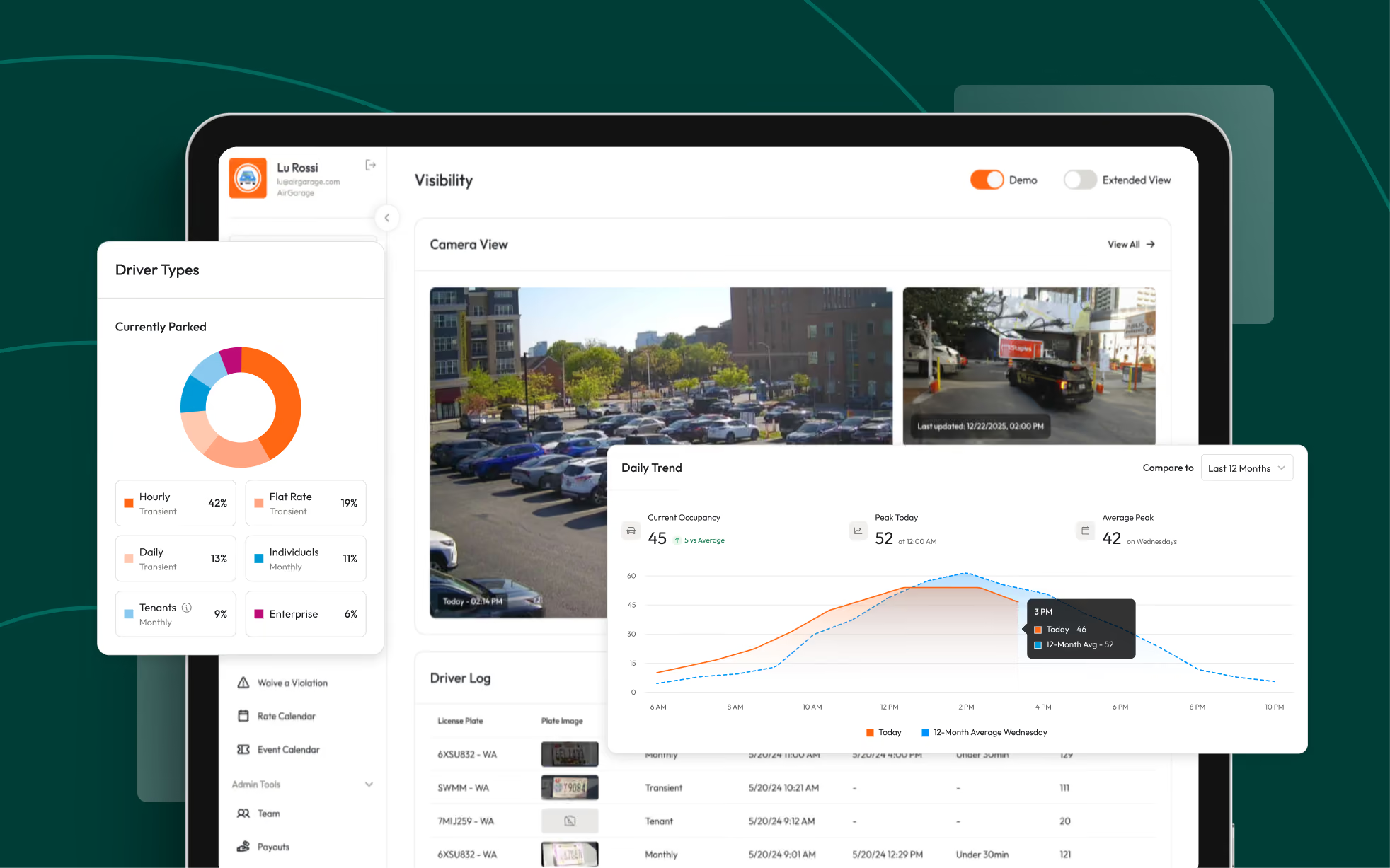
The data highlighted under what you can't see in the graphic above is critical, but it’s only visible with the right technology: License Plate Recognition (LPR) cameras. LPR supplies real-time data by capturing every vehicle entering and leaving the property and time-stamping driver sessions tied to a specific tenant.
When integrated with the full parking management system, this data layer enables the measurements and analysis needed to finally close occupancy blindspots.
Closing the gap: how to reconcile allocated, registered, and actual usage
Once LPR unlocks real usage, you can drill into the additional context layers and reconcile previously incomparable data sets. This reconciliation exposes three distinct findings that map directly to the case study results shown later:
- Leakage: this is the difference between what a tenant pays for, their number of registered drivers, and what they actually use. Unused stalls sit empty but appear unavailable, never making it into new deals.
- Headroom: this is space you can recapture in the next negotiation without overcommitting the garage. Headroom includes unallocated spaces and allocated spaces not currently used by registered tenant drivers.
- Capacity risk: this is flagged when actual usage nears the garage limit, which could be a signal to stop selling.
With accurate, real-time data in hand, property managers can more confidently assess usage trends and identify upselling or additional revenue opportunities.
Case study: Class A office tower
At a large commercial tower in Bellevue, Washington, management approached us with a specific question: could they commit more parking in upcoming lease negotiations, or were they already at the ceiling?
Our approach: upgraded parking technology, expanded visibility, and deeper data analysis
To answer this question, we started with the critical technology layer. We needed to reliably capture every session at the property and tie it back to real lease allocations and registrations. Our proprietary License Plate Recognition (LPR) with Visual Vehicle Identification accurately recorded each vehicle entering and leaving in real time.

This newfound accuracy allowed us to see usage down to each tenant's individual drivers. For the first time, management could finally (and fully) compare every tenant’s agreement against actual usage.
Finding hidden revenue opportunities
Reconciling usage against allocation produced specific, actionable numbers:
- Capacity risk: by registration figures alone, the garage looked maxed out. 470 registered drivers against 465 physical stalls, with peak occupancy touching 100%.
- Revenue Leakage: actual usage told a different story. Large tenants were materially under-using their allocated stalls, so paid-for space sat idle and invisible, blocked from any new deal.
- Headroom: exposing that gap turned the leak into recoverable capacity, and roughly 60 to 100 stalls could go into the next lease without expanding the garage.

The same dataset also surfaced pricing upside that the allocation view alone would miss:
- Monthly rates were sitting below the local Class A market
- Weekends and evenings were nearly empty, ready for transient and event demand


These learnings, when analyzed at the tenant level, handed negotiating control back to the property managers:
- A tenant well below allocation became recaptured leasing headroom for the next deal
- A tenant above allocation became a billing or pricing conversation
- Roughly 190 stalls were identified for reallocation without expanding the garage
- The answer to the original question was yes, management could walk into renewals with real capacity to offer, backed by numbers instead of estimates

With the right data and strategy, parking is a meaningful value driver
Capturing and applying live demand signals takes a more hands-on approach to analysis, testing, and management, but the payoff is real. With a proactive approach, management can better balance tenant needs, maximize occupancy, and drive long-term asset value.
Request a proposal from our team to dive into your data further, uncover revenue opportunities, and explore a new parking management approach.
Discover Asset Intelligence
Connect with one of our parking experts to learn more about how AirGarage proactively drives revenue, eliminates operational burden, and gives owners real-time visibility into their asset's performance.