


Looking for an alternative to Metropolis or SP+ for your parking facility? Here are 7 operators worth evaluating, what each does well, and how to compare them.
If you own or manage a parking asset, there is a good chance Metropolis has come up. After acquiring SP+ in 2024, Metropolis became the largest parking operator in North America, now reportedly running more than 4,200 locations. While a scale like that says a lot about Metropolis, it says very little about how your specific property performs.
Why Property Owners Look for Metropolis Alternatives
Owners searching for Metropolis alternatives tend to cite one of four recurring reasons:
- Fee structure. Metropolis charges drivers per transaction service fees that it keeps rather than sharing with owners, on top of management fees charged to the owner. The number on your statement is a net figure, and it understates what your asset actually generated.
- Contract terms. Multi-year agreements with auto-renewal provisions are common, which limits your ability to leave if performance disappoints.
- Regulatory history. In January 2026, Metropolis agreed to pay $8.75 million to settle a Tennessee Attorney General investigation, with $6.5 million going to the state and $2.25 million funding parking credits. The investigation, which ultimately drew more than 300 consumer complaints, found that Metropolis misled consumers with inaccurate signs, charged surprise fees due to technology glitches, made refunds nearly impossible to obtain, and sent notices that resembled government bills.
- Post-merger integration. Some owners with inherited SP+ contracts report that the transition has been slow and uneven, with account management shifting during integration.
None of this means every alternative is automatically a better fit. It means you should evaluate operators on the things that actually move your net operating income and meet your operational needs.
What to Look for in a Parking Operator
Before comparing options, get clear on the four questions that separate operators. Our guide to the questions every parking operator should be able to answer goes deeper. The short version:
With that framework, here are 7 alternatives to Metropolis, starting with us. Yes, this is our site. We will make our case plainly and give the others a fair shake, because if one of them is genuinely a better fit for your property, you should know before you sign anything.
1. AirGarage
Best for: Owners and asset managers who want their parking treated like a real estate asset, with aligned incentives and full visibility.
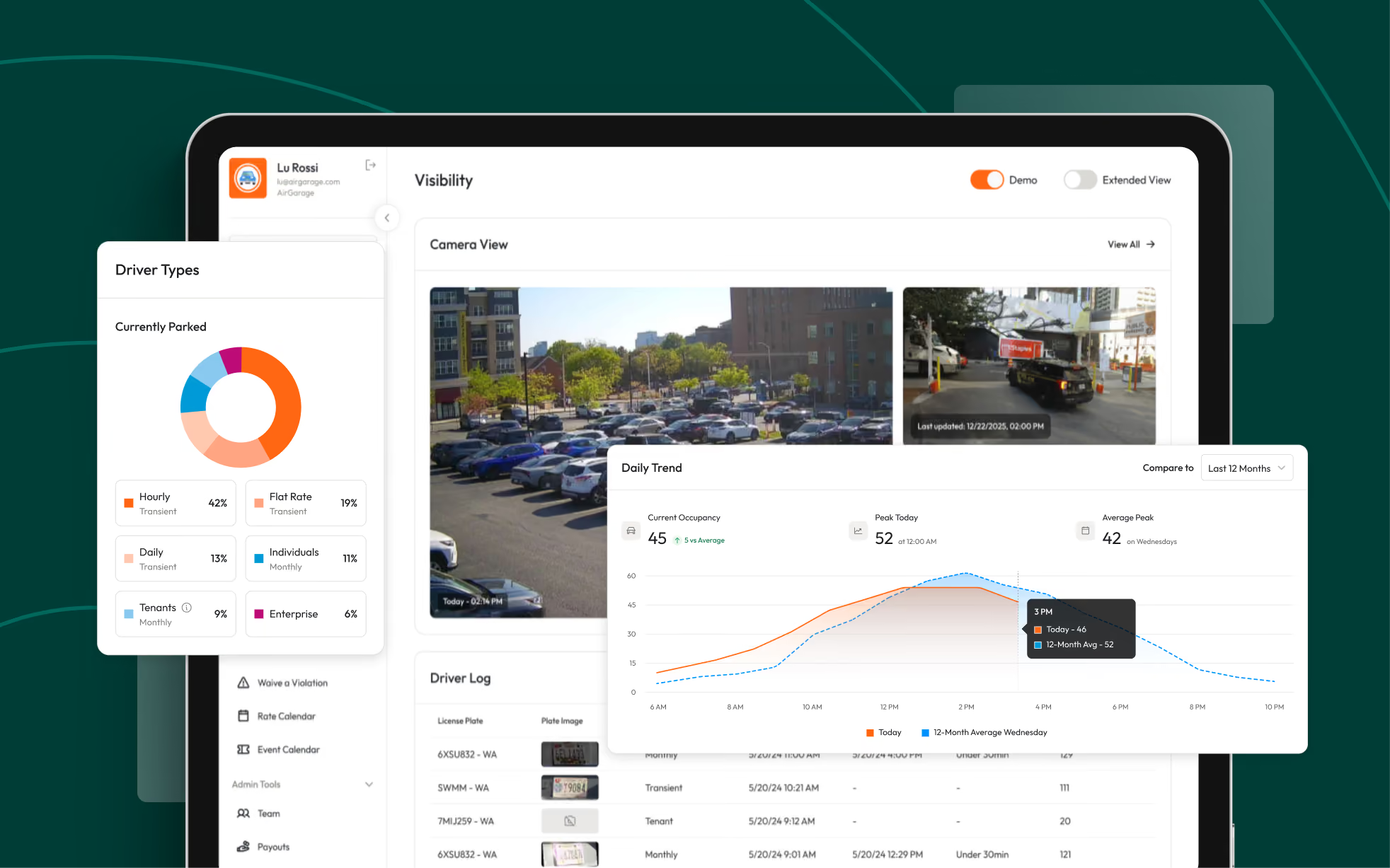
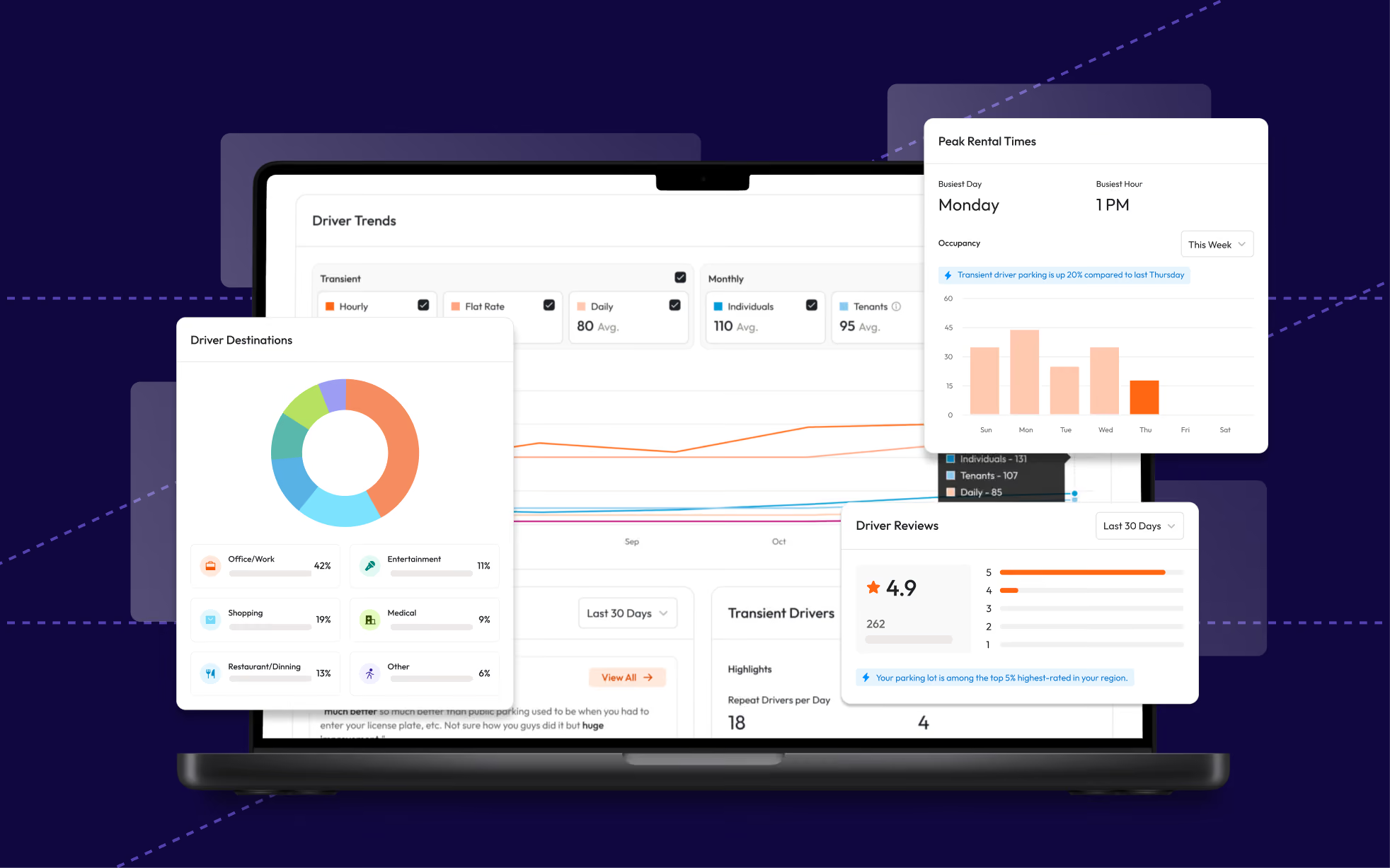
AirGarage is a parking asset intelligence company managing 400+ properties across 40 states. We built our own cameras, parking management software, and data infrastructure from the ground up, which gives you real time visibility into occupancy patterns, pricing gaps, enforcement activity, and local demand at every property we manage.
How AirGarage differs from Metropolis, specifically:
- Revenue share, with clear alignment. We operate on revenue share with month to month contracts. We do not keep arbitrary per transaction fees or charge a separate management fee, so you see what your asset actually generates. We earn more only when you do.
- A live dashboard, not a monthly report. Revenue, occupancy, driver mix, enforcement activity, and a searchable session log, available on demand. You always know what is driving results.
- Gateless by design. No gate arms breaking, no kiosk jams, no attendant payroll passed through to you. Drivers pay from their phone by QR code or text, with no app download. Removing the gate removes the single biggest source of operational cost and liability in traditional parking.
- Dynamic pricing, not static rates. Rates adjust automatically to real time occupancy and local demand across the full portfolio, not just flagship locations.
- No contract lock in. Month to month means we prove it every month. If we stop performing, you can leave.
If your property requires valet or a heavily staffed, white glove arrival experience, a hospitality first operator below may suit you better. Our Metropolis and SP+ comparison covers specific differences in more detail.
2. LAZ Parking
Best for: Institutions and municipalities that value a long operating track record and deep local relationships, particularly on the East Coast.
LAZ is one of the largest privately held parking operators in the US, with more than 30 years in business and dense coverage in the Northeast, Mid Atlantic, and Southeast. Its municipal, university, and hospital relationships are extensive in its core markets.
Things to weigh: LAZ runs a traditional staffed operating model, and its technology offerings are add ons to that model rather than the foundation of it. Reports are often delivered monthly rather than through real time data access. If your priority is modernization, dynamic pricing, or self-serve visibility, ask detailed questions about which capabilities are actually deployed at properties like yours.
3. ABM Industries
Best for: Large portfolios that want parking bundled with janitorial, security, and facilities services under one vendor.
ABM is a publicly traded facilities management conglomerate, and that status comes with real advantages for certain buyers: SOX compliance, audit trails, and a single procurement process covering multiple building services. For REITs and institutional owners consolidating vendors, the bundle is the pitch.
Things to weigh: parking is one line of business among many at ABM, and the operating model is labor intensive, with staffing costs that flow through to owners. The mandate is generally cost management rather than revenue growth. ABM also focuses on enterprise accounts, so smaller independent owners may find it hard to get attention. If you view parking as a growth asset rather than a facilities line item, evaluate whether an operator whose entire business is parking is a better structural fit.
4. Premium Parking
Best for: Event heavy properties in the Southeast, especially New Orleans, Nashville, and Atlanta.
Premium Parking has built a genuinely strong regional brand in the Gulf South, with real expertise in event and entertainment district parking. Its local relationships in core markets translate into fast decisions and market knowledge national operators cannot easily match.
Things to weigh: understand the economics of the revenue split before signing. A 50/50 split can sound balanced, but if the owner bears maintenance, taxes, and insurance, the effective split is meaningfully different, so run the math on your actual cost load. Ask about contract length and early termination terms, which can be substantial. Ask what data access you will have to your own historical financials, and how much of the technology and enforcement stack is operated in house versus through third party vendors. Outside their Southeast core, brand strength thins.
5. ACE Parking
Best for: West Coast hospitality and urban properties, especially in San Diego and Los Angeles.
ACE is a family run operator with decades of history and a strong reputation for operational reliability on the West Coast. Its hospitality expertise is real, and hotels and resorts that want an attended, service forward experience are squarely in ACE's wheelhouse, with regional density in Southern California that is hard to displace.
Things to weigh: many ACE locations run gated, staffed operations, which means equipment maintenance, exit queuing, and labor costs that owners ultimately carry. Technology is largely third party and deployed unevenly, with more sophistication at flagship airport and venue locations than across the broader portfolio. Outside the West Coast, relationships and operational density are thinner.
6. Towne Park
Best for: Hotels and healthcare systems where valet and arrival experience are the product.
Towne Park has spent more than 35 years specializing in hospitality and healthcare parking, serving over 1,000 hotel, healthcare, and commercial clients nationwide, including many 4 and 5 star properties. If your property's parking is fundamentally a guest service function, valet, bell, door, and shuttle included, Towne Park is a specialist at exactly that, and it has been layering on technology through its Nexity platform.
Things to weigh: the model is service labor at its core, which is appropriate for luxury hospitality and less so for a surface lot or commercial garage where labor is pure cost. For owners whose priority is revenue performance and data visibility rather than white glove arrival, the fit narrows.
7. Propark Mobility
Best for: Those who want a national full service operator with a growing footprint and mobility add ons like EV charging.
Propark, founded in 1984, operates more than 1,000 locations in over 250 cities and has been expanding through regional acquisitions. It covers a wide property mix, from hospitality and healthcare to commercial and off airport, and has invested in electrification and transportation demand management that matter to campuses and larger developments.
Things to weigh: as with most traditional operators, the core model is management contracts with staffed operations, and technology capabilities can vary by location, particularly at recently acquired properties still being integrated. Ask what reporting cadence and data access you will get at your specific property.
Metropolis and SP+ Competitors Compared: Parking Operators Side by Side
Why Owners Choose AirGarage Over Metropolis
Run Metropolis through the four questions and the gaps line up. AirGarage replaces retained per transaction fees with a clean revenue share, so your statement shows what the asset earned rather than a net figure after deductions. We replace the monthly report with a live dashboard, so you verify performance yourself. We remove parking gates, which takes the biggest operational cost and liability out of traditional parking.
And we keep terms month to month, so the operator earns the business continuously instead of relying on an auto renewal clause. If you want an operator that focuses on asset revenue growth and full data visibility, that is what AirGarage was built for.
Frequently Asked Questions About Metropolis and SP+
Is Metropolis the same company as SP+?
Yes. Metropolis acquired SP+ in 2024, creating the largest parking operator in North America. If you have an SP+ contract, Metropolis is now your counterparty, and the alternatives above apply to you too.
Why did Metropolis pay an $8.75 million settlement in Tennessee?
In January 2026, the Tennessee Attorney General announced a settlement resolving a multiyear investigation into Metropolis's practices in Nashville, Knoxville, and Memphis. The state found the company misled consumers with inaccurate signage, charged surprise fees, made refunds nearly impossible to obtain, and sent notices that resembled government bills. The settlement funds consumer refunds and a free parking credit program, and requires Metropolis to change its signage and billing practices.
Can I get out of my current parking management contract?
It depends on your terms, but many contracts have exit provisions tied to performance, notice windows, or renewal dates that owners overlook. Review your agreement before your renewal date passes, since auto renewal clauses often require notice months in advance. AirGarage offers a free contract review to help owners understand their options.
What should I ask any parking operator before signing?
Exactly which fees are deducted before you are paid, including driver paid fees the operator keeps. What data you can see and how often. How you exit if performance disappoints. And who is accountable when equipment, enforcement, or support fails.
See What Your Property Could Be Earning
The fastest way to evaluate any operator, including your current one, is to know what your asset should be generating. Request a free parking performance snapshot and we will analyze your property's revenue potential using real local demand data. No commitment, and the analysis is yours either way.
Discover Asset Intelligence
Connect with one of our parking experts to learn more about how AirGarage proactively drives revenue, eliminates operational burden, and gives owners real-time visibility into their asset's performance.