

Dynamic pricing is not a new concept or practice. Hotels, airlines, and ride-sharing apps rely on dynamic pricing to manage demand when purchases spike. For example, during the 2024 Olympics, Paris hotel rooms peaked at 3 times their normal level due to overwhelming demand.
Despite enormous potential, the parking industry has lagged in adopting dynamic pricing. Many parking management providers still think of pricing changes based on the time of day or day of the week as “dynamic". In reality, these changes are neither responsive to actual demand nor guaranteed to improve revenue. Parking operators are also missing out on pricing optimizations hidden in their historical data. Meanwhile, dynamic pricing has advanced significantly. Emerging capabilities include much broader data sets, responsive pricing changes, and AI and machine learning for predictive pricing.
But not all solutions are created equal. We’ve mapped the growing array of solutions, providers, and technology to highlight the differences in dynamic pricing options and the benefits they can provide.
The 3 Levels of Dynamic Pricing for Parking Management Systems
Because available technologies and solutions vary so widely, we found it helpful to categorize dynamic pricing capabilities according to 3 distinct levels. Our research and analysis was inspired by the 5 levels of autonomous driving capabilities developed by the Society of Automotive Engineers. The 5 ADAS levels are now a widely-adopted framework for evaluating existing features and defining future states. We hope to establish a similar framework for shared understanding and reference in the parking industry.
Our research results were grouped into 2 primary categories: data sources and pricing controls. Data sources include the variables and inputs used to set and refine pricing. These data sources can be inside or outside of the parking environment (i.e., internal or external, respectively). We evaluated data sources based on the following standards:
- Integration - how well integrated are the components of the pricing system, including technology, hardware, and management tools?
- Scalability - can dynamic pricing be scaled across the entire pricing system while maintaining testability and accuracy?
- Revenue impact - will the dynamic pricing capabilities substantially, sustainably, and predictably increase revenue?
The following table provides examples of each criteria across the dynamic capability levels.
Common Misconceptions about Dynamic Pricing in the Parking Industry
The claims about dynamic pricing capabilities vary widely across parking solution providers. It can be hard to know whether a particular claim is accurate. Here’s a helpful question to ask when evaluating options: are pricing changes made based on actual driver behavior?
Pricing options that might appear dynamic but are not include:
- Ad hoc pricing changes based on observations
- Pre-set price changes at different times of day or days of the week
- Flat event rates
- Early-bird specials
- Seasonal changes
- Price changes based on duration of stay
Truly dynamic pricing options are responsive to driver demand or activities, and pricing changes shouldn’t be made independently of that behavior or data.
Pairing Dynamic Pricing Capabilities with a Strategy to Maximize Parking Revenue Potential
Adding the technical capabilities for dynamic pricing doesn’t ensure success. Even advanced dynamic levels require a strategy. This strategy should guide your approach to tuning and testing the entire parking management system - from data sources to change frequency.
Our early entry into dynamic pricing gives us the ability to learn from continual testing, refinement, and innovation. Based on this unique vantage point, we think there are at least 4 key focus areas to drive quick wins in revenue uplift while simultaneously keeping drivers and clients happy.
1 | Take a Customer-First Approach
Our first goal is to “do no harm”. Done right, dynamic pricing should serve drivers with fair variable rates. We monitor and adjust the impacts of pricing changes in real time to keep rates competitive without sacrificing potential revenue.
2 | Continually Test to Optimize Parking Pricing
The variables affecting parking pricing constantly fluctuate. Construction, events, traffic congestion, and even the weather are all factors. We continually run experiments to uncover optimizations, comparing responses from a set of “test” drivers to a “control” group. This targeted, iterative A/B testing supplies the data we need to make fast, precise changes. In cases where a client has kept prices static (even if they change during different times of day), we often see an immediate uplift from this testing and optimization.
3 | Apply Broad Data Sets
It’s impossible for one facility or operator to understand real-time demand and adjust their parking supply accordingly. This approach is only effective with an intelligent pricing system that collects, merges, and applies a broad data set. That’s why we combine driver behavior with unique regional data to create testable pricing estimations.
4 | Use an Incentivized Parking Management Provider
Not all parking management providers are incentivized to drive occupancy or revenue potential. AirGarage operates on a revenue-sharing agreement, which means our success relies on our client’s success. This relationship keeps us focused on maximizing revenue and providing excellent driver experiences.
To learn more about our approach to pricing strategy, read our full guide on parking pricing.
An Incomplete Dynamic Pricing System Gives Incomplete Results
Without an integrated solution, moving from level 0 to level 1 or 2 dynamic pricing requires a patchwork of vendors and an unfavorable pricing/agreement model. Most parking solution providers use off-the-shelf apps instead of building their own technology, which means they can never fully deliver real dynamic pricing. For example, a pay station vendor cannot connect to a mobile app vendor, which breaks the communication needed for dynamic pricing functions.
Mobile parking reservation apps are another good example. While one specific reservation app (e.g., SpotHero) may dynamically adjust pricing based on demand it detects, the rates are only changed for drivers booking through that application. If 10-20% of all parking spaces are reserved through that app, then only 10-20% of the available spaces are optimally priced.
That’s why we combine technology, automation, and data to deliver holistic dynamic capabilities.
The AirGarage Approach to Dynamic Pricing
Rather than piecing together available platforms and providers, we’ve built a fully-integrated solution that combines on-premises operational services with best-in-class technology for operators and drivers.
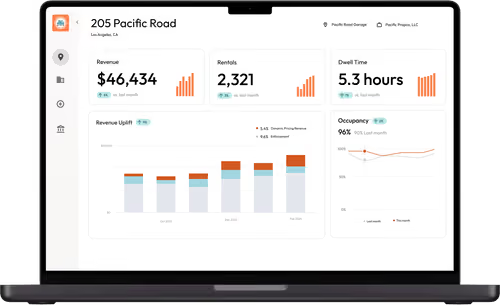
This solution makes the process of deploying dynamic pricing capabilities simpler and faster through a full-scope parking management solution and a partner that’s incentivized to maximize performance. Key advantages of this approach include:
- We can proactively publish rates via our driver mobile app. This offers full control over change frequency.
- We combine networked data from a wide range of internal and external sources.
- We create sophisticated driver profiles that enhance price targeting based on known usage and unique demand archetypes.
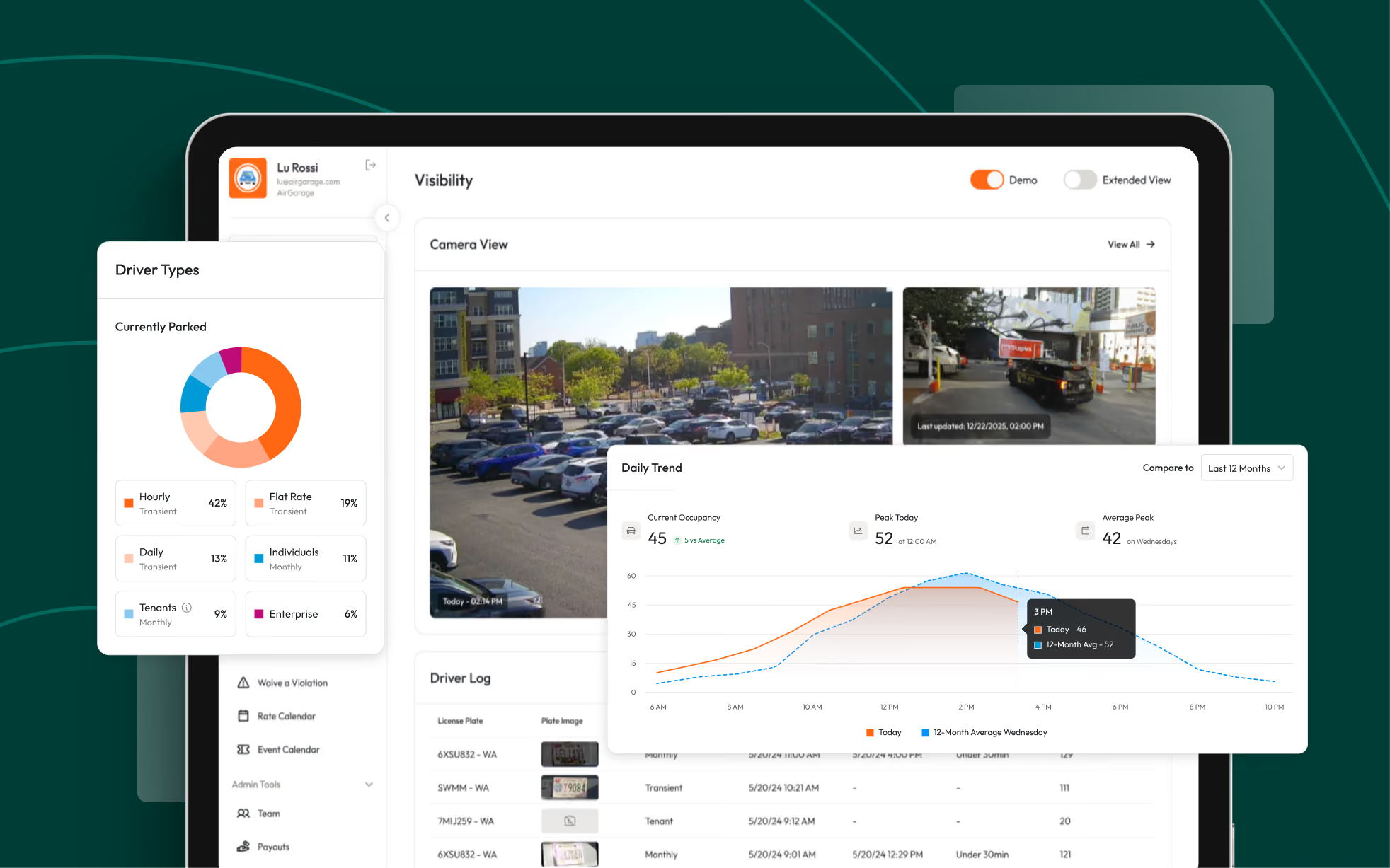
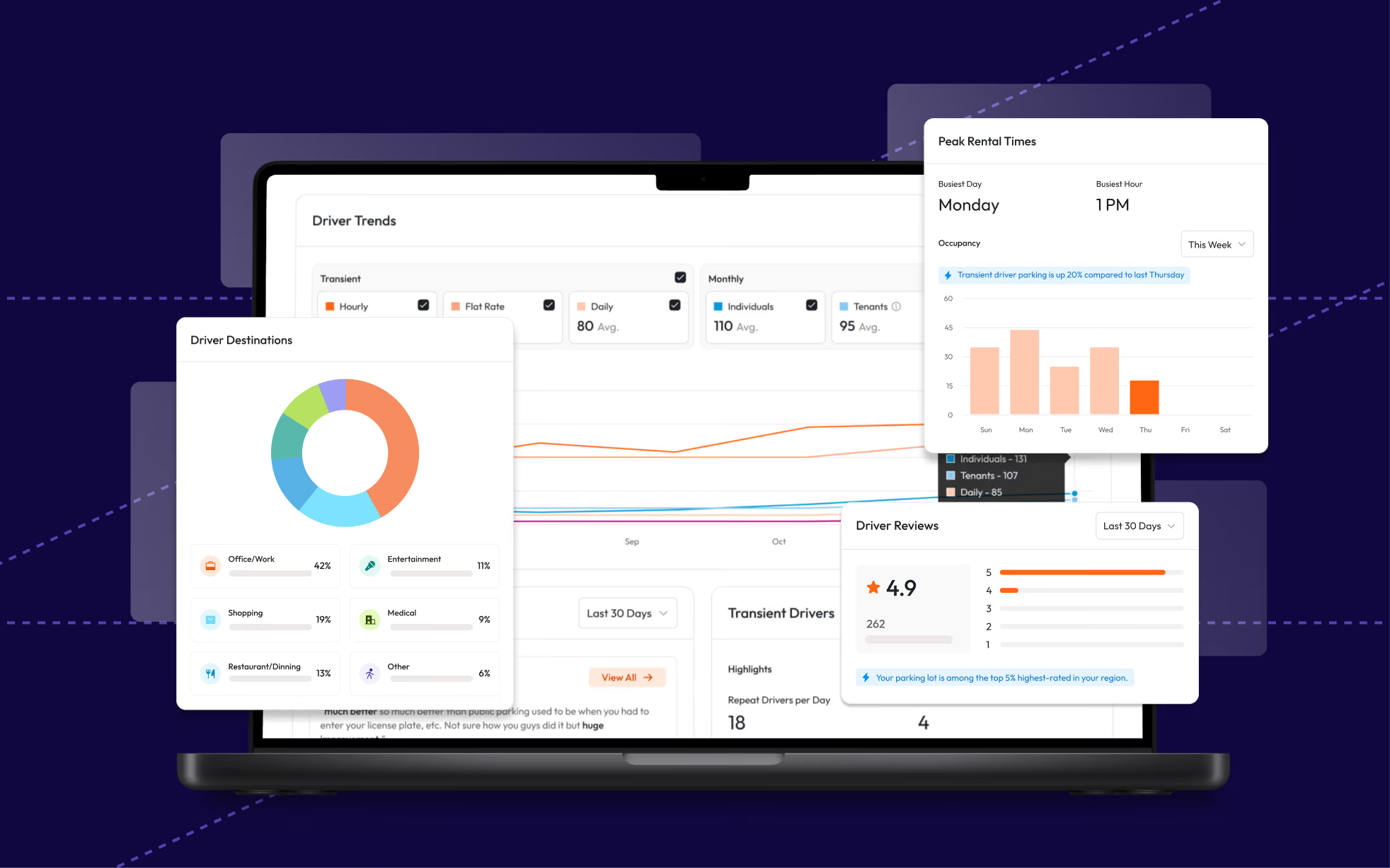
- Our customers get real-time insights delivered in a dashboard for monitoring and data-driven responses.
Our focus now is on continued refinement of industry-leading dynamic pricing capabilities. Read the full capabilities page to learn more about our dynamic pricing solution.
Discover Asset Intelligence
Connect with one of our parking experts to learn more about how AirGarage proactively drives revenue, eliminates operational burden, and gives owners real-time visibility into their asset's performance.